Zizyphus
Zizyphus jujube · Also known as Jujube, Indian jujube, ber, बेर (ber), Chinese date, red date, Zizyphus mauritiana
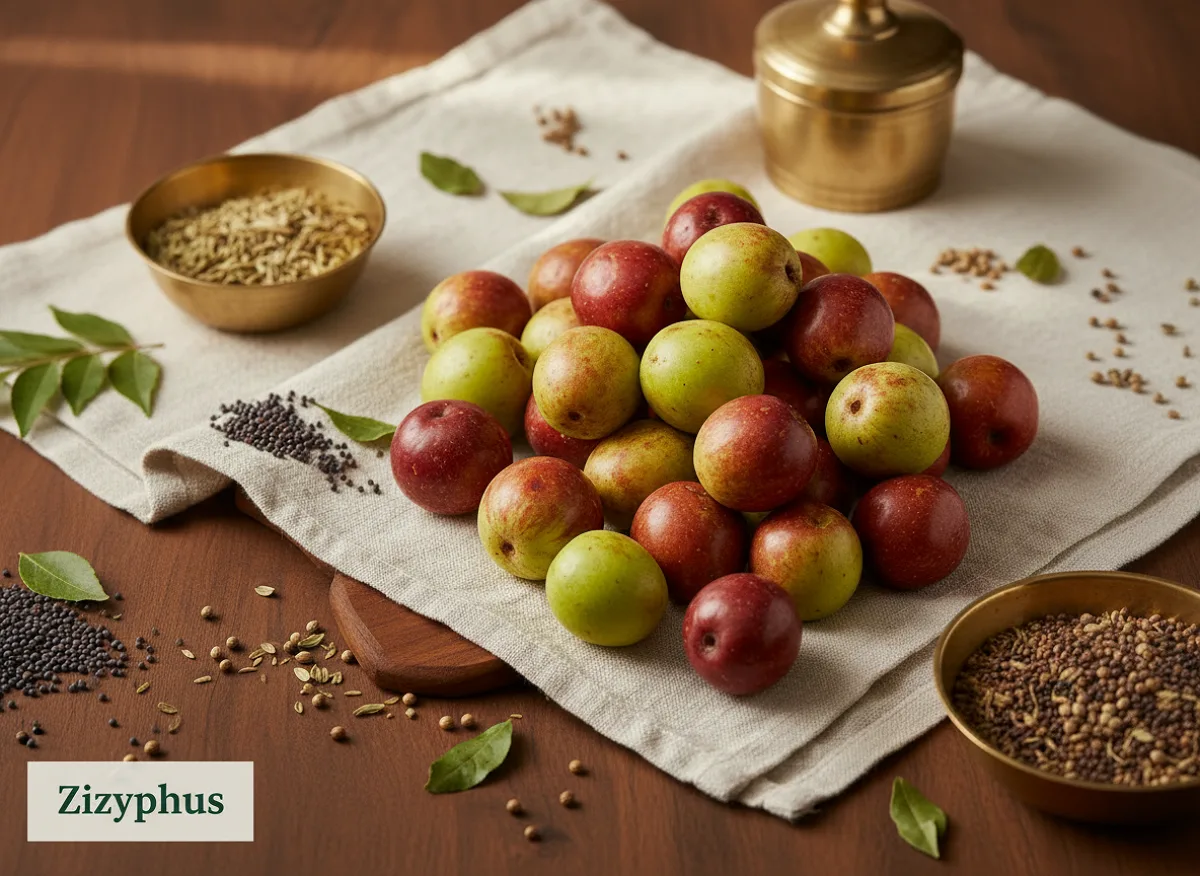
Zizyphus, or ber (बेर), is a small round or oval fruit with thin, smooth skin that ripens from green to deep red or brown. Crisp, juicy, and mildly sweet with a subtle tartness, it is eaten fresh, dried, or made into chutneys and pickles across India. The fruit is particularly va...
Nutrition per 100 g
Edible portion values from the master catalog.
More macros
Classification
About Zizyphus
What it is
Zizyphus, commonly called ber (बेर) in Hindi and regional Indian languages, is a small stone fruit with thin, smooth skin that ranges from pale green when unripe to deep red, brown, or almost black when fully mature. The flesh inside is crisp, juicy, and pale yellow, with a single hard pit in the centre. The taste is mildly sweet with a subtle tartness and slight astringency, making it refreshing when eaten fresh and complex when dried or preserved. Zizyphus trees are hardy, drought-tolerant plants found across India, particularly in arid and semi-arid regions of Rajasthan, Gujarat, Uttar Pradesh, and the Deccan plateau. (IFCT 2017, Ref #E068)
Use in Indian Kitchen
Fresh ber is eaten as a simple roadside snack, often dusted with salt and chilli powder for a tangy-spicy bite. In North Indian homes, it is dried and stored for winter use, then rehydrated in warm milk or water for a comforting drink. Ber is also made into chutneys (raw or cooked with jaggery and spices), pickles, and murabba (fruit preserve). In Rajasthan and Gujarat, dried ber is pounded into flour for use in traditional sweets and energy balls. A practical tip: ripe ber bruises easily, so handle gently and consume within a day or two of purchase, or dry them whole in the sun for longer storage. The fruit pairs beautifully with tamarind, jaggery, and warming spices like ginger and cardamom.
Key Nutrients
Zizyphus is a good source of vitamin C, which supports immunity and skin health. It also contains dietary fibre, potassium, and small amounts of iron and calcium. The fruit is low in calories and fat, making it a light, nourishing snack. Exact nutrient composition varies with ripeness and growing conditions; refer to IFCT 2017 for detailed values.
Health Benefits (Evidence-based)
- May support immune function due to its vitamin C content.
- Dietary fibre aids digestion and may promote healthy bowel function.
- Traditionally used in Ayurvedic and folk medicine to calm the mind and support restful sleep.
- Potassium content may help maintain healthy blood pressure and heart function.
- Antioxidants present in the fruit may help protect cells from oxidative stress.
Culinary Uses (Vegetarian)
- Fresh ber eaten as a snack, plain or with salt and chilli powder.
- Dried ber rehydrated in warm milk or water for a soothing drink.
- Ber chutney made with jaggery, ginger, and spices.
- Ber pickle (achar) preserved in oil and spices for year-round use.
- Ber murabba (fruit preserve) served with bread or as a sweet condiment.
- Dried ber powder mixed into energy balls (laddu) with nuts and seeds.
Caution
- The hard pit poses a choking risk for young children; supervise consumption.
- Those with sensitive teeth may find the astringency of unripe ber uncomfortable.
- Dried ber is high in natural sugars; consume in moderation if managing blood sugar levels.
- Allergic reactions are rare but possible; discontinue use if any unusual symptoms occur.
References
- Indian Council of Medical Research - National Institute of Nutrition (ICMR-NIN). Indian Food Composition Tables (IFCT) 2017. Hyderabad: NIN; 2017. [Reference code E068]
- Vaya, J. & Mahmood, U. (2006). Flavonoid content in leaf extracts of the fig (Ficus carrica), carob (Ceratonia siliqua), and locust bean (Ceratonia siliqua) trees. Journal of Agricultural and Food Chemistry, 54(20), 7651-7654. [General antioxidant reference for related stone fruits]
Sourcing & Storage
Storage
Store fresh ber in a cool, dry place or in the refrigerator in a perforated plastic bag or open container to allow air circulation. Keep away from direct sunlight and moisture. In warm, humid Indian climates, refrigeration extends shelf life significantly. For long-term storage, dry whole ber in the sun until completely hard and brittle, then store in an airtight glass jar or cloth bag in a cool, dark cupboard away from insects and moisture.
Shelf Life
Fresh ber keeps for 2-4 days at room temperature in cool weather, or 5-7 days in the refrigerator. Once ripe, the fruit bruises easily and deteriorates quickly. Properly dried ber, stored in an airtight container in a cool, dry place, will keep for several months to a year. After opening a jar of ber pickle or murabba, consume within 2-3 weeks if stored in the refrigerator, or follow the manufacturer's guidance for packaged products.
Check Before You Buy
Choose ber that is firm to the touch with unblemished, smooth skin. Ripe fruit should have a deep red or brown colour and yield slightly to gentle pressure. Avoid fruit with soft spots, cracks, or signs of mould. Fresh ber from the mandi (market) is best bought in season (October to December in most of India); out-of-season fruit may be imported or stored longer and less flavourful. When buying dried ber, check that the pieces are whole, hard, and free from dust or insect damage. Packaged ber products should have clear labelling and no signs of moisture or clumping inside the packet.
In Ayurveda
In classical Ayurvedic texts, jujube (ber) is recognized for its cooling (sheet) and nourishing properties. It is traditionally considered beneficial for balancing Pitta dosha and is used to support digestion and general vitality. The fruit is often recommended in Ayurvedic preparations for its mild laxative action and its ability to strengthen tissues (dhatu). However, it is typically advised in moderation, as excessive consumption may increase heaviness (guru guna).