Apricot
Prunus armeniaca · Also known as खुबानी
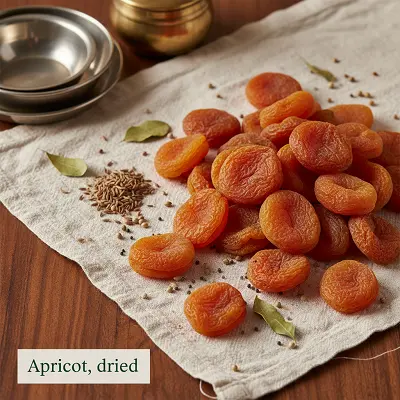
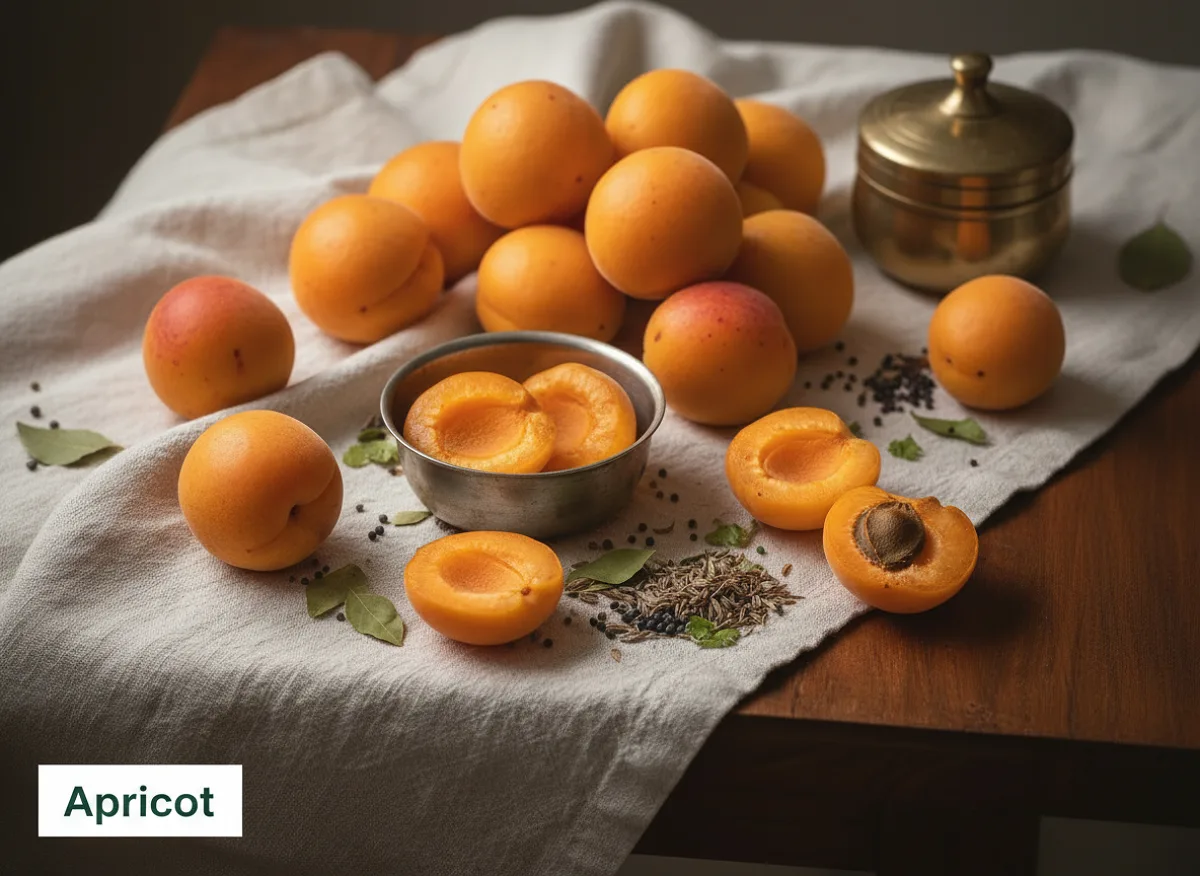
Apricot (खुबानी, khubani) is a golden-orange stone fruit rich in beta-carotene, fibre, and natural sugars. Commonly eaten fresh or dried in Indian kitchens, it brings sweetness and nutrition to chutneys, desserts, and everyday snacks. (IFCT 2017, Ref #E006)
Nutrition per 100 g
Mean values ± IFCT published SD (edible portion).
More macros
Classification
About Apricot
What it is
Apricot is a small, velvety stone fruit with a warm golden-orange flesh and a single hard pit inside. Native to Central Asia, it thrives in cooler Indian regions - Kashmir, Himachal Pradesh, and parts of Uttarakhand are known for quality apricots. The fruit is eaten fresh during summer or dried year-round as a shelf-stable snack. (IFCT 2017, Ref #E006)
Use in Indian Kitchen
Fresh apricots are less common in everyday Indian home cooking than mangoes or guavas, but dried apricots (सूखी खुबानी) are a beloved pantry staple. In North India, they feature in rich Mughlai-influenced dishes - biryanis, kormas, and meat curries (though vegetarian versions use them in paneer or vegetable preparations). Apricot pulp or paste goes into chutneys, jams, and traditional barfi. In Kashmir, apricots are candied or made into preserves. Across India, dried apricots are nibbled as a quick energy snack, soaked in milk for children, or stewed into compotes. The fruit carries a nostalgic, almost festive quality - a treat from the hills.
Key Nutrients
Apricots are notably rich in beta-carotene (provitamin A), which gives them their bright colour. They also contain fibre, potassium, and small amounts of iron and calcium. Dried apricots concentrate these nutrients, making them denser in calories and minerals than fresh fruit. Exact nutrient composition is documented in IFCT 2017 for both fresh and dried forms.
Health Benefits (Evidence-based)
- High in beta-carotene, which may support eye health and skin wellness.
- Good source of dietary fibre, linked to digestive regularity and satiety.
- Potassium content may help maintain healthy blood pressure and heart function.
- Natural antioxidants in apricots are associated with general cellular protection.
- Dried apricots provide quick energy and are traditionally used to address mild anaemia (iron-rich snack).
Culinary Uses (Vegetarian)
- Dried apricots in vegetable biryanis, pulao, and khichdi.
- Fresh apricot chutney or pickle alongside Indian breads and curries.
- Apricot jam or paste in barfi, halwa, and traditional sweets.
- Soaked dried apricots in milk-based desserts, kheer, and falooda.
- Stewed apricots as a breakfast compote or side to yoghurt and granola.
- Apricot pulp blended into lassi or smoothies.
Caution
- Dried apricots are calorie and sugar-dense; portion control is wise for those managing blood sugar or weight.
- The pit contains compounds that break down into cyanide if consumed in large quantities; always discard pits.
- Some people may experience mild digestive upset if eating large amounts of dried apricots due to fibre and natural sugars.
- Those with stone fruit allergies (oral allergy syndrome) should be cautious with fresh apricots.
References
- Indian Council of Medical Research - National Institute of Nutrition (ICMR-NIN). Indian Food Composition Tables (IFCT) 2017. Reference #E006 (Apricot, fresh and dried).
- National Institute of Nutrition, ICMR. Nutritive Value of Indian Foods. Hyderabad: NIN Publications.
Health Benefits
- Supports Digestion
- Boosts Immunity
- Heart Health Support
- Improves Skin Health
Sourcing & Storage
Storage
Fresh apricots are delicate and best kept in a cool, well-ventilated place or the refrigerator crisper drawer (away from direct sunlight and moisture). In warm Indian climates, refrigeration extends shelf life. Dried apricots should be stored in an airtight container or glass jar in a cool, dry cupboard, away from heat and humidity. Keep them away from direct sunlight to preserve colour and prevent oil oxidation.
Shelf Life
Fresh apricots last 3 - 5 days at room temperature in cool weather, or up to 1 - 2 weeks in the refrigerator. Dried apricots, when stored in an airtight container in a cool, dry place, remain fresh for 6 - 12 months. Once opened, consume within a few weeks and reseal the container tightly to prevent moisture absorption and mould.
Check Before You Buy
When buying fresh apricots, look for fruit that yields slightly to gentle pressure - not rock-hard or mushy. The skin should be a deep golden-orange with no large blemishes, bruises, or dark spots. Avoid any with a fermented or off smell. In Indian mandis and kirana shops, ask for apricots from Kashmir or Himachal Pradesh for better quality. Dried apricots should be plump, evenly coloured, and free of mould or crystallisation. Check the packaging date and avoid any with a rancid or musty odour, which signals poor storage.