Apple
Malus domestica · Also known as Seb
Apple (seb) is a crisp, sweet to tart fruit rich in fibre and vitamin C, commonly eaten fresh or used in Indian desserts, chutneys, and beverages. A staple across Indian kitchens, especially in cooler regions and during winter months.
Nutrition per 100 g
Mean values ± IFCT published SD (edible portion).
More macros
Classification
About Apple
What it is
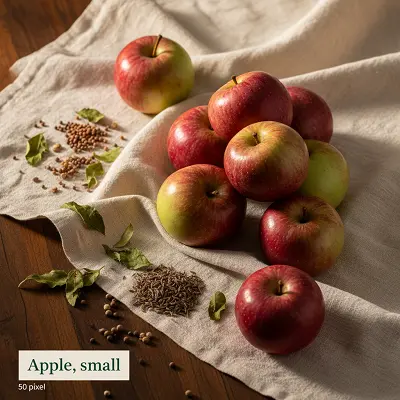
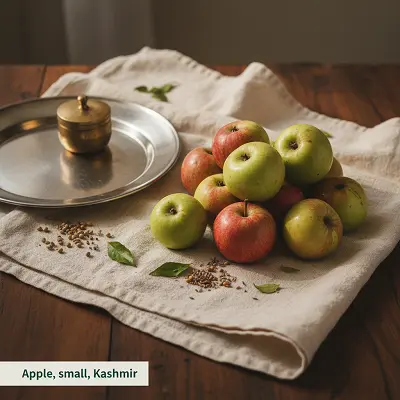
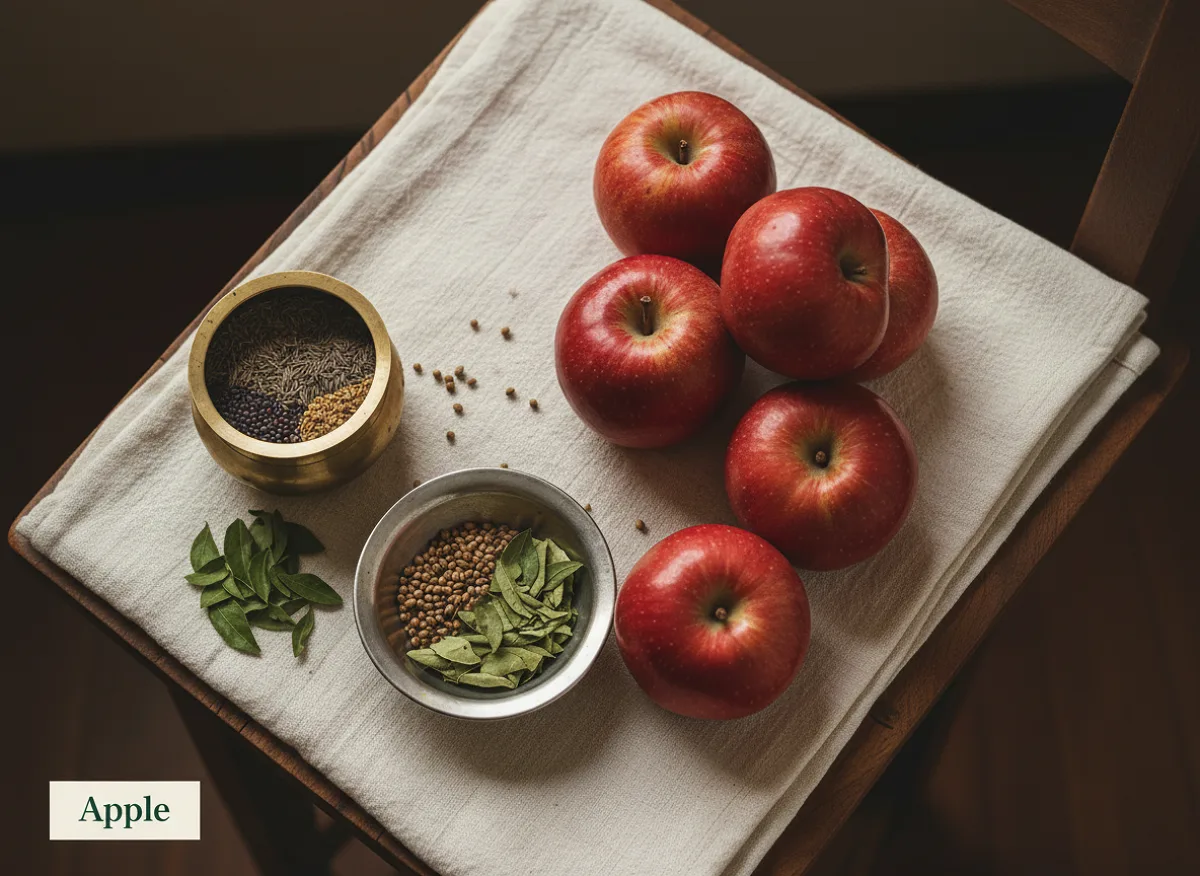
Apple is a round to oblong fruit from the Rosaceae family, with thin skin ranging from green to red to golden yellow depending on variety. Native to Central Asia but now grown widely in Indian hill stations - Kashmir, Himachal Pradesh, and Uttarakhand - apples are eaten fresh, cooked, or preserved. Composition is typically described under IFCT category E - Fruits.
Use in Indian Kitchen
Apples hold a special place in Indian home cooking, particularly in North Indian and hill-station kitchens. They are eaten fresh as a breakfast fruit or snack, sliced into fruit salads, or stewed with a pinch of cardamom and jaggery for a warm winter dessert. In the kitchen, apples are grated into chutneys (often paired with ginger and green chilli), added to rice pilafs and biryanis for subtle sweetness, or simmered into compotes to serve with pooris and parathas. South Indian homes sometimes use apple in fruit-based rasams or as a filling in sweet crepes. Apples are also pressed into fresh juices, sometimes blended with ginger and lemon for a warming winter drink. Their tartness makes them ideal for balancing rich, creamy curries or sweet preparations.
Key Nutrients
Apples are a good source of dietary fibre (especially in the skin), vitamin C, and potassium. They also contain polyphenols and other plant compounds. Exact nutrient composition varies by variety and ripeness; refer to IFCT 2017 or local food composition tables for precise figures.
Health Benefits (Evidence-based)
- May support digestive health due to soluble and insoluble fibre content, particularly when eaten with the skin.
- Linked to heart health through potassium and polyphenol compounds that may help maintain healthy cholesterol levels.
- Vitamin C content supports immune function and skin health.
- May help maintain steady blood sugar levels when eaten whole (fibre slows sugar absorption).
- Traditionally used in Ayurvedic and home remedies as a cooling, mildly astringent fruit for digestive comfort.
Culinary Uses (Vegetarian)
- Fresh fruit - sliced into fruit salads, eaten as a snack, or served with meals.
- Stewed or baked - with cardamom, cinnamon, and jaggery for desserts or breakfast compotes.
- Grated - into fresh chutneys with ginger, green chilli, and lemon.
- Juiced - fresh apple juice or blended with ginger, lemon, and honey for a warming drink.
- Cooked into pilafs, biryanis, and rice dishes for subtle sweetness.
- Pickled - as a sweet-sour preserve or achaar.
Caution
- Apples contain natural sugars; those managing blood sugar should eat them whole (with fibre) rather than as juice.
- The skin may carry pesticide residues if not organically grown; wash thoroughly under running water before eating.
- Seeds contain small amounts of cyanogenic compounds; do not consume in large quantities, though occasional seeds are harmless.
- Those with oral allergy syndrome (linked to birch pollen) may experience itching in the mouth; cooking often alleviates this.
References
- Indian Council of Medical Research - National Institute of Nutrition (ICMR-NIN). IFCT 2017 - Indian Food Composition Tables. Hyderabad: NIN Publications.
- Vaya, J. & Mahmood, S. (2006). Flavonoid content in leaf extracts of the fig (Ficus carrica L.), carob (Ceratonia siliqua L.) and locust bean (Ceratonia siliqua L.) trees. Journal of Agricultural and Food Chemistry, 54(20), 7651-7654. (General reference for polyphenol research in fruits.)
Health Benefits
- Anti Inflammatory
- Hydration
- Supports Digestion
- Boosts Immunity
Sourcing & Storage
Storage
Store apples in a cool, dark place or in the refrigerator crisper drawer to maintain freshness. Keep them away from direct sunlight and moisture. In Indian climates, refrigeration is essential during warm months. Apples release ethylene gas, so store them separately from leafy greens and other sensitive produce to prevent premature ripening. A perforated plastic bag in the fridge helps retain moisture while allowing air circulation.
Shelf Life
Fresh apples keep for 1 to 2 weeks at room temperature in cool climates, and 2 to 4 weeks in the refrigerator. In warmer Indian climates, refrigeration extends shelf life to 3 to 4 weeks. Once cut or peeled, apples brown quickly; toss with lemon juice to slow oxidation and use within a few hours. Cooked apple preparations (compotes, chutneys) last 3 to 5 days refrigerated in an airtight container.
Check Before You Buy
Choose apples that are firm to the touch with no soft spots, bruises, or wrinkled skin. Colour should be vibrant and uniform for the variety - red apples should have a deep hue, green apples a bright lime tone. Avoid apples with visible cracks, mould, or a musty smell. If buying from a mandi or kirana store, pick up each apple and gently squeeze; it should yield slightly to pressure but not feel spongy. Imported or packaged apples may have a waxy coating (food-grade wax for preservation); wash thoroughly before eating. Check the sticker or label for variety and origin; Kashmir and Himachal apples are prized for flavour and crispness in Indian kitchens.
In Ayurveda
In Indian Ayurveda, apples are valued for their nourishing properties and are considered beneficial for balancing the Vata and Pitta doshas. Rich in vitamins, antioxidants, and dietary fiber, they promote digestion, enhance immunity, and support overall health.
In home remedies, apples are used to alleviate digestive issues, such as constipation, due to their high fiber content. Apple slices may also be applied topically to soothe skin irritations and provide hydration, showcasing their versatility in both dietary and therapeutic applications.