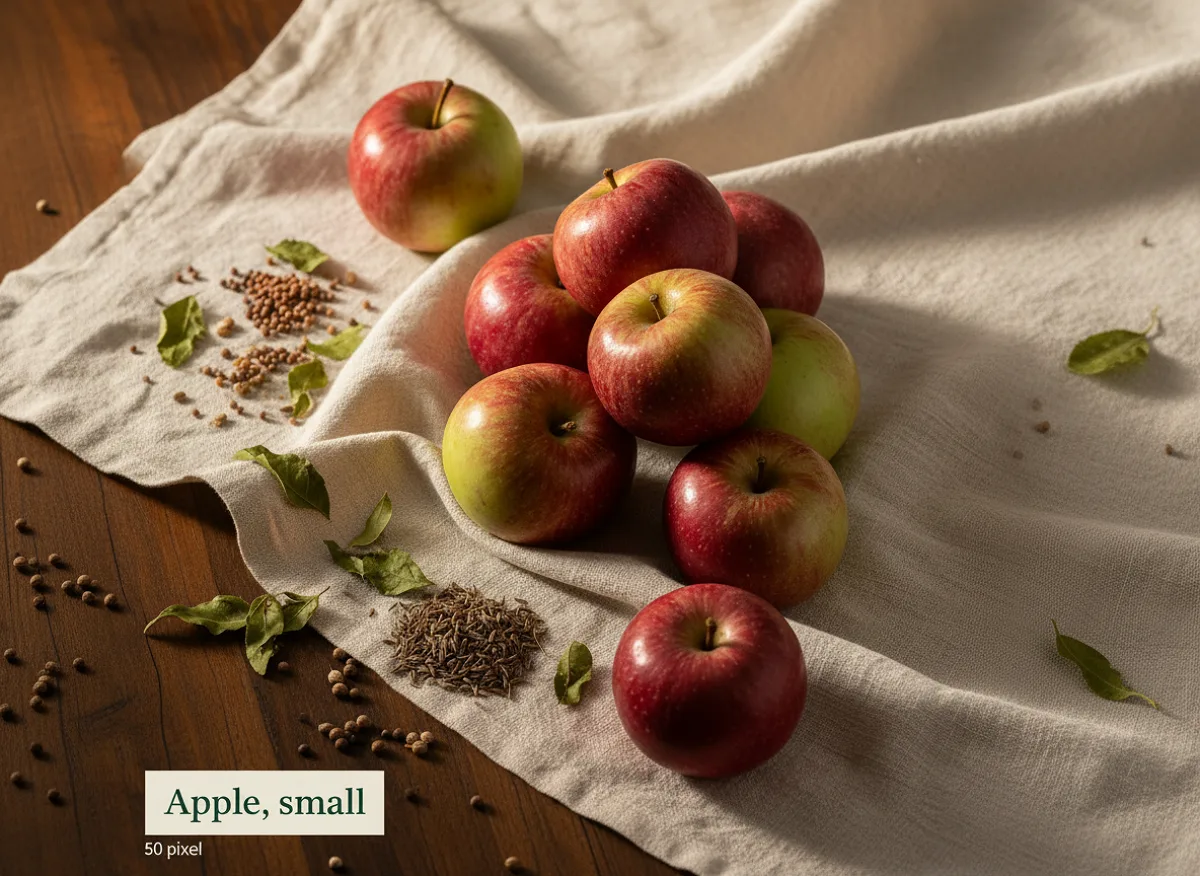
Apple, small
Malus domestica · Also known as Apel, Sev, Safarjan, Sebu, Tsoonth, Soh apple saw, Apple pazham, Sem, Safar chand, Shau, Seb, Seva, Sepu/Sema regu
A small, crisp fruit rich in fibre and natural sugars, apples are a staple across Indian kitchens and markets. Eaten fresh, stewed, or added to chutneys and desserts, they bring a gentle sweetness and digestive support to everyday meals (IFCT 2017, Ref #E003).
Nutrition per 100 g
Mean values ± IFCT published SD (edible portion).
More macros
Classification
About Apple, small
What it is
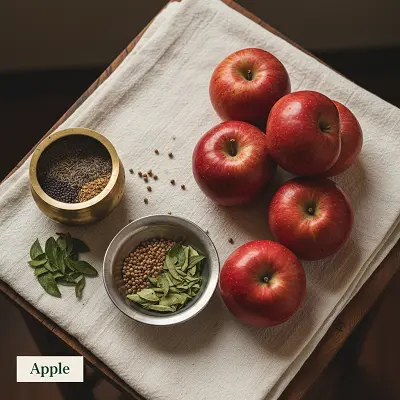
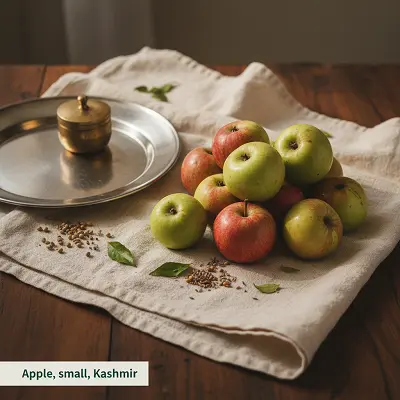
The apple is a round or slightly oblong fruit with thin, smooth skin ranging from red, green, or yellow depending on variety. Native to Central Asia but now grown widely across Indian hill stations - Kashmir, Himachal Pradesh, and Uttarakhand - apples are one of the most accessible temperate fruits in Indian markets year-round. Small apples, typically 100-150g, are favoured for snacking and cooking in home kitchens (IFCT 2017, Ref #E003).
Use in Indian Kitchen
Apples hold a quiet place in Indian home cooking, less flashy than mangoes or bananas but deeply practical. In North India, they appear sliced in fruit chaat, stewed with a pinch of cardamom for children's meals, and grated into halwa. In the South, they are sometimes added to fruit salads or served as a cooling dessert after spiced meals. Across regions, apples are peeled and added to chutneys - particularly apple-ginger or apple-mint versions - and their natural pectin makes them useful in homemade jams and preserves. During winter months, when local stone fruits fade, apples become the everyday fruit in many Indian households, offering a crisp, refreshing bite that pairs well with warm spices like cinnamon and clove.
Key Nutrients
Apples are a good source of dietary fibre (especially in the skin), natural sugars (glucose, fructose), and vitamin C. They also contain polyphenols and antioxidants. Exact nutrient composition varies by variety and ripeness; refer to IFCT 2017 for detailed micronutrient profiles.
Health Benefits (Evidence-based)
- High in soluble fibre, which may support digestive health and help maintain steady blood sugar levels.
- Contains polyphenols linked to antioxidant activity, supporting general cellular health.
- Vitamin C content supports immune function and skin health.
- May help maintain healthy cholesterol levels when consumed regularly as part of a balanced diet.
- The natural sugars and fibre combination makes apples a satisfying, lower-glycemic fruit choice.
Culinary Uses (Vegetarian)
- Fresh, sliced in fruit chaat with chaat masala and lemon juice.
- Stewed with cardamom and a touch of ghee for a simple dessert or breakfast dish.
- Grated into halwa or kheer for sweetness and texture.
- Added to apple-ginger or apple-mint chutneys to serve with meals.
- Sliced into salads with pomegranate, walnuts, and a light dressing.
- Cooked into homemade jams and preserves with spices like cinnamon and clove.
- Blended into smoothies with curd and honey for a cooling drink.
Caution
Apples are generally safe for most people. Those with fructose intolerance or IBS may need to limit intake or peel the fruit. Always wash apples thoroughly before eating, especially if not organically grown, to remove any surface residues. Store away from strong-smelling foods as apples absorb odours easily.
References
- Indian Council of Medical Research - National Institute of Nutrition. IFCT 2017: Indian Food Composition Tables. Hyderabad: NIN, ICMR.
- National Institute of Nutrition, ICMR. Dietary Guidelines for Indians - A Manual. New Delhi: ICMR.
Sourcing & Storage
Storage
Store apples in a cool, dark place or in the refrigerator crisper drawer, ideally at 4-7°C. Keep them in a perforated plastic bag or open container to allow air circulation and prevent moisture buildup. In Indian climates, especially during warm months, refrigeration extends shelf life significantly. Keep apples away from direct sunlight and strong-smelling foods, as they absorb odours readily.
Shelf Life
A small apple stored in a cool room lasts 3-5 days; in the refrigerator, 1-2 weeks or longer depending on freshness at purchase and variety. Once cut or peeled, use within a few hours or store in an airtight container in the fridge for up to 24 hours. Stewed or cooked apple dishes keep refrigerated for 2-3 days.
Check Before You Buy
Choose apples that feel firm to gentle pressure, with unblemished, glossy skin free of soft spots, bruises, or wrinkled patches. The fruit should have a pleasant, mild apple aroma. Avoid apples that are very hard (underripe) or feel mushy (overripe). At the mandi or kirana shop, pick apples that are heavy for their size - a sign of good juice content. Imported apples in sealed packaging should show a clear date; locally grown hill-station apples are often fresher and less treated with preservatives.