Apricot, dried
Prunus armeniaca · Also known as Malhoi, Suska khubani, Jardaloo (Suka velu), Khoomani, Jaldaru Hannu, Tser, Sheema bedhaam pazham, Malhei, Jardaalu, Khattu, Kharamani, Seema Badam/ Jallaru Pandu, Sakkarai badhami
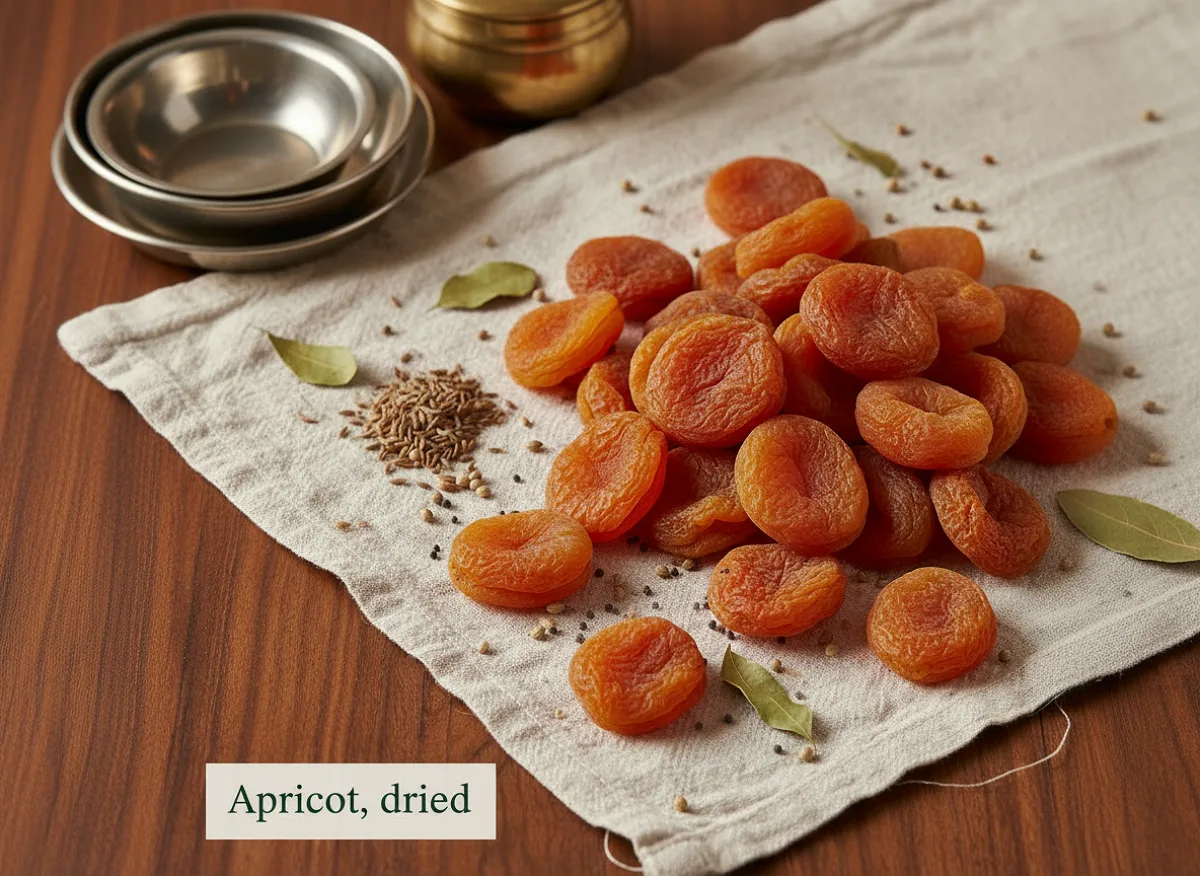
Dried apricots are sun-dried stone fruits with a sweet, tangy flavour and chewy texture, commonly used in Indian sweets, chutneys, and festive dishes. Rich in fibre and natural sugars, they add both nutrition and a touch of luxury to everyday cooking (IFCT 2017, Ref #E005).
Nutrition per 100 g
Mean values ± IFCT published SD (edible portion).
More macros
Classification
About Apricot, dried
What it is
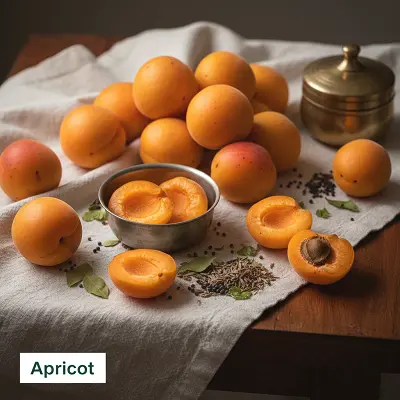
Dried apricots are the dehydrated form of the stone fruit Prunus armeniaca, with a deep golden to amber colour and a concentrated sweet-tart flavour. They are typically sun-dried whole or halved, retaining their natural sugars and chewy texture. Composition data is recorded under IFCT 2017, Ref #E005.
Use in Indian Kitchen
Dried apricots hold a special place in Indian festive and celebratory cooking. In North India, they feature in rich pulaos, biryanis, and kheer, often paired with nuts and ghee. In the South, they appear in payasams and are sometimes used in chutneys. They are a staple in Mughlai cuisine and are treasured during Diwali and wedding feasts. Beyond sweets, they lend a subtle fruity depth to savoury curries and rice dishes. Their natural sweetness means less added sugar is needed, making them a thoughtful choice for home cooks aiming for balanced flavour.
Key Nutrients
Dried apricots are a good source of dietary fibre, potassium, and natural sugars. They also contain iron, magnesium, and vitamin A (as beta-carotene), which gives them their warm golden hue. Exact nutrient composition per serving is detailed in IFCT 2017, Ref #E005.
Health Benefits (Evidence-based)
- May support digestive health due to their fibre content, helping maintain regular bowel function.
- Linked to bone health through their mineral profile, particularly potassium and magnesium.
- The natural antioxidants, including beta-carotene, may help protect cells from oxidative stress.
- Traditionally used in Ayurvedic and folk medicine to support energy and vitality, especially during recovery or seasonal transitions.
- May help maintain steady blood sugar when consumed in moderation as part of a balanced meal, due to their fibre content.
Culinary Uses (Vegetarian)
- Pulaos and biryanis - layered with rice, ghee, and spices for festive meals.
- Kheer and payasam - simmered into creamy rice or lentil puddings.
- Chutneys and preserves - blended with spices, ginger, and jaggery for a sweet-savoury condiment.
- Curries and sabzis - added to vegetable or paneer dishes for subtle sweetness and texture.
- Halwa and barfi - ground or chopped into traditional Indian sweets.
- Trail mixes and snacking - paired with nuts and seeds for a quick energy boost.
Caution
- High in natural sugars; those managing blood sugar or diabetes should consume in measured portions.
- May cause digestive discomfort if eaten in large quantities due to fibre content; introduce gradually.
- Dried apricots are sometimes treated with sulphites as a preservative; check labels if you have sensitivities.
- Choking risk for very young children; soak or chop finely before serving.
References
- Indian Council of Medical Research - National Institute of Nutrition (ICMR-NIN). Indian Food Composition Tables 2017. Hyderabad: NIN; 2017. [Ref #E005 - Fruits category]
- National Institute of Nutrition, ICMR. Dietary Guidelines for Indians - A Manual. 2nd ed. Hyderabad: NIN; 2011.
Sourcing & Storage
Storage
Store dried apricots in an airtight container or resealable pouch in a cool, dry place away from direct sunlight and moisture. In warm, humid Indian climates, refrigeration in an airtight glass jar or container is ideal to prevent mould and insect infestation. Keep away from strong-smelling foods, as dried apricots absorb odours easily.
Shelf Life
Well-stored dried apricots keep for 6 to 12 months in a cool pantry, and up to 18 months in the refrigerator. Once opened, transfer to an airtight container and consume within 2 to 3 months for best flavour and texture. If stored in the freezer, they remain safe indefinitely but are best used within a year.
Check Before You Buy
Choose dried apricots with a deep golden to amber colour and a slightly soft, pliable texture - avoid hard, brittle pieces or those with white spots (mould). Smell them if possible; they should have a sweet, fruity aroma with no musty or off odours. Check the packaging for any mention of added sugar or sulphites if you prefer unsulphured varieties. Buy from reputable kirana shops or trusted brands to ensure quality and freshness. Avoid apricots that clump together heavily, as this may indicate excess moisture or age.