Avocado
Persea americana · Also known as एवोकाडो, evokaado, makkhan fal, alligator pears
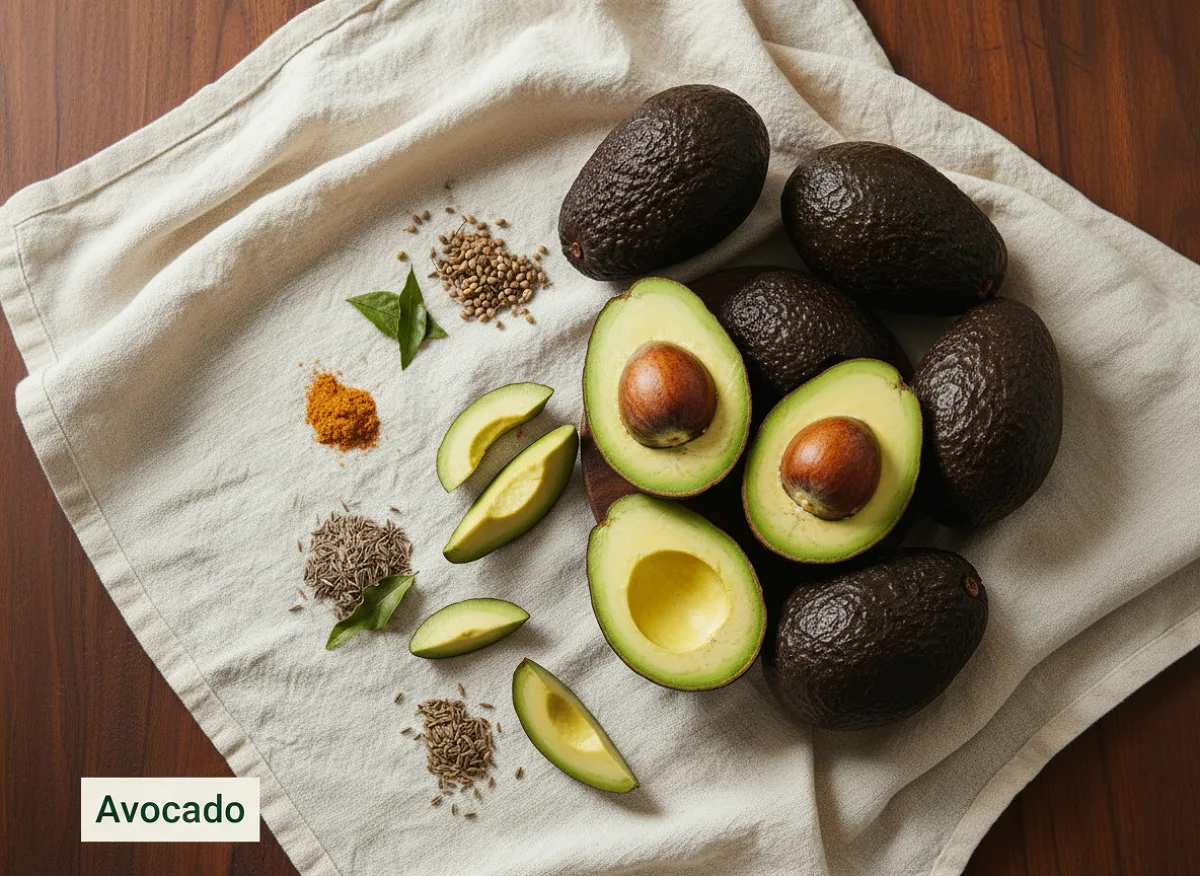
Avocado (एवोकाडो, makkhan fal) is a creamy, nutrient-dense fruit native to Mexico, increasingly popular in Indian kitchens for salads, spreads, and smoothies. Rich in healthy fats, fibre, and vitamins, it brings a buttery texture to both traditional and modern Indian dishes.
Nutrition per 100 g
Edible portion values from the master catalog.
More macros
Classification
About Avocado
What it is
Avocado is a pear-shaped fruit with pale green to dark flesh and a large central stone. Native to Mexico but now cultivated in tropical and subtropical regions worldwide, it has become a modern addition to Indian urban kitchens. The fruit is prized for its creamy texture and mild, slightly nutty flavour. Composition data for avocado is typically described under the IFCT category label for fruits (E - FRUITS).
Use in Indian Kitchen
While not a traditional ingredient in classical Indian cooking, avocado has found its place in contemporary Indian home kitchens, especially in metros and health-conscious households. It pairs well with Indian spices in salads, can be mashed into a simple guacamole-style dip with lime and chaat masala, and blends smoothly into lassi or fruit smoothies. Some cooks use it as a creamy base in sandwiches or toast, sometimes topped with a sprinkle of chaat masala or cumin. It is also gaining popularity in fusion bowls and as a side with Indian breakfasts. Unlike ghee or coconut, avocado brings a Western wellness angle to the Indian table, though its richness makes it feel indulgent rather than everyday.
Key Nutrients
Avocado is notably rich in monounsaturated fats (the "good" fats), dietary fibre, potassium, vitamin E, vitamin C, and B vitamins including folate. It also contains small amounts of magnesium, copper, and antioxidants such as lutein and zeaxanthin. The exact nutrient profile per 100 g can vary by cultivar and ripeness; for precise figures, refer to the IFCT or USDA Food Composition Database.
Health Benefits (Evidence-based)
- May support heart health due to high monounsaturated fat content, which is linked to improved cholesterol levels.
- High in dietary fibre, which may aid digestion and help maintain stable blood sugar levels.
- Rich in potassium, a mineral important for blood pressure regulation and overall cardiovascular function.
- Contains lutein and zeaxanthin, antioxidants traditionally associated with eye health.
- May promote satiety and support weight management when included as part of a balanced diet.
- Vitamin E content contributes to skin and immune health.
Culinary Uses (Vegetarian)
- Sliced or diced in fresh salads, especially with tomato, cucumber, and a squeeze of lemon or lime.
- Mashed into a simple dip with lime juice, green chilli, and chaat masala.
- Blended into smoothies or lassi for a creamy texture.
- Spread on toast or crackers, optionally topped with chaat masala, cumin, or fresh coriander.
- Added to fusion bowls with grains, roasted vegetables, and yoghurt dressing.
- Mixed into raita or used as a creamy side with Indian breakfasts.
Caution
- Avocado is calorie-dense; portion control is wise if weight management is a concern.
- Those with latex allergies may experience cross-reactivity, as avocado proteins can trigger similar responses in sensitive individuals.
- High fat content may not suit everyone; people with certain digestive conditions should consume in moderation.
- Avocado leaves and seeds are toxic and should never be consumed.
References
- Indian Council of Medical Research - National Institute of Nutrition (ICMR-NIN). Indian Food Composition Tables (IFCT 2017). Hyderabad: NIN; 2017.
- United States Department of Agriculture (USDA). FoodData Central. Accessed for avocado nutrient composition when IFCT data is limited.
Health Benefits
- Improves Digestion
- Provides Energy
- Supports Heart Health
- Boosts Muscle Function
Sourcing & Storage
Storage
Store unripe avocados at room temperature (20-25°C) away from direct sunlight until they soften. Once ripe, move them to the refrigerator (4°C) to slow further ripening and extend shelf life. To prevent browning after cutting, brush the exposed flesh with lemon or lime juice, wrap tightly in cling film, and refrigerate. In Indian climates with high humidity, keep avocados in a cool, dry place or the vegetable drawer of the fridge to avoid moisture-related spoilage.
Shelf Life
Unripe avocados kept at room temperature typically ripen within 3-7 days depending on variety and ambient temperature. Once ripe and refrigerated, they will keep for 3-5 days. Cut avocado, when wrapped and refrigerated, stays fresh for 1-2 days. Freezing is not recommended for whole fruit or halves, as the texture becomes mushy upon thawing, though avocado flesh can be mashed, mixed with lemon juice, and frozen in ice-cube trays for smoothies.
Check Before You Buy
Choose avocados that yield slightly to gentle pressure when held in the palm - they should feel neither rock-hard nor mushy. The skin colour varies by variety (some are dark green, others lighter), so colour alone is not a reliable ripeness indicator; feel is key. Avoid fruits with dark bruises, soft spots, or cracks. If buying from a mandi or kirana store, check that the fruit has no mould or signs of insect damage. Imported avocados are often sold in sealed packs; inspect the pack for any leakage or visible decay. For immediate use, select slightly softer fruit; for later consumption, choose firmer ones and ripen at home.
In Ayurveda
0