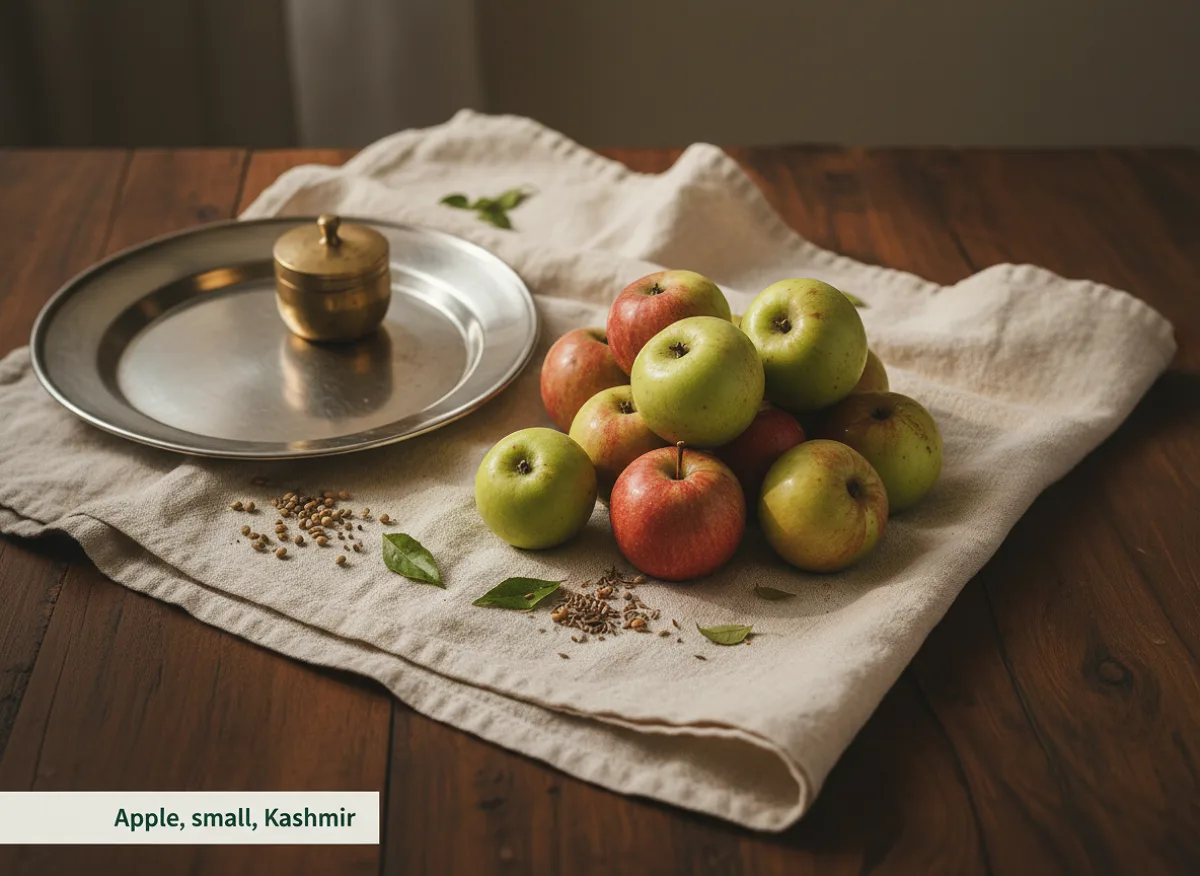
Apple, small, Kashmir
Malus sylvestris · Also known as Apel, Sev, Safarjan, Seb, Tsoonth, Soh apple saw, Apple pazham, Sem, Safar chand, Shau, Seva, Sepu/Sema regu
A crisp, sweet fruit grown in Kashmir's cool mountain valleys, apples are a staple across Indian homes and markets. Rich in fibre and vitamin C, they're eaten fresh, stewed, or added to chutneys and desserts. (IFCT 2017, Ref #E004)
Nutrition per 100 g
Edible portion values from the master catalog.
More macros
Classification
About Apple, small, Kashmir
What it is
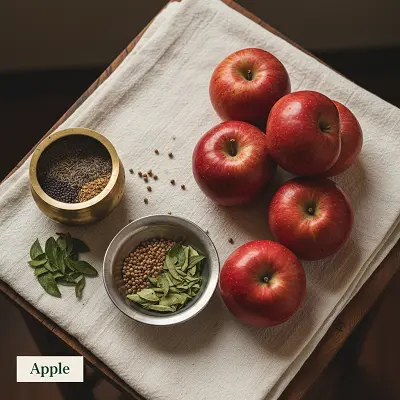
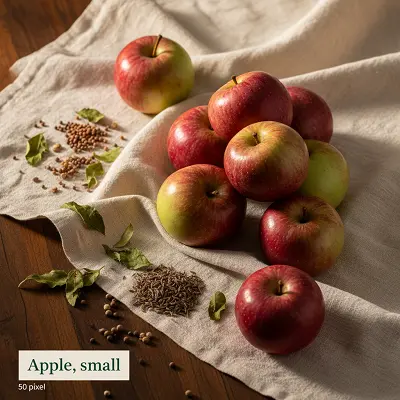
The apple is a firm, round fruit with smooth skin ranging from deep red to golden yellow, depending on variety and ripeness. Kashmir's cool climate produces some of India's most prized apples, known for their sweetness and crisp texture. Apples are eaten fresh, cooked, or preserved, and are one of the most widely consumed fruits across Indian households. (IFCT 2017, Ref #E004)
Use in Indian Kitchen
In North India, apples are eaten fresh as a breakfast fruit or snack, often paired with a sprinkle of salt and chaat masala. They're stewed with a touch of ghee and cardamom for a simple dessert, or grated into chutneys and pickles. In South Indian homes, apples appear less frequently but are valued in fruit salads and as a cooling fruit during summer. Kashmiri cuisine celebrates the local apple in traditional wazwan feasts, sometimes in meat dishes or as a sweet accompaniment. Apples are also dried and used in winter cooking, and their juice is a refreshing drink. The fruit carries a nostalgic weight in Indian childhoods - a lunchbox staple and a sign of good health.
Key Nutrients
Apples are a good source of dietary fibre (especially in the skin), vitamin C, and potassium. They also contain polyphenols and other plant compounds linked to antioxidant activity. Exact nutrient composition varies by variety and ripeness; refer to IFCT 2017 for detailed micronutrient profiles.
Health Benefits (Evidence-based)
- May support digestive health due to soluble fibre content, particularly pectin, which can help maintain regular bowel function.
- Linked to heart health through potassium and polyphenol content, which may help maintain healthy blood pressure and cholesterol levels.
- Vitamin C content supports immune function and collagen formation, particularly useful during seasonal changes.
- May help maintain steady blood sugar levels when eaten whole with skin, due to fibre and low glycaemic index.
- Traditionally used in Ayurvedic and home remedies as a cooling, easily digestible fruit for convalescence and gentle nutrition.
Culinary Uses (Vegetarian)
- Fresh fruit - eaten raw as a breakfast or snack, sometimes with a pinch of salt and chaat masala.
- Stewed apples - cooked gently with ghee, cardamom, and a touch of jaggery for a simple dessert or kheer topping.
- Apple chutney - grated or chopped apple mixed with ginger, green chilli, and salt for a fresh condiment.
- Fruit salads - combined with pomegranate, grapes, and a squeeze of lemon.
- Baked or roasted - stuffed with nuts and dried fruit for festive occasions.
- Apple juice or fresh juice blends - a refreshing drink, sometimes with a pinch of black salt.
- Dried apples - used in winter cooking, trail mixes, or rehydrated for compotes.
Caution
Apples are generally safe for most people. Those with fructose intolerance or irritable bowel syndrome may need to limit intake or peel the fruit. Pesticide residues can accumulate on apple skin; wash thoroughly under running water before eating. If buying packaged apple juice, check for added sugars and preservatives. Diabetics should eat whole apples rather than juice to benefit from fibre content.
References
- Indian Council of Medical Research - National Institute of Nutrition (ICMR-NIN). Indian Food Composition Tables (IFCT) 2017. Reference #E004 (Fruits category).
- National Institute of Nutrition, ICMR. Dietary Guidelines for Indians - A Manual. 2nd Edition, 2011.
Sourcing & Storage
Storage
Store apples in a cool, dark place away from direct sunlight. In Indian homes, a ventilated basket or cloth bag in a cool corner of the kitchen works well. For longer storage, keep apples in the refrigerator's crisper drawer, ideally in a perforated plastic bag to allow air circulation and prevent moisture buildup. Keep them away from strong-smelling foods like onions and garlic, as apples absorb odours easily. In warm or humid climates, refrigeration is essential to prevent rapid ripening and spoilage.
Shelf Life
Fresh apples stored at room temperature in a cool place last 5-7 days. In the refrigerator, they can last 2-4 weeks when kept in the crisper drawer. Once cut or peeled, apples should be used within a few hours to prevent browning; a squeeze of lemon juice slows discolouration. Apples do not freeze well whole, but can be sliced, blanched, and frozen for up to 8 months for use in cooking or stewing.
Check Before You Buy
Choose apples that feel firm and heavy for their size, with unblemished, glossy skin free of soft spots, bruises, or wrinkled patches. Avoid apples with visible mould, cracks, or cuts. The colour should be deep and even for the variety - Kashmir apples are typically deep red or golden. Smell the apple gently; it should have a mild, sweet fragrance. When buying from a mandi or kirana shop, ask about the harvest date and origin to ensure freshness. Packaged apples should have clear labelling with the date and storage instructions. Avoid apples that feel light or hollow, as they may be old or have internal rot.