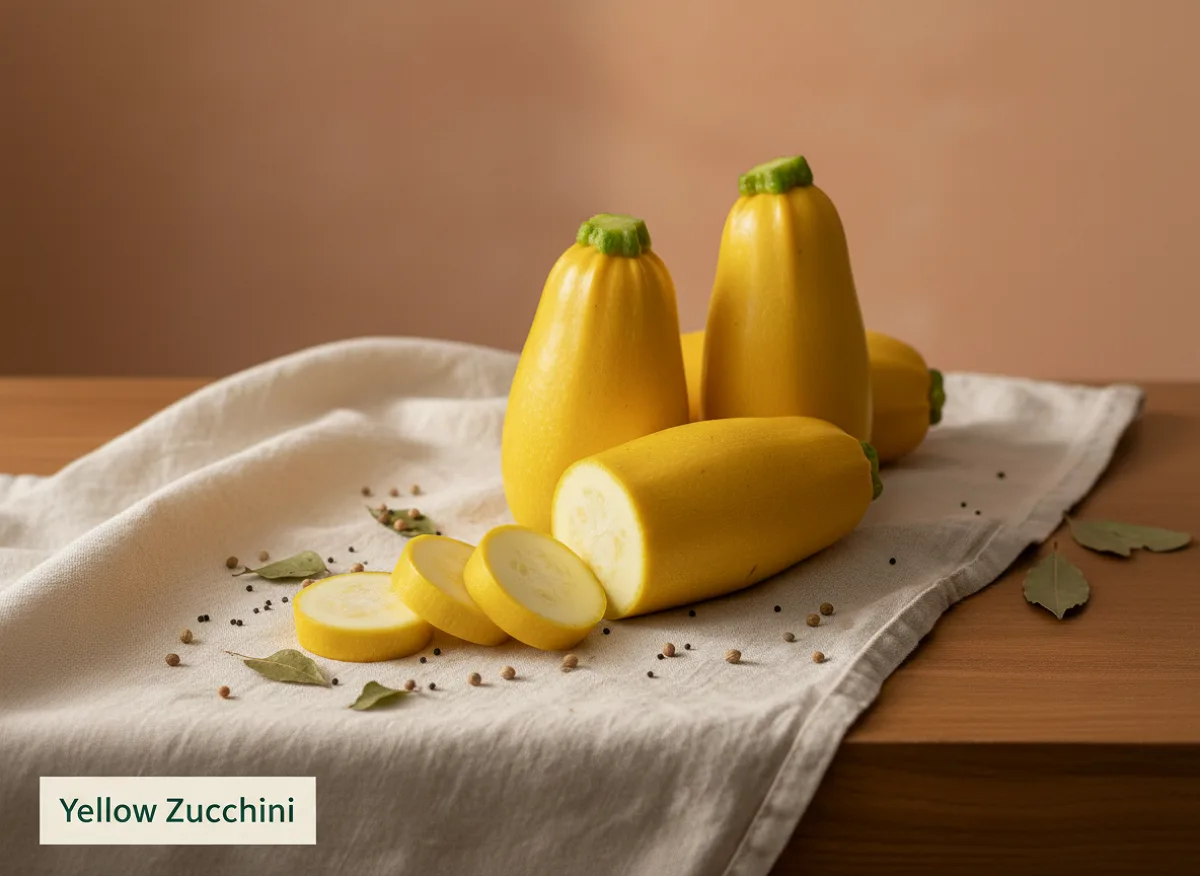
Yellow Zucchini
Cucurbita pepo · Also known as Peelee toree, yellow squash, golden zucchini
Yellow zucchini (पीली तोरी, peelee toree) is a mild, tender summer squash with smooth golden skin and pale flesh. Lighter and sweeter than its green cousin, it cooks quickly and absorbs flavours beautifully. Pan-fried with mustard seeds and curry leaves, stuffed with spiced besan...
Nutrition per 100 g
Edible portion values from the master catalog.
More macros
Classification
About Yellow Zucchini
What it is
Yellow zucchini (पीली तोरी, peelee toree) is a tender summer squash with smooth, thin golden skin and pale, watery flesh inside. It is milder and slightly sweeter than green zucchini, with a delicate, almost buttery taste when cooked. Fresh yellow zucchini is sold whole, medium-sized (6-8 inches), and is best used within days of purchase. (IFCT 2017, Ref #D078)
Use in Indian Kitchen
Yellow zucchini is a versatile addition to everyday vegetable curries and stir-fries. In South Indian kitchens, it appears in sambar, kootu, and poriyal (dry pan-fried rounds with coconut and spices). North Indian cooks stuff halved zucchini with spiced besan and onion, then shallow-fry until golden. It pairs beautifully with mustard seeds, curry leaves, and a pinch of turmeric in a simple tadka. A practical tip: slice it into thin rounds or half-moons and cook over medium-high heat to avoid a mushy texture; it releases water as it cooks, so don't add extra liquid at the start.
Key Nutrients
Yellow zucchini is mostly water (around 95%), making it very low in calories. It contains small amounts of vitamin C, potassium, and dietary fibre, along with trace minerals. Exact nutrient composition is documented in IFCT 2017 (Ref #D078).
Health Benefits (Evidence-based)
- Very low in calories and high in water content, supporting hydration and light digestion.
- Contains vitamin C, which may support immune function and skin health.
- Dietary fibre aids digestive regularity and may help maintain healthy cholesterol levels.
- Potassium content may help support heart and muscle function.
- Traditionally used in summer cooking for its cooling, easily digestible nature.
Culinary Uses (Vegetarian)
- Pan-fried rounds with mustard seeds, curry leaves, and turmeric (South Indian style).
- Stuffed halves with spiced besan and onion filling, shallow-fried.
- Sambar and kootu curries (South Indian vegetable stews).
- Poriyal - dry stir-fry with grated coconut and green chilli.
- Sliced thin and added to vegetable pulao or biryani.
- Pickled or preserved in oil with spices for longer storage.
Caution
Yellow zucchini is generally safe for all ages and poses no common allergies. Those with sensitive digestion may find it easier to digest when cooked soft rather than raw. Store-bought zucchini may carry pesticide residue; wash thoroughly before use.
References
- Indian Council of Medical Research - National Institute of Nutrition (ICMR-NIN). Indian Food Composition Tables (IFCT) 2017. Reference #D078 (Other Vegetables category).
- FSSAI Food Safety and Standards Authority of India. Vegetable Classification and Labelling Guidelines.
Health Benefits
- Hydration
- Supports Digestion
- Boosts Immunity
- Weight Management Support
- Heart Health Support
Sourcing & Storage
Storage
Store yellow zucchini in the vegetable drawer of the refrigerator, ideally in a perforated plastic bag or open container to allow air circulation. Keep away from ethylene-producing fruits (apples, bananas) which can speed ripening and spoilage. In warm Indian climates, use within 2-3 days for best texture and flavour. Do not wash before storage; wash only when ready to cook.
Shelf Life
Fresh yellow zucchini keeps for 3-5 days in the refrigerator when stored properly. Once cut, use the remaining piece within 1-2 days, storing it in an airtight container. Cooked zucchini dishes last 2-3 days in the fridge. Zucchini does not freeze well raw due to high water content, but cooked curries can be frozen for up to 1 month.
Check Before You Buy
Choose firm, unblemished yellow zucchini with smooth, glossy skin and no soft spots or wrinkles. Medium-sized squash (6-8 inches) are more tender than very large ones, which can have tough skin and watery flesh. Avoid any with dark patches, mould, or a dull, shrivelled appearance. At the mandi or kirana, gently press the skin - it should spring back, not leave an indent. Organic or pesticide-free varieties are preferable if available.
In Ayurveda
Yellow zucchini is not extensively documented in classical Ayurvedic texts as a named ingredient. However, as a light, watery summer vegetable with cooling properties, it aligns with Ayurvedic principles of seasonal eating and pitta-pacifying foods during warm months. Its high water content and gentle nature make it suitable for balancing excess heat in the body during summer.