Ash Gourd
Benincasa hispida · Also known as Safed Petha
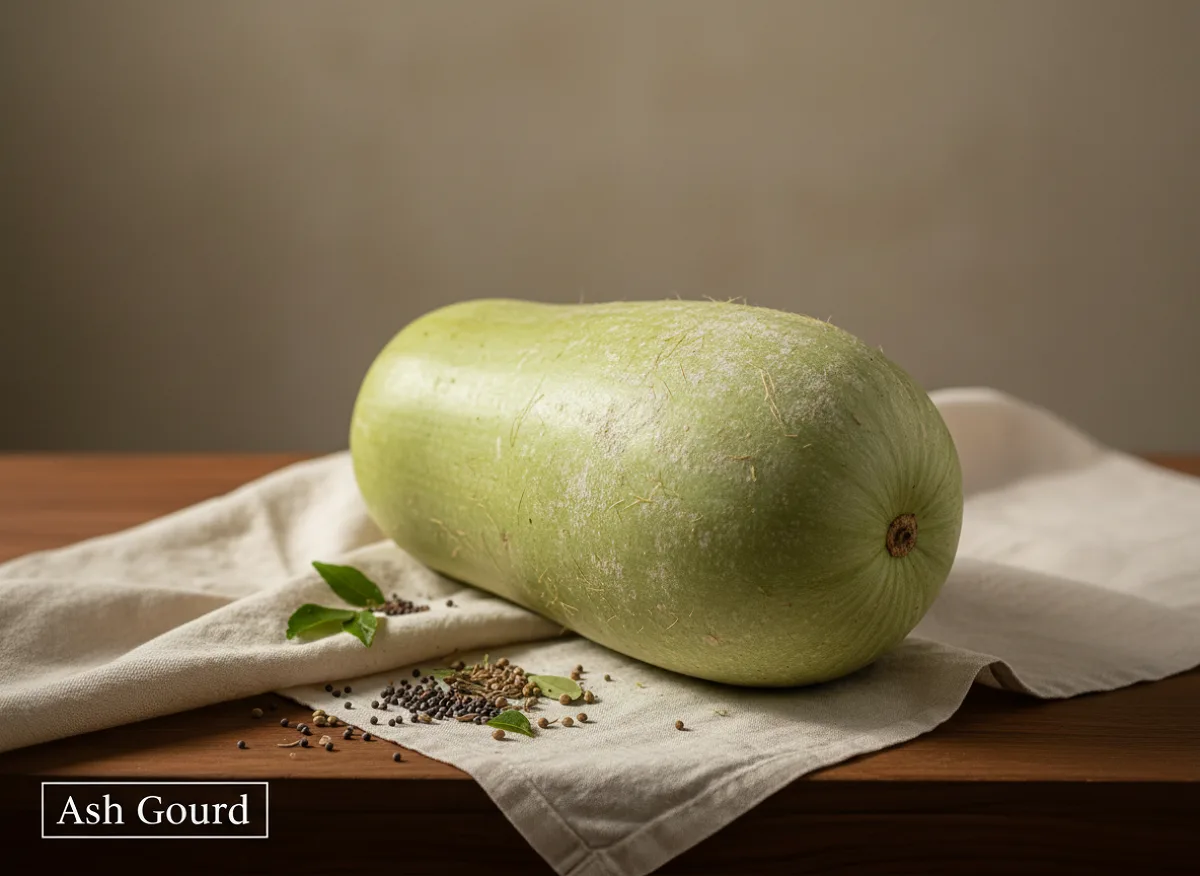
Ash gourd, also known as safed petha or winter melon, is a large pale-green or white squash commonly used across Indian kitchens in curries, stir-fries, and sweet preparations. Low in calories and rich in water content, it is a staple monsoon and winter vegetable (IFCT 2017, Ref...
Nutrition per 100 g
Mean values ± IFCT published SD (edible portion).
More macros
Classification
About Ash Gourd
What it is
Ash gourd is a large, round or oblong winter squash with a pale greenish-white or silvery-grey skin and white flesh inside. Native to South and Southeast Asia, it thrives in warm, monsoon-fed climates and is harvested year-round in India, peaking during the cooler months. The vegetable is prized for its mild, slightly sweet flavour and tender texture when cooked (IFCT 2017, Ref #D001).
Use in Indian Kitchen
Ash gourd holds a cherished place across Indian regional cooking. In South India, it features in sambar, avial, and coconut-based curries; in the North, it appears in sabzi and khichdi. The vegetable is equally at home in Bengali and Odia kitchens, where it is simmered with mustard seeds and turmeric. Beyond savoury dishes, ash gourd is transformed into a beloved sweet - petha candy, a translucent, syrup-soaked delicacy from Agra that graces festival tables and gift boxes. Its high water content and neutral flavour make it an ideal monsoon vegetable, cooling and easy to digest, often recommended in Ayurvedic seasonal eating.
Key Nutrients
Ash gourd is predominantly water (over 95%), making it very low in calories. It contains small amounts of dietary fibre, vitamin C, and minerals including potassium and magnesium. The exact nutrient profile is documented in IFCT 2017 (Ref #D001); values vary slightly depending on maturity and growing conditions.
Health Benefits (Evidence-based)
- May support hydration and electrolyte balance due to high water and potassium content, especially useful in hot climates.
- Low glycaemic index and calorie density may help with weight management and blood sugar stability when part of a balanced diet.
- Dietary fibre content may support digestive health and regular bowel function.
- Vitamin C and antioxidants may contribute to immune function and skin health.
- Traditionally used in Ayurvedic practice as a cooling, pitta-balancing vegetable suitable for summer and monsoon seasons.
- May help reduce inflammation and support kidney health in classical Indian wellness traditions, though clinical evidence remains limited.
Culinary Uses (Vegetarian)
- Curries and gravies - sambar, avial, coconut curry, mustard-based preparations.
- Stir-fries and sabzi - with turmeric, cumin, and tempering of mustard seeds or cumin.
- Khichdi and one-pot meals - pairs well with moong dal and rice.
- Soups and broths - light, cooling, and easily digestible.
- Sweet preparations - petha candy, halwa, and jaggery-based desserts.
- Pickles and preserves - can be candied or fermented.
Caution
Ash gourd is generally safe for all ages. Those with very sensitive digestion may find raw ash gourd slightly harder to digest; cooking softens it and aids absorption. No known drug interactions. Individuals on fluid-restricted diets (e.g. certain kidney conditions) should consult a healthcare provider, though ash gourd's mild nature makes it suitable for most people.
References
- Indian Council of Medical Research - National Institute of Nutrition (ICMR-NIN). Indian Food Composition Tables 2017. Hyderabad: NIN; 2017. Category D - Other Vegetables, Ref #D001.
- Simopoulos AP. The Omega-6/Omega-3 Fatty Acid Ratio and Cardiovascular Disease Risk Factors. Journal of the American College of Nutrition. 2002; 21(6): 495-505. (General reference for seasonal vegetable intake and cardiovascular health in Indian diets.)
Health Benefits
- Supports Digestion
- Boosts Immunity
- Detox Support
- Heart Health Support
- Supports Kidney Function
Sourcing & Storage
Storage
Store whole ash gourd in a cool, dry place away from direct sunlight - a pantry, cellar, or cool corner of the kitchen is ideal. If the gourd is cut, wrap the exposed flesh tightly in cling film or place it in an airtight container and refrigerate. Keep away from moisture and ensure good air circulation around whole gourds to prevent mould. In humid Indian climates, check periodically for soft spots or sprouting.
Shelf Life
A whole, uncut ash gourd can last 2 - 4 weeks at room temperature in a cool, dry place, or up to 6 - 8 weeks in a cool cellar or pantry. Once cut and refrigerated, use within 5 - 7 days. Cooked ash gourd keeps for 3 - 4 days in the fridge in an airtight container. Ash gourd can be frozen after cooking (as curry or blanched pieces) for up to 2 - 3 months.
Check Before You Buy
Choose ash gourds that feel heavy for their size, indicating good water content and freshness. The skin should be firm, unblemished, and free of soft spots, cracks, or mould. A pale greenish-white or silvery-grey colour is normal; avoid gourds that are yellowing or have dark patches. If buying from a mandi or kirana store, gently press the skin - it should not yield easily. Avoid pre-cut pieces unless you plan to use them immediately, as exposed flesh dries out quickly. For packaged ash gourd, check the date and ensure the packaging is intact and dry.
In Ayurveda
Ash Gourd: An Essential Ingredient in Meal Planning
Ash Gourd, also known as winter melon, is an important vegetable in meal planning due to its numerous health benefits and versatile culinary uses. It is rich in vitamins, minerals, and fiber, making it a healthy choice for various dishes. Its mild flavor and high water content make it an ideal addition to a wide range of recipes, from soups to curries, smoothies, and more.
Including Ash Gourd in your menu planning ensures you are consuming a nutrient-dense vegetable that supports hydration, digestion, and overall well-being. Its low calorie count and high fiber content make it a great option for weight management and maintaining a balanced diet.
Incorporating Ash Gourd into your daily meals is easy and beneficial. It pairs well with other vegetables, grains, and proteins, offering a flexible ingredient for meal planners looking for healthy options.
By adding Ash Gourd to your meal planning, you can enjoy a variety of nutritious dishes that contribute to a healthier lifestyle.