Bitter Gourd
Momordica charantia · Also known as Karela, करेला, Pavakkai (Tamil), Uchche (Bengali), Karavella (Odia)
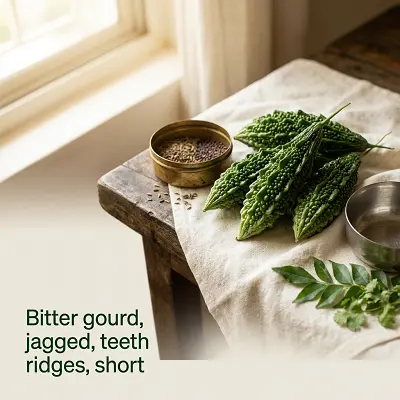
Bitter gourd (करेला, karela) is a slender, ridged green vegetable with warty skin and a distinctly sharp, astringent taste. Fresh and crisp, it is a beloved summer vegetable across Indian kitchens, prized for its cooling properties and use in pan-fried rounds, stuffed preparation...
Nutrition per 100 g
Mean values ± IFCT published SD (edible portion).
More macros
Classification
About Bitter Gourd
What it is
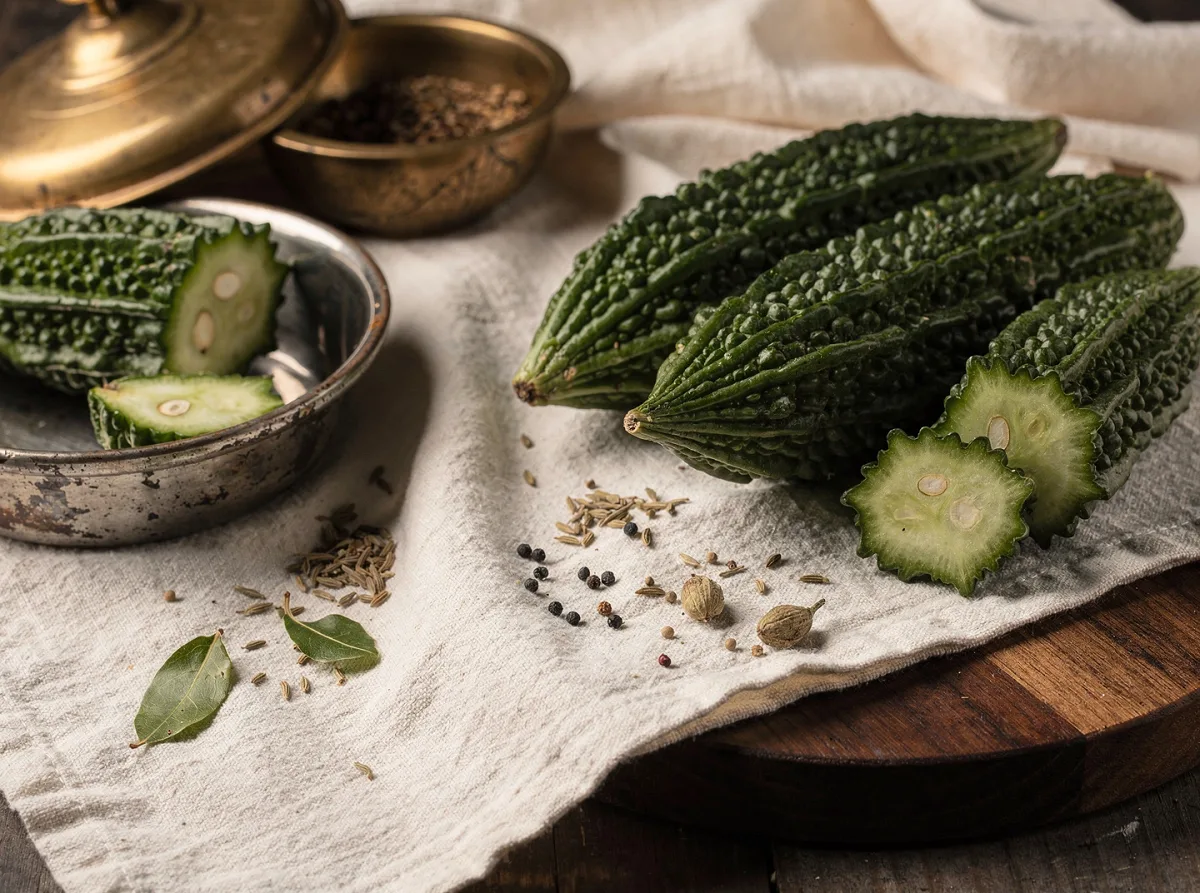
Bitter gourd (करेला, karela) is a slender, ridged green vegetable with distinctive warty or bumpy skin and a crisp, pale interior. It is typically 15–25 cm long and harvested when young and tender for the best flavour and texture. The vegetable is known for its sharp, astringent bite and cooling nature, making it a staple in summer cooking across North, South, and East India. (IFCT 2017, Ref #D004)
Use in Indian Kitchen
Bitter gourd shines in pan-fried rounds (karela fry), where thin slices are crisped with onion, turmeric, and a pinch of asafoetida to balance the bitterness. It is also stuffed with a spiced besan and onion filling for a hearty side dish, added to sambhar and kootu in South India, and layered into parathas in the North. A practical tip: soak sliced karela in salted water for 15–20 minutes, then squeeze dry before cooking to reduce the sharp bite while keeping its nutritional edge. Many home cooks also dry-roast thin slices briefly before adding them to curries to mellow the astringency naturally.
Key Nutrients
Bitter gourd is low in calories and rich in vitamin C, dietary fibre, and minerals including potassium and magnesium. It also contains compounds such as momordicin and charantin, which have been studied for their potential metabolic effects. For precise nutrient composition, refer to IFCT 2017.
Health Benefits (Evidence-based)
- May support healthy blood sugar levels due to compounds that mimic insulin action, traditionally valued in Ayurvedic and folk medicine.
- High in vitamin C and antioxidants, linked to immune support and skin health.
- Cooling and light on digestion, making it ideal for summer eating and Pitta-balancing diets.
- Dietary fibre content may support digestive regularity and satiety.
- Traditionally used in Indian home remedies for liver and digestive wellness.
Culinary Uses (Vegetarian)
- Pan-fried rounds (karela fry) with onion, turmeric, and asafoetida.
- Stuffed karela with spiced besan and onion filling.
- Added to sambhar, kootu, and vegetable curries in South Indian cooking.
- Layered into parathas and rotis in North India.
- Pickled or preserved as an accompaniment to rice and dal.
- Blended into fresh juices or smoothies for a bitter-green boost (often sweetened with jaggery or honey).
Caution
- Bitter gourd may interact with blood sugar-lowering medications; those on diabetes medication should consult a healthcare provider before consuming large quantities regularly.
- Pregnant women are traditionally advised to limit intake, as some classical texts suggest it may have uterine-stimulating properties; moderation is wise.
- The seeds contain momordicin, which can cause stomach upset in very high amounts; remove seeds if sensitive digestion is a concern.
- Its cooling and drying nature may aggravate Vata imbalance in susceptible individuals; balance with warming spices and ghee.
References
- Indian Council of Medical Research - National Institute of Nutrition (ICMR-NIN). Indian Food Composition Tables (IFCT 2017). Reference #D004 (Other Vegetables category).
- Grover, J. K., & Yadav, S. P. (2004). Pharmacological actions and potential uses of Momordica charantia: a review. Journal of Ethnopharmacology, 93(1), 123-132.
Health Benefits
- Improves Digestion
- Boosts Immunity
- Detox Support
- Weight Management Support
- Regulates Blood Sugar
Sourcing & Storage
Storage
Store fresh bitter gourd in a cool, dry place or in the vegetable compartment of the refrigerator in a perforated plastic bag or paper wrap to allow air circulation. Keep away from direct sunlight and moisture to prevent mould. In warm, humid Indian climates, use within 3-4 days of purchase for best quality. Do not wash before storage; rinse only when ready to cook.
Shelf Life
Fresh bitter gourd keeps for 3-5 days in the refrigerator when stored properly. At room temperature in a cool, dry place, it will last 1-2 days. Once cut, wrap the unused portion tightly and refrigerate; use within 1-2 days. Cooked karela dishes keep refrigerated for 2-3 days and can be frozen for up to 1 month.
Check Before You Buy
Choose bitter gourds that are firm, bright green, and free of soft spots, blemishes, or yellowing. The skin should feel slightly bumpy and waxy, not shrivelled or damp. Avoid very large or overmature specimens, which tend to be more bitter and have tough, woody flesh. When buying from a mandi or kirana shop, gently squeeze to check for firmness; a good karela should yield slightly but spring back. Packaged bitter gourd should show no signs of condensation or decay inside the wrapper.
In Ayurveda
In classical Ayurvedic texts, bitter gourd (karela) is recognized for its tikta (bitter) rasa and ushna (warm) virya. It is traditionally used to support digestive health and is believed to help balance Kapha and Pitta doshas. The bitter taste is thought to stimulate digestive fire (agni) and promote healthy elimination. However, its warming nature means those with high Pitta should consume it in moderation.