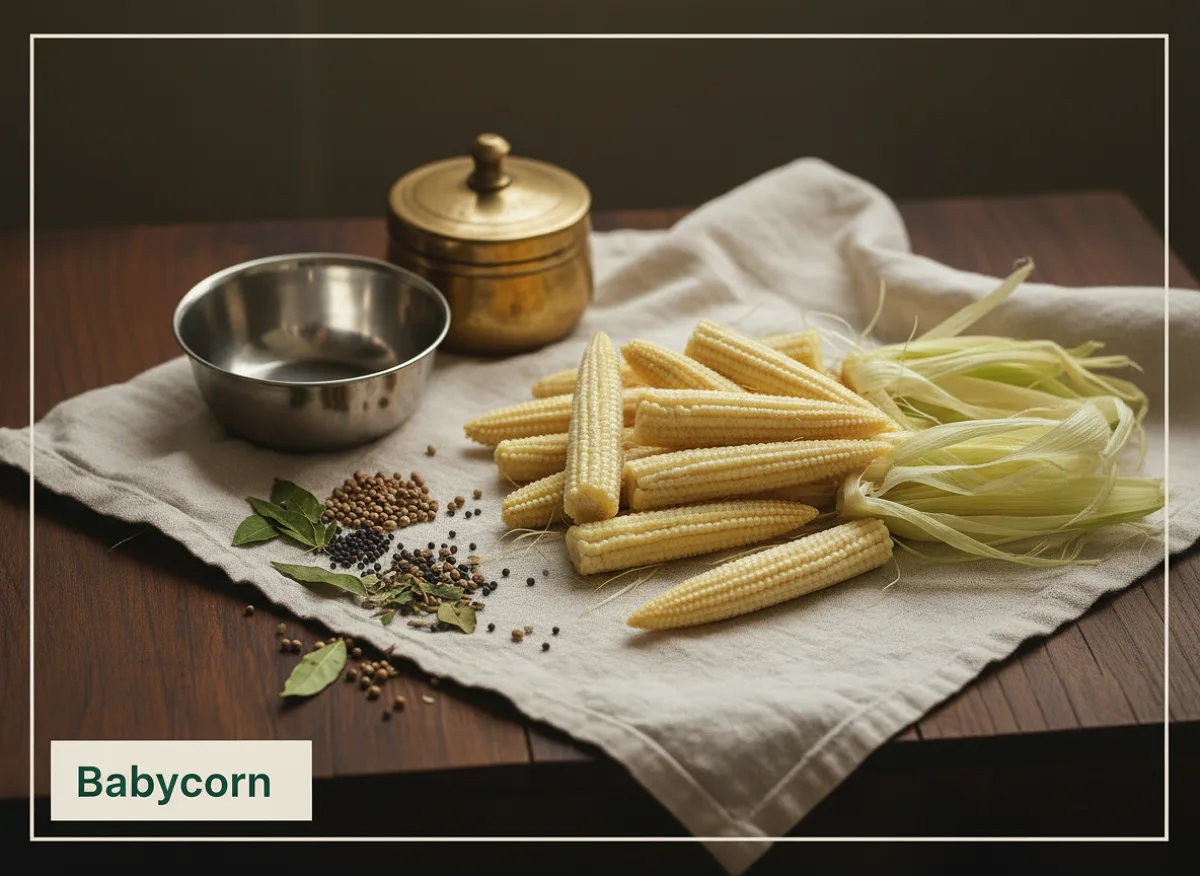
Babycorn
Zea mays · Also known as Zea mays
Babycorn (also called young corn or tender corn) is the immature ear of maize harvested before maturity, eaten whole with the cob. A delicate vegetable popular in Indian stir-fries, curries, and Indo-Chinese dishes, babycorn is classified under Other Vegetables (IFCT 2017, Ref #D...
Nutrition per 100 g
Mean values ± IFCT published SD (edible portion).
More macros
Classification
About Babycorn
What it is
Babycorn is the tender, immature ear of maize (Zea mays) harvested 2–3 days after pollination, before the kernel develops. The entire cob and silk are edible, making it a whole-vegetable ingredient. It is classified as Other Vegetables in the Indian Food Composition Tables (IFCT 2017, Ref #D042) and is increasingly available in Indian markets, both fresh and canned.
Use in Indian Kitchen
Babycorn has become a fixture in modern Indian home cooking, particularly in urban kitchens and restaurant menus. It features prominently in Indo-Chinese stir-fries, mixed vegetable curries, and as a crisp addition to sabzi preparations. In North India, it is often tossed with peppers and onions in a quick tadka; in the South, it appears in vegetable sambar and mixed vegetable kootu. Its mild, slightly sweet flavour and tender texture make it a favourite for quick weeknight meals and festive vegetable platters. Though not traditional to classical Indian cuisine, babycorn has found a comfortable home in contemporary Indian kitchens as a convenient, quick-cooking vegetable.
Key Nutrients
Babycorn is low in calories and contains carbohydrates, dietary fibre, and small amounts of protein. It provides B vitamins (including folate), vitamin C, and minerals such as potassium and magnesium. Exact nutrient composition per 100 g is available in IFCT 2017, Ref #D042.
Health Benefits (Evidence-based)
- Low in calories and fat, making it suitable for weight-conscious meals.
- Contains dietary fibre, which may support digestive health and regular bowel function.
- Provides folate and B vitamins, linked to energy metabolism and nervous system support.
- Rich in antioxidants, including lutein and zeaxanthin, traditionally associated with eye health.
- May help maintain stable blood sugar levels due to its low glycaemic index and fibre content.
Culinary Uses (Vegetarian)
- Stir-fried with peppers, onions, and soy sauce in Indo-Chinese style.
- Added to mixed vegetable curries, sambar, and kootu.
- Blanched and tossed into salads or vegetable pulao.
- Grilled or roasted as a side dish with minimal seasoning.
- Included in vegetable pakora or fritter batters.
- Canned babycorn can be used in quick curries and one-pot meals.
Caution
Babycorn is generally safe for all ages. Those with corn allergies should avoid it. Canned varieties may contain added salt and preservatives; rinse well before use if reducing sodium intake. Fresh babycorn should be cooked thoroughly to reduce any microbial risk.
References
- Indian Food Composition Tables (IFCT 2017), National Institute of Nutrition, Indian Council of Medical Research.
- Gopalan, C., Rama Sastri, B. V., & Balasubramanian, S. C. (2016). Nutritive Value of Indian Foods. National Institute of Nutrition, ICMR.
Health Benefits
- Provides Energy
- Supports Digestion
- Boosts Immunity
- Weight Management Support
- Heart Health Support
Sourcing & Storage
Storage
Store fresh babycorn in a perforated plastic bag or breathable container in the refrigerator at 4–6°C, away from ethylene-producing fruits like apples and bananas. Keep it in the vegetable drawer to maintain humidity and prevent moisture loss. Canned babycorn should be stored in a cool, dry cupboard away from direct sunlight; once opened, transfer unused portions to an airtight container and refrigerate.
Shelf Life
Fresh babycorn keeps for 5–7 days when refrigerated in a breathable container. Unopened canned babycorn lasts 1–2 years in a cool cupboard. Once opened and refrigerated in an airtight container, canned babycorn should be used within 3–4 days.
Check Before You Buy
When buying fresh babycorn, look for tender, pale yellow ears that are firm but not hard. The silk should be fresh and slightly moist, not dried or browning. Avoid ears with blemishes, dark spots, or signs of insect damage. If buying from a mandi or kirana store, gently squeeze to check for firmness; the cob should snap slightly when bent. Packaged babycorn should have no visible moisture or discolouration inside the pack. For canned varieties, check the expiry date and ensure the tin is not dented or leaking.
In Ayurveda
In Indian Ayurveda, baby corn is valued for its nutritional properties and its ability to balance the body's doshas. It is considered beneficial for digestive health due to its high fiber content, which aids in proper digestion and alleviates constipation. Additionally, baby corn is rich in vitamins and minerals, contributing to overall vitality and energy.
In home remedies, baby corn can be used to prepare soups and salads that promote hydration and nourishment. Its mild flavor makes it an ideal ingredient in dishes designed to soothe the digestive system. Overall, incorporating baby corn into the diet aligns with Ayurvedic principles of promoting health and well-being through balanced nutrition.