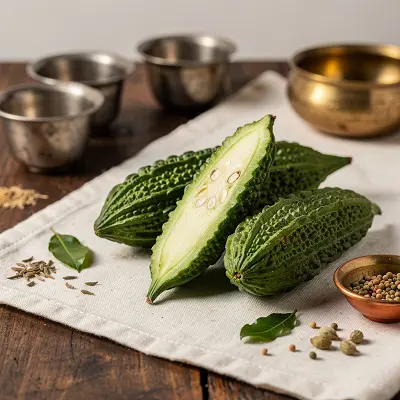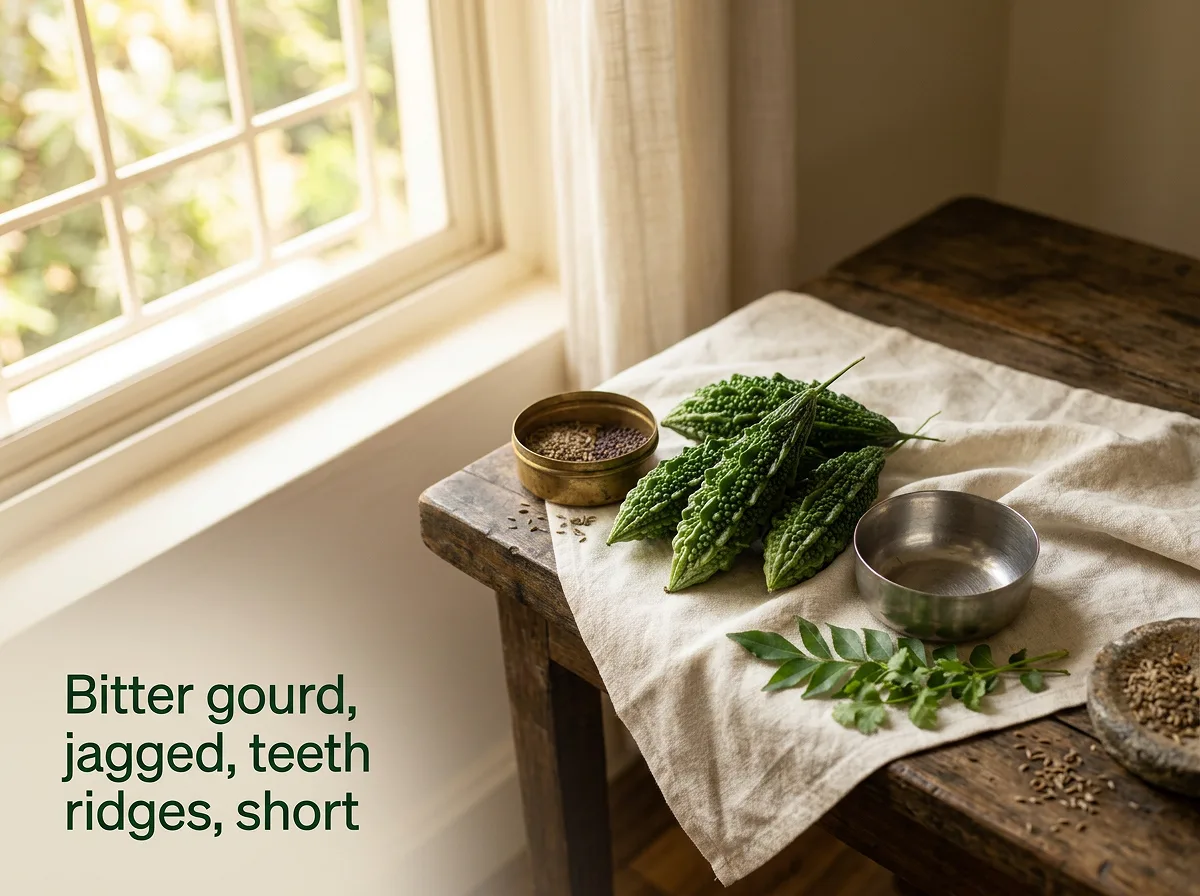
Bitter gourd, jagged, teeth ridges, short
Momordica charantia · Also known as Kerela, Uchhe, Bitter melon, Bitter squash, Balsam pear, Marela, Karela, Hagal kai, Kerela rit, Kaippakka, Karon Akhabi, Karle, Tite karela, Kalara, Tillikaa, Paavakkai, Kakara kaya
Bitter gourd (karela) is a warty, ridged green vegetable prized in Indian kitchens for its distinctive bitter taste and nutritional density. Common across South and North Indian cooking, it is typically stir-fried, stuffed, or added to curries and chutneys. Classified under IFCT...
Nutrition per 100 g
Mean values ± IFCT published SD (edible portion).
More macros
Classification
About Bitter gourd, jagged, teeth ridges, short
What it is
Bitter gourd is a climbing vine vegetable with a distinctive jagged, warty skin and elongated ridges. The flesh is pale green with small seeds and a characteristically sharp, bitter taste. Native to tropical regions and widely cultivated across India, it is a staple in home kitchens and markets year-round, with peak season during summer and monsoon. (IFCT 2017, Ref #D005)
Use in Indian Kitchen
Karela holds a special place in Indian home cooking, particularly in South Indian, North Indian, and Bengali cuisines. In the South, it appears in sambar and is often fried with onions and spices; in the North, stuffed karela (bharwa karela) is a beloved side dish, and thin slices are tempered with mustard seeds and curry leaves. Bengali kitchens favour it in light curries with minimal oil. The bitterness is traditionally embraced rather than masked - a sign of its perceived health-giving properties. Many Indian grandmothers insist on karela during the hot months, believing it cools the body and aids digestion. It is also pickled and made into chutneys. The vegetable's slightly astringent quality pairs well with onions, tomatoes, and warm spices like cumin and turmeric.
Key Nutrients
Bitter gourd is low in calories and rich in vitamin C, dietary fibre, and minerals including potassium and magnesium. It also contains compounds such as momordicin and charantin, which are traditionally associated with its bitter taste and potential metabolic effects. Exact nutrient composition is documented in IFCT 2017, Ref #D005.
Health Benefits (Evidence-based)
- May support healthy blood sugar levels - traditionally used in Indian home remedies and linked to compounds that influence glucose metabolism.
- Rich in antioxidants and vitamin C, which may help support immune function and skin health.
- High in dietary fibre, which may aid digestive regularity and satiety.
- Low in calories and fat, making it a useful addition to weight-conscious meals.
- Contains compounds traditionally believed to support liver and digestive wellness in Ayurvedic practice.
- May help reduce inflammation due to its polyphenol content, though more research is ongoing.
Culinary Uses (Vegetarian)
- Stir-fried: Sliced thin and fried with onions, mustard seeds, and turmeric - a quick side dish (karela fry).
- Stuffed: Halved lengthwise, seeds removed, and filled with a spiced potato and gram flour mixture (bharwa karela).
- Curries: Added to sambar, rasam, or light coconut-based curries in South Indian cooking.
- Chutneys: Ground raw or cooked with coconut, chilli, and spices for a tangy condiment.
- Pickles: Sliced and preserved in oil and spices for long-term storage and flavour intensity.
- Tempering: Thin slices tempered with mustard seeds, curry leaves, and asafoetida for a simple Bengali-style preparation.
Caution
- Bitter gourd may interact with blood sugar medications - those on diabetes treatment should consult a healthcare provider before significantly increasing intake.
- Pregnant women are traditionally advised to limit consumption, as some compounds may have uterine effects; medical guidance is recommended.
- Excessive consumption may cause digestive discomfort, including mild cramping or loose stools, in sensitive individuals.
- The seeds contain momordicin, which is bitter and may cause nausea if consumed in large quantities; remove seeds if preparing for young children or those with sensitive digestion.
References
- Indian Council of Medical Research - National Institute of Nutrition (ICMR-NIN). Indian Food Composition Tables 2017. Hyderabad: NIN; 2017. [Reference code D005 - Other Vegetables category]
- Grover JK, Yadav SP. Pharmacological actions and potential uses of Momordica charantia: a review. Journal of Ethnopharmacology. 2004;93(1):123-132.
Sourcing & Storage
Storage
Store bitter gourd in the vegetable drawer of the refrigerator, ideally in a perforated plastic bag or paper bag to allow air circulation and prevent moisture buildup. Keep away from ethylene-producing fruits like apples and bananas. In warm, humid Indian climates, ensure the fridge temperature is set to 8-10°C. Do not wash before storage; wash only when ready to use. Avoid storing near onions or potatoes, as they may accelerate spoilage.
Shelf Life
When stored properly in the refrigerator, bitter gourd will keep for 5-7 days. In cooler months or hill stations, it may last up to 10 days. Once cut, wrap the unused portion tightly in cling film and use within 2-3 days. Bitter gourd does not freeze well due to its high water content and will become mushy when thawed; it is best used fresh.
Check Before You Buy
Choose firm, medium-sized bitter gourds with a bright, even green colour and prominent ridges - avoid those that are yellowing, soft, or have dark spots or blemishes. The skin should feel slightly waxy and crisp when gently pressed; reject any that are wrinkled or feel hollow. At the mandi or kirana shop, pick vegetables that are free of cuts and bruises. Smaller to medium gourds tend to be less bitter and have thinner seeds than very large ones. If buying pre-packed, check the date and ensure the pack is not crushed or leaking.