Bamboo Shots
Bambusa vulgaris · Also known as Mau Tuai, Raw Tuai
Bamboo shoots (mau tuai or raw tuai) are the tender, edible sprouts of bamboo plants, commonly used across Indian kitchens - especially in the Northeast and hill regions. Mild, slightly sweet flavour and crisp texture make them a versatile vegetable for stir-fries, curries, and p...
Nutrition per 100 g
Edible portion values from the master catalog.
More macros
Classification
About Bamboo Shots
What it is
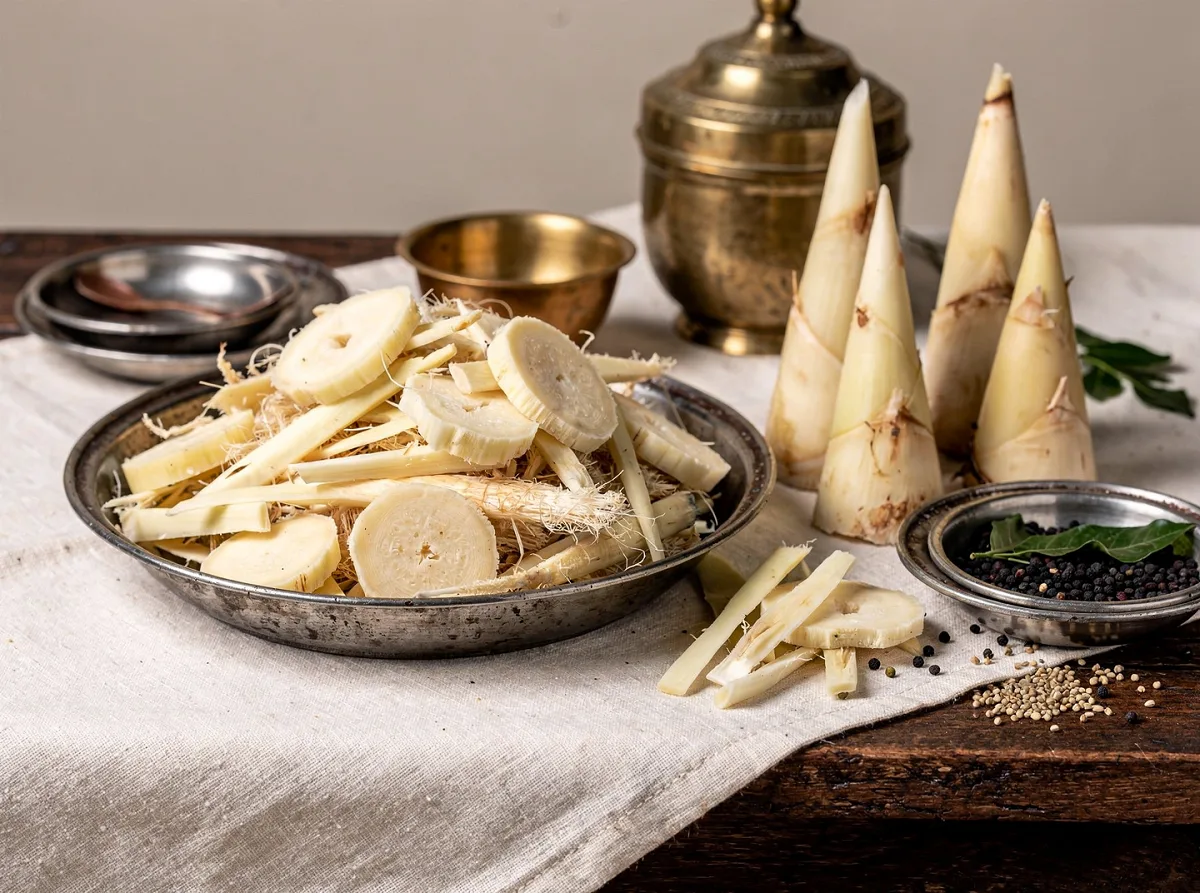
Bamboo shoots are the young, tender sprouts harvested from bamboo plants before they harden into woody culms. They have a pale cream to light green colour, a firm yet tender texture, and a delicate, slightly sweet flavour with subtle earthy notes. Widely foraged and cultivated in the Northeast, Himalayan foothills, and parts of South India, they are a seasonal spring vegetable prized for their crispness and versatility (IFCT 2017, Ref #D002).
Use in Indian Kitchen
Bamboo shoots hold special significance in Northeast Indian cuisine - Manipur, Nagaland, Assam, and Meghalaya feature them prominently in traditional dishes. In Manipur, they are a key ingredient in singju (raw vegetable salad) and various curries; in Nagaland and Assam, they appear in stir-fries and dal-based preparations. Hill stations across Himachal Pradesh and Uttarakhand also celebrate them in spring cooking. South Indian kitchens, particularly in Kerala and Tamil Nadu, use them in sambhar and vegetable curries. They are typically available fresh during monsoon and early summer, and are also preserved as pickles and canned varieties for year-round use. The tender shoots evoke a sense of seasonal abundance and are often associated with spring festivals and family gatherings in these regions.
Key Nutrients
Bamboo shoots are low in calories and contain dietary fibre, which supports digestive health. They provide small amounts of protein, carbohydrates, and minerals including potassium, manganese, and copper. Exact nutrient composition varies by variety and freshness; refer to IFCT 2017 (Ref #D002) for detailed micronutrient profiles.
Health Benefits (Evidence-based)
- High in dietary fibre, which may support healthy digestion and regular bowel function.
- Low in calories and fat, making them suitable for weight-conscious meal planning.
- Contain compounds linked to antioxidant activity, which may help protect cells from oxidative stress.
- Traditionally used in Asian wellness practices to support joint and bone health, though clinical evidence in Indian populations is limited.
- May help maintain healthy cholesterol levels as part of a balanced diet rich in plant foods.
Culinary Uses (Vegetarian)
- Stir-fried with mustard seeds, curry leaves, and green chillies for a simple side dish.
- Added to sambhar, rasam, and vegetable curries for texture and mild flavour.
- Pickled with turmeric, chillies, and oil for long-term storage and tangy condiment use.
- Included in singju (raw vegetable salad) with lime juice, chillies, and salt - a Northeast speciality.
- Blanched and added to mixed vegetable preparations, dals, and khichdi.
- Paired with paneer, mushrooms, or other vegetables in contemporary fusion cooking.
Caution
Raw bamboo shoots contain small amounts of cyanogenic compounds and should always be blanched or cooked before eating to ensure safety. Those with a history of kidney stones should consume in moderation, as bamboo shoots contain oxalates. If you have a known allergy to bamboo or grass family plants, exercise caution. Always source from reputable vendors to avoid contaminated or improperly processed shoots.
References
- Indian Council of Medical Research - National Institute of Nutrition (ICMR-NIN). Indian Food Composition Tables 2017 (IFCT 2017). Category D - Other Vegetables, Ref #D002.
- Nirmala, C., Bisht, M. S., & Shekar, K. C. (2008). Nutritional composition of bamboo shoots: potential and prospects for utilisation as a health food. Journal of the Science of Food and Agriculture, 88(15), 2590-2597.
Health Benefits
- Supports Digestion
- Boosts Immunity
- Detox Support
- Weight Management Support
- Heart Health Support
Sourcing & Storage
Storage
Fresh bamboo shoots are best stored in the refrigerator in a sealed container or wrapped in damp cloth to retain moisture and prevent drying. Keep them in the vegetable crisper drawer at 4-8°C. If using canned or tinned shoots, store unopened tins in a cool, dry cupboard away from direct sunlight. Once opened, transfer canned shoots to an airtight glass container and refrigerate. Pickled bamboo shoots should be kept in a cool, dark place in their brine or oil until opened, then refrigerated.
Shelf Life
Fresh bamboo shoots last 3-5 days when properly refrigerated in a sealed container. Canned or tinned shoots, when unopened, remain shelf-stable for 1-2 years in a cool cupboard. Once opened, canned shoots should be used within 3-4 days if refrigerated in an airtight container. Pickled bamboo shoots, when stored in sterilised jars with adequate brine or oil, can last 2-3 months in the refrigerator and up to 6 months in a cool pantry if unopened.
Check Before You Buy
When buying fresh bamboo shoots at the mandi or kirana store, look for pale cream or light green colour with no dark spots, bruising, or soft patches. The shoots should feel firm and crisp when gently pressed - avoid any that are mushy or have a slimy texture. Fresh shoots should have a mild, pleasant aroma; reject any with a sour or off smell, which indicates spoilage. Check the cut end - it should look fresh and moist, not dried out or discoloured. If buying pre-packed or canned shoots, inspect the packaging for dents, leaks, or rust, and always check the manufacturing and expiry dates. Avoid shoots that appear yellowed or have an unusual odour when the tin is opened.