Yellow Capsicum
Capsicum annuum · Also known as Shimla mirch, yellow bell pepper, sweet pepper, पीला शिमला मिर्च
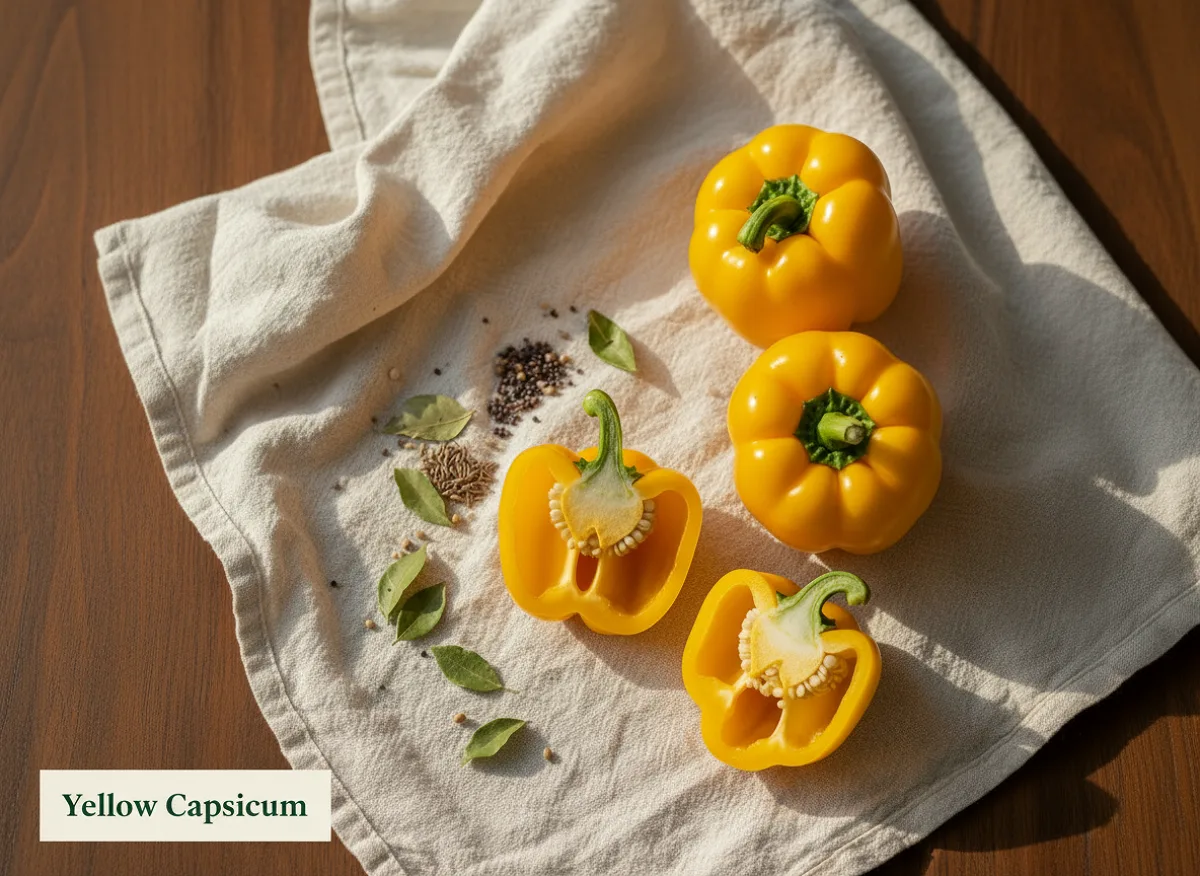
Yellow capsicum (पीला शिमला मिर्च, shimla mirch) is a mild, sweet bell pepper with glossy golden-yellow skin and crisp, juicy flesh. Fresh and crunchy, it brings colour and natural sweetness to stir-fries, stuffed vegetable dishes, and salads across Indian kitchens. Unlike green...
Nutrition per 100 g
Mean values ± IFCT published SD (edible portion).
More macros
Classification
About Yellow Capsicum
What it is
Yellow capsicum (पीला शिमला मिर्च, shimla mirch) is a fully ripened bell pepper with smooth, waxy golden-yellow skin and thick, crisp walls filled with mild, sweet flesh. Unlike its green cousin, the yellow variety has matured on the plant, developing natural sugars and a gentler, almost fruity taste. It is sold fresh, whole, and is a staple in North Indian kitchens and increasingly popular across regional Indian cooking. (IFCT 2017, Ref #D035)
Use in Indian Kitchen
Yellow capsicum shines in vegetable stir-fries (sabzi), stuffed capsicum curry (bharwa shimla mirch), and mixed vegetable preparations like mixed vegetable pickle and khichdi. In North India, it is often paired with paneer and onions in a quick tadka-based sabzi; in the South, it appears in vegetable kootu and sambar. A practical tip: slice into rings or chunks and add towards the end of cooking to preserve the crisp texture and bright colour. The natural sweetness pairs beautifully with tamarind, tomato, and cumin-based temperings.
Key Nutrients
Yellow capsicum is rich in vitamin C, which supports immunity and skin health. It also contains vitamin A (as beta-carotene), potassium, and dietary fibre. The yellow pigment comes from lutein and zeaxanthin, compounds linked to eye health. Exact nutrient composition per 100 g is available in IFCT 2017.
Health Benefits (Evidence-based)
- High in vitamin C, supporting immune function and collagen formation.
- Contains antioxidants (lutein, zeaxanthin) traditionally associated with eye health and vision support.
- Low in calories and high in fibre, making it suitable for weight-conscious and digestive wellness routines.
- Potassium content may help maintain healthy blood pressure levels.
- The natural sweetness and mild flavour make it easier to digest than spicy green peppers, especially for sensitive stomachs.
Culinary Uses (Vegetarian)
- Stuffed capsicum curry (bharwa shimla mirch) with spiced potato and paneer filling.
- Quick stir-fried sabzi with onions, tomatoes, and cumin tempering.
- Mixed vegetable pickle (achar) for long-term storage.
- Sliced raw in salads and raita for crunch and colour.
- Diced into vegetable khichdi, pulao, and biryani.
- Grilled or roasted with olive oil and spices as a side dish.
Caution
- Those with nightshade sensitivity or solanine concerns should consult a healthcare provider before regular consumption.
- Capsicum seeds can cause mild digestive discomfort in some people; remove them if needed.
- Store away from ethylene-producing fruits (apples, bananas) to prevent premature yellowing and softening.
References
- Indian Council of Medical Research - National Institute of Nutrition (ICMR-NIN). Indian Food Composition Tables (IFCT 2017). Reference #D035 - Other Vegetables category.
- National Institute of Nutrition, Hyderabad. Nutritive Value of Indian Foods. ICMR publication on vegetable composition and health benefits.
Health Benefits
- Anti Inflammatory
- Boosts Immunity
- Supports Eye Health
- Weight Management Support
- Improves Skin Health
Sourcing & Storage
Storage
Store yellow capsicum in the refrigerator's vegetable drawer or a perforated plastic bag to maintain moisture without trapping excess condensation. Keep the temperature between 7-10°C (45-50°F) for best results. Avoid storing near ethylene-producing fruits like apples and bananas, which accelerate ripening and spoilage. In warm Indian climates, use the coldest part of your fridge and consume within 5-7 days. Do not wash before storage; wash only when ready to use.
Shelf Life
When stored properly in the refrigerator, yellow capsicum will keep for 7-10 days. Once cut, store the pieces in an airtight container and use within 3-4 days. Frozen yellow capsicum (blanched or raw) can last up to 8-12 months in the freezer, though texture will soften slightly upon thawing; use frozen pieces in cooked dishes rather than raw salads.
Check Before You Buy
Choose capsicums that are firm, glossy, and uniformly yellow with no soft spots, wrinkles, or dark patches. The skin should feel smooth and waxy, not dull or shrivelled. Avoid peppers with cracks, cuts, or mould. A ripe yellow capsicum will feel heavy for its size, indicating juicy flesh inside. At the mandi or kirana shop, gently press the sides - they should spring back, not yield to pressure. Packaged capsicums should have no condensation inside the bag, which signals decay.
In Ayurveda
Yellow capsicum is not extensively documented in classical Ayurvedic texts as a standalone ingredient, as it is a relatively modern cultivated variety in India. However, it shares properties with sweet peppers and mild vegetables traditionally valued in Ayurveda for their cooling (sheeta) nature and light digestibility. Its high water content and mild taste make it suitable for balancing Pitta dosha, particularly in warm seasons. Some contemporary Ayurvedic practitioners recommend it as a gentle, non-heating vegetable for those with sensitive digestion.