Yam
Amorphophallus campanulatus · Also known as Suran, Jimikand, Greater yam, White yam, Elephant foot yam
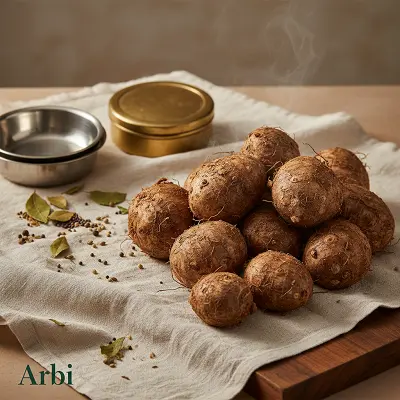
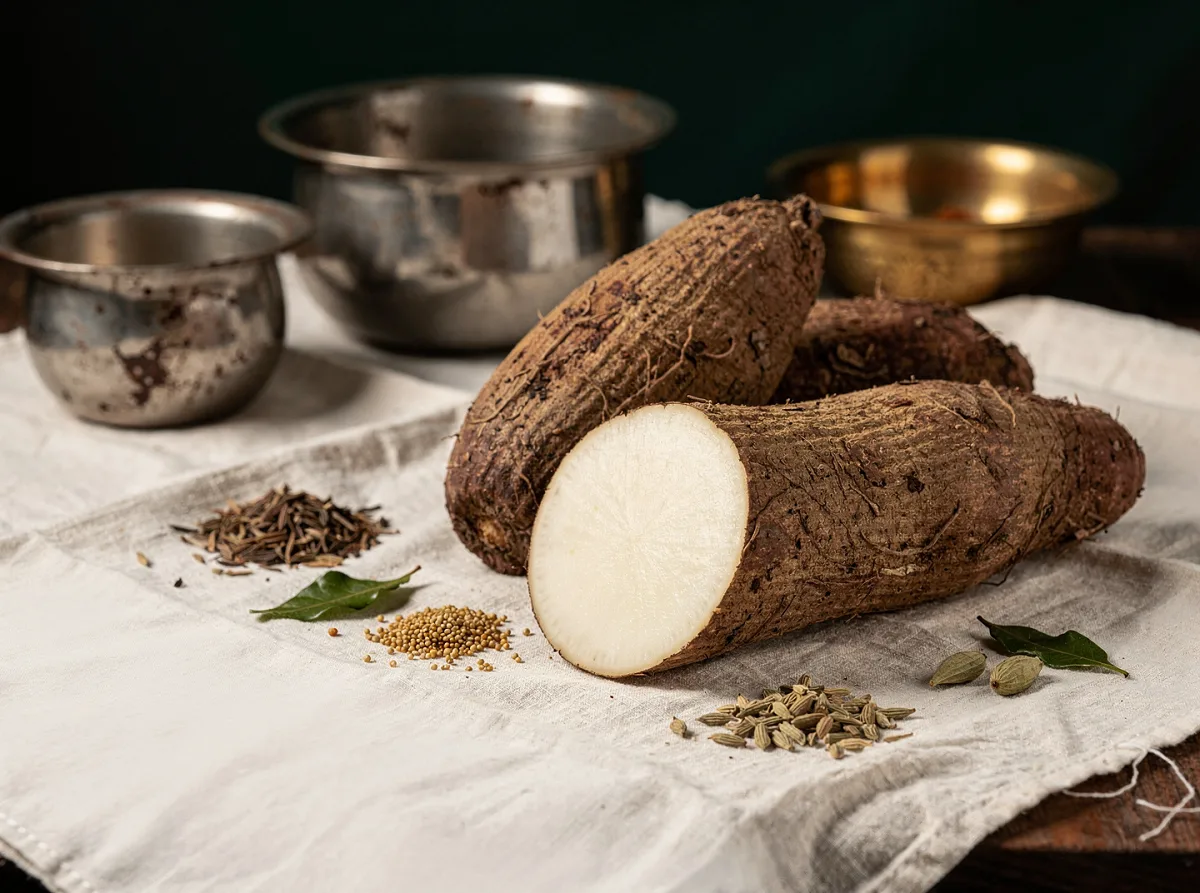
Yam (सुरन, suran) is a starchy tuber with rough, bark-like brown skin and creamy white or pale yellow flesh inside. It has a mild, slightly nutty flavour and firm texture when cooked. In Indian kitchens, yam is commonly roasted, fried into crispy chips, or curried with spices and...
Nutrition per 100 g
Mean values ± IFCT published SD (edible portion).
More macros
Classification
About Yam
What it is
Yam (सुरन, suran) is a starchy underground tuber with a rough, bark-like brown exterior and creamy white or pale yellow flesh. It is larger and heavier than potato, with an earthy, mildly sweet flavour and firm, slightly sticky texture when cooked. Fresh yam is available year-round in Indian markets, though it is especially popular during winter months. (IFCT 2017, Ref #F018)
Use in Indian Kitchen
Yam is a versatile ingredient across Indian regional cooking. In North India, it is often roasted whole in hot ash or oven, then peeled and eaten with ghee and salt, or cut into rounds and pan-fried until golden and crispy. In South India, yam curry (suran fry or suran kootu) is made with coconut, turmeric, and chillies, sometimes paired with dal. It is also sliced thin and deep-fried into savoury chips, or boiled and mashed into a simple comfort side dish. A practical tip: always wear gloves when peeling raw yam, as the sap can cause mild itching on skin and throat; soaking peeled pieces in water for 15-20 minutes before cooking further reduces this sensation.
Key Nutrients
Yam is rich in carbohydrates, dietary fibre, and potassium. It also contains vitamin B6, manganese, and smaller amounts of vitamin C and folate. The exact nutrient profile varies by variety and growing conditions; refer to IFCT 2017 for detailed compositional data.
Health Benefits (Evidence-based)
- May support digestive health due to its dietary fibre content and resistant starch when cooked and cooled.
- Linked to stable blood sugar levels when eaten as part of a balanced meal, owing to its low glycaemic index.
- Rich in potassium, which supports heart health and healthy blood pressure regulation.
- Contains antioxidants and compounds that may help reduce inflammation in the body.
- Traditionally used in Ayurvedic and folk medicine as a nourishing, easily digestible food for recovery and general wellness.
Culinary Uses (Vegetarian)
- Roasted whole or in chunks with ghee and spices.
- Pan-fried or deep-fried into crispy chips and rounds.
- Curried with coconut milk, turmeric, green chillies, and mustard seeds.
- Boiled and mashed as a simple side dish or mixed into dal.
- Stuffed with spiced besan or onion filling and baked or fried.
- Added to vegetable stews and mixed vegetable preparations.
Caution
Raw yam sap can cause mild itching or irritation on skin and in the throat; always wear gloves when peeling and handle in a well-ventilated space. Soaking peeled yam in water before cooking reduces this effect. Those with a history of kidney stones or high oxalate sensitivity should consume yam in moderation, as it contains oxalates. If you have a diagnosed medical condition or take medications, consult a healthcare provider before making significant dietary changes.
References
- Indian Council of Medical Research - National Institute of Nutrition (ICMR-NIN). Indian Food Composition Tables (IFCT 2017). Hyderabad: ICMR-NIN; 2017. [Root and Tubers, Ref #F018]
- McGill CR, Kurilich AC, Davignon J. The role of potassium in human health and in hypertension management. Journal of the American College of Cardiology. 2015;65(13):1383-1391.
Health Benefits
- Provides Energy
- Supports Digestion
- Boosts Immunity
- Weight Management Support
- Heart Health Support
Sourcing & Storage
Storage
Store yam in a cool, dark, well-ventilated place (ideally 10-15°C) away from direct sunlight and moisture. A pantry, cellar, or cool corner of the kitchen works well. Do not refrigerate whole yam, as cold temperatures can damage the tuber and affect flavour. Keep yam away from onions and potatoes, which release gases that can hasten sprouting. Once peeled and cut, store yam pieces in an airtight container in the refrigerator and use within 1-2 days to prevent browning and loss of texture.
Shelf Life
Whole, unpeeled yam stored in cool, dark, dry conditions can last 2-3 weeks, sometimes up to a month if kept in optimal conditions (around 10-15°C with low humidity). Peeled or cut yam should be used within 1-2 days when refrigerated in an airtight container. Once cooked, yam dishes keep for 3-4 days in the refrigerator in a sealed container.
Check Before You Buy
Choose yam that feels firm and heavy for its size, with no soft spots, bruises, or mould. The skin should be dry and intact, without cracks or sprouting eyes. Avoid yam that feels light or has a wrinkled appearance, as these signs indicate age and moisture loss. At the mandi or kirana shop, ask for freshly harvested stock if possible; older yam may have begun to dry out inside. Avoid pre-cut or peeled yam unless you plan to use it immediately, as exposed flesh oxidises and loses quality quickly.
In Ayurveda
In Ayurveda, yam (सूरन) is traditionally regarded as a vegetable that balances Vata and Kapha doshas. It is considered light and easy to digest, especially when prepared with warming spices like ginger and turmeric. Classical texts and home remedies have used yam to support digestive health and provide warmth during winter months.