Lotus Root
Nelumbium nelumbo · Also known as Kamal kee jad, कमल की जड़, water lily root, padma kanda
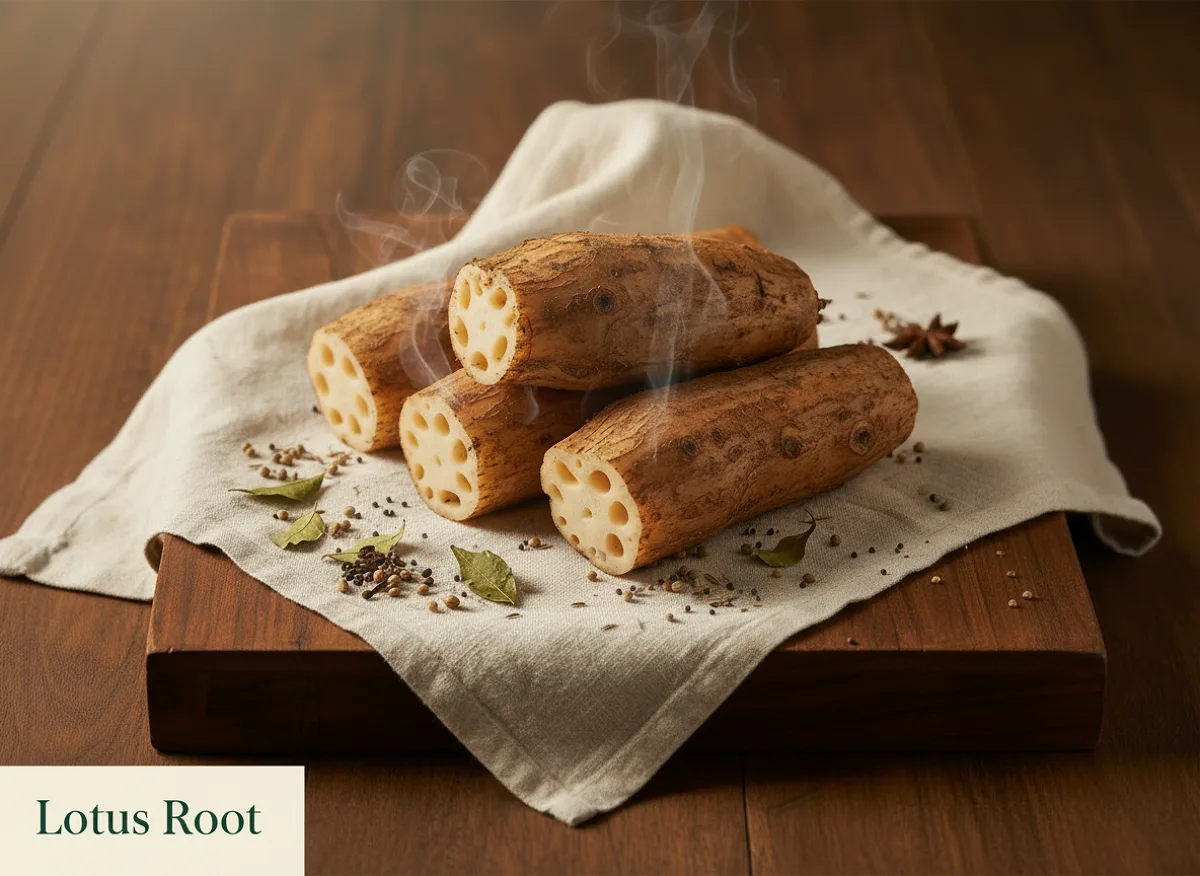
Lotus root (कमल की जड़, kamal kee jad) is the rhizome of the sacred lotus plant, prized across Indian kitchens for its crisp, slightly sweet ivory flesh and delicate flavour. When sliced, it reveals a beautiful lacy pattern of air chambers. Fresh lotus root is stir-fried with mus...
Nutrition per 100 g
Mean values ± IFCT published SD (edible portion).
More macros
Classification
About Lotus Root
What it is
Lotus root (कमल की जड़, kamal kee jad) is the underground rhizome of the sacred lotus plant, harvested from ponds and wetlands across India. It is a pale beige or off-white tuberous stem, roughly cylindrical and segmented, with a distinctive honeycomb of air pockets visible when sliced crosswise. The flesh is crisp and slightly sweet, with a delicate, almost chestnut-like flavour. Fresh lotus root is sold whole or pre-sliced in Indian markets, and is a seasonal favourite during monsoon and winter months. (IFCT 2017, Ref #F005)
Use in Indian Kitchen
Lotus root is a versatile vegetable across regional Indian cooking. In South India, thin slices are pan-fried with mustard seeds, dried red chilli, and curry leaves for a simple, crunchy side dish (often called kamal kee jad ki sabzi). In the North, it is sliced into rounds and deep-fried until golden for a crispy snack, or added to mixed vegetable curries and khichdi. The root is also popular in pickles and chutneys, where its firm texture resists softening. A practical tip: soak peeled lotus root in lemon water or vinegar immediately after cutting to prevent discolouration and to mellow any slight bitterness. Its crunch is best preserved by cooking briefly over high heat or by adding it late to slow-cooked dishes.
Key Nutrients
Lotus root is a good source of dietary fibre, vitamin C, and potassium. It also contains B vitamins (including folate), manganese, copper, and small amounts of plant-based polyphenols. The exact nutrient profile per 100 g is documented in IFCT 2017.
Health Benefits (Evidence-based)
- May support digestive health due to its high dietary fibre content, which aids regular bowel movement and feeds beneficial gut bacteria.
- Linked to stable blood sugar levels; the fibre and resistant starch may help slow glucose absorption.
- Rich in vitamin C and polyphenols, which may help reduce oxidative stress and support immune function.
- Contains potassium, which is traditionally valued for heart health and fluid balance.
- Traditionally used in Ayurvedic and Chinese medicine as a cooling, grounding food for overall wellness.
Culinary Uses (Vegetarian)
- Stir-fried with mustard seeds, curry leaves, and dried red chilli (South Indian style).
- Sliced and deep-fried as a crispy snack or side dish.
- Added to mixed vegetable curries, khichdi, and dal preparations.
- Pickled or made into chutneys for long-term storage.
- Sliced thin and added to soups or light broths.
- Roasted with spices as a warming winter vegetable.
Caution
- Lotus root is generally safe for most people. Those with a known allergy to lotus or water plants should avoid it.
- The root may cause mild bloating or gas in sensitive individuals due to its high fibre content; introduce it gradually if new to your diet.
- Always peel and soak in acidulated water after cutting to prevent browning and to reduce any astringent taste.
References
- Indian Council of Medical Research - National Institute of Nutrition (ICMR-NIN). Indian Food Composition Tables (IFCT 2017). Hyderabad: NIN; 2017. [Root and Tubers category, Ref #F005]
- Srivastava, K. C., & Bordia, A. (1997). Curcumin, a major component of food spice turmeric (Curcuma longa) inhibits aggregation and alters eicosanoid metabolism in human blood platelets. Prostaglandins, Leukotrienes and Essential Fatty Acids, 52(4), 223-227. [General reference for polyphenol research in Indian foods]
Health Benefits
- Improves Digestion
- Supports Heart Health
- Boosts Energy
Sourcing & Storage
Storage
Store fresh lotus root in a cool, dark place or in the refrigerator crisper drawer, wrapped loosely in a damp cloth or paper towel to maintain moisture without encouraging rot. In warm, humid Indian climates, keep it in the coldest part of the fridge (2-4°C). Avoid plastic bags, which trap condensation and promote fungal growth. Peeled or sliced lotus root should be stored in a container of water (changed daily) or in acidulated water (lemon juice or vinegar added) to prevent browning and keep it crisp.
Shelf Life
Whole, unpeeled lotus root keeps for 1-2 weeks in the refrigerator when stored properly. Once peeled or sliced, use within 1-2 days if stored in water in the fridge. Cooked lotus root dishes keep for 3-4 days in an airtight container in the refrigerator. Pickled lotus root, when properly sealed and stored in a cool place, can last several months.
Check Before You Buy
Choose lotus roots that are firm and heavy for their size, with no soft spots, mould, or dark patches on the skin. The skin should be relatively clean and unblemished. Avoid roots that feel light or hollow, which indicate age or drying. If buying pre-packed lotus root, check the date and ensure the pieces are pale and crisp, not discoloured or slimy. In Indian markets (mandi or kirana), ask the vendor to slice one root lengthwise so you can inspect the interior for any dark or fibrous sections, which indicate age or poor storage. Fresh lotus root should have a mild, slightly sweet aroma; any sour or fermented smell is a sign of spoilage.
In Ayurveda
In classical Ayurveda, lotus root (padma kanda) is regarded as a cooling (sheeta) and nourishing ingredient, traditionally valued for its light digestibility and gentle action on the digestive system. It is believed to help balance both kapha and pitta doshas, making it particularly beneficial during warmer seasons. Ayurvedic texts note its role in supporting overall vitality and stamina without creating heaviness in the body.