Orange Carrot
Dacus carota · Also known as Gajar, red carrot, sweet carrot
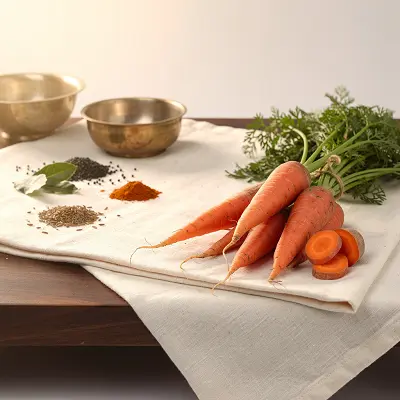
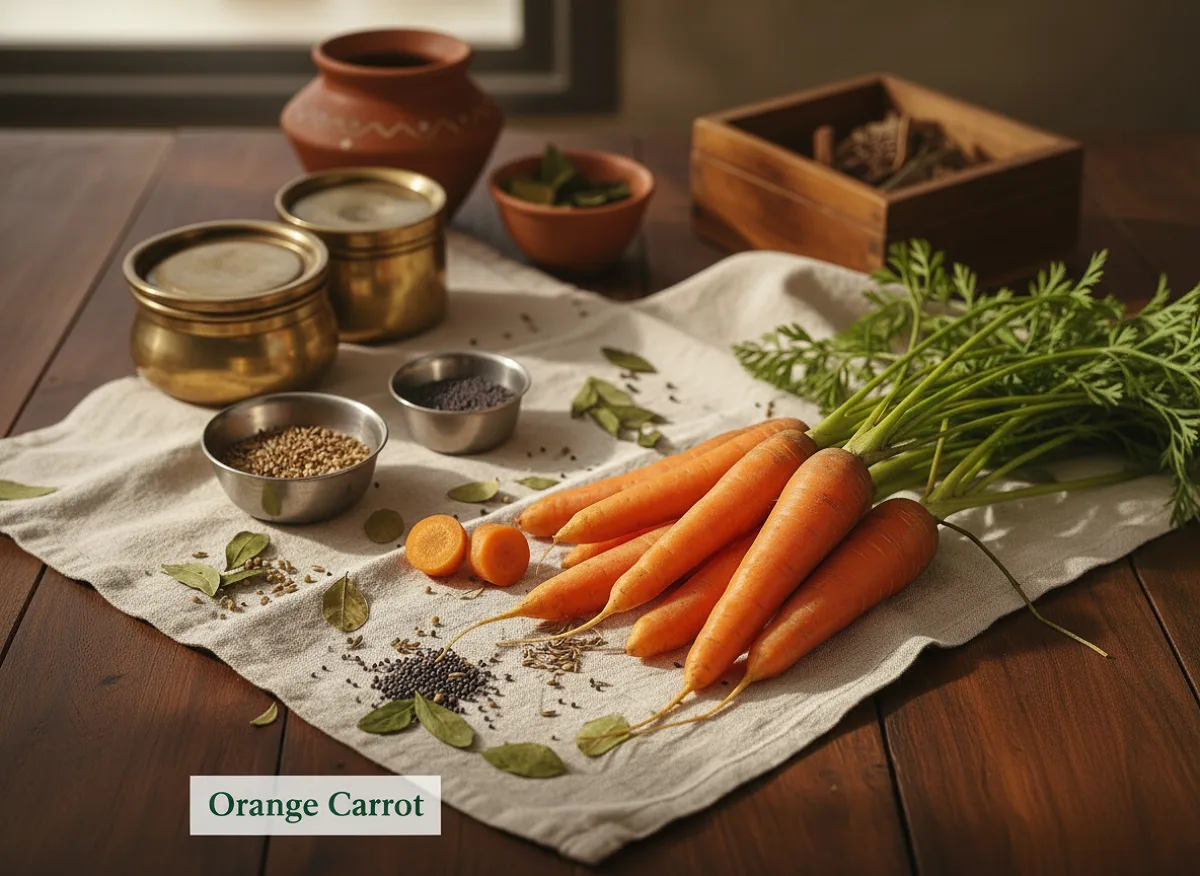
Orange carrot (गाजर, gajar) is a bright, crunchy root vegetable with smooth skin and sweet, tender flesh. Fresh and versatile, it appears in everything from halwa and pickle to sabzi and salads across Indian kitchens. Eat raw, grated into raita, or slow-cooked into warming winter...
Nutrition per 100 g
Mean values ± IFCT published SD (edible portion).
More macros
Classification
About Orange Carrot
What it is
Orange carrot (गाजर, gajar) is a smooth-skinned root vegetable with a bright orange hue and naturally sweet, crisp flesh. Typically 15–25 cm long and conical in shape, it is eaten fresh, cooked, or grated into countless Indian dishes. A winter staple in North India and increasingly year-round in markets nationwide, the carrot is prized for its versatility and mild, earthy-sweet flavour. (IFCT 2017, Ref #F002)
Use in Indian Kitchen
Carrots shine in both raw and cooked forms across Indian cuisine. Grated raw carrot goes into raita with curd and cumin, or into salads with lemon and chaat masala. Cooked, they feature in gajar halwa (the iconic winter dessert with ghee, milk, and nuts), vegetable curries, sambar, and mixed vegetable sabzi. In North India, carrots are often paired with peas in pulao or biryani; in South India, they appear in kootu and avial. A simple tadka of mustard seeds and curry leaves over steamed carrot rounds makes an everyday side dish. Tip: slice or grate just before use to retain crispness and colour.
Key Nutrients
Orange carrots are rich in beta-carotene (provitamin A), which gives them their colour. They also contain fibre, potassium, vitamin C, and small amounts of manganese and folate. Exact nutrient composition varies with freshness and growing conditions; refer to IFCT 2017 for detailed micronutrient profiles.
Health Benefits (Evidence-based)
- Beta-carotene supports eye health and may help maintain vision, particularly in low-light conditions.
- High fibre content aids digestion and supports healthy gut function.
- Potassium helps regulate blood pressure and heart rhythm.
- Antioxidants like beta-carotene and vitamin C may help reduce oxidative stress in the body.
- Low in calories and naturally sweet, making them a satisfying snack for weight-conscious eating.
- Traditionally used in Ayurvedic cooking to support digestive warmth and nourishment.
Culinary Uses (Vegetarian)
- Gajar halwa - slow-cooked with ghee, milk, sugar, and cardamom.
- Grated into raita with curd, cumin, and green chilli.
- Steamed or boiled rounds with mustard seed tadka.
- Mixed into vegetable curries, sambar, and kootu.
- Raw in salads with lemon juice and chaat masala.
- Carrot pickle (gajar ka achar) with mustard oil and spices.
- Pulao and biryani with peas and other vegetables.
Caution
- Eating very large quantities of raw carrot over time may cause carotenemia (yellowing of skin), though this is harmless and reversible.
- Those with known allergies to carrot pollen or celery (cross-reactivity) should be cautious with raw carrot.
- Diabetics should monitor portion sizes in sweet preparations like halwa, which contain added sugar and ghee.
References
- Indian Council of Medical Research - National Institute of Nutrition (ICMR-NIN). Indian Food Composition Tables (IFCT) 2017. Reference #F002 (Root and Tubers category).
- National Institute of Nutrition, Hyderabad. Nutritive Value of Indian Foods. ICMR publication on micronutrient composition and dietary guidance.
Health Benefits
- Improves Eye Health
- Supports Digestion
- Boosts Immunity
- Skin Health Support
Sourcing & Storage
Storage
Store carrots in a cool, dark place or in the refrigerator crisper drawer, ideally between 0–4°C. Remove any green tops before storage (they draw moisture from the root). Keep in a perforated plastic bag or paper bag to allow air circulation and prevent moisture buildup. Avoid storing near ethylene-producing fruits like apples or bananas, which can cause bitterness. In warm Indian climates, refrigeration extends shelf life significantly.
Shelf Life
Fresh, whole carrots stored in the refrigerator last 3–4 weeks when kept dry and undamaged. At room temperature in cool weather (winter), they may last 1–2 weeks. Once peeled or grated, use within 1–2 days. Cooked carrot dishes keep refrigerated for 3–4 days; frozen cooked carrot can last up to 3 months.
Check Before You Buy
Choose firm, smooth carrots with no soft spots, cracks, or mould. The skin should be bright orange and unblemished; avoid carrots that are limp, shrivelled, or have a dull colour, which indicate age or poor storage. At the mandi or kirana, select medium-sized carrots (very large ones may be woody inside). If buying pre-packed carrots, check the packaging date and ensure no condensation or slime is visible inside the bag. Smell should be fresh and earthy, never musty or fermented.
In Ayurveda
In classical Ayurveda, carrot (गाजर) is valued as a nourishing root vegetable with a sweet rasa (taste) and warm virya (potency). It is traditionally believed to support digestive health, strengthen vision, and balance vata and kapha doshas. Ayurvedic texts and home remedies have long recommended carrot for its role in promoting eye health and overall vitality, particularly in children. Cooked carrot is considered easier to digest than raw, making it a gentle addition to convalescent diets.