Baby Potato
Solanum tuberosum · Also known as bebee aaloo
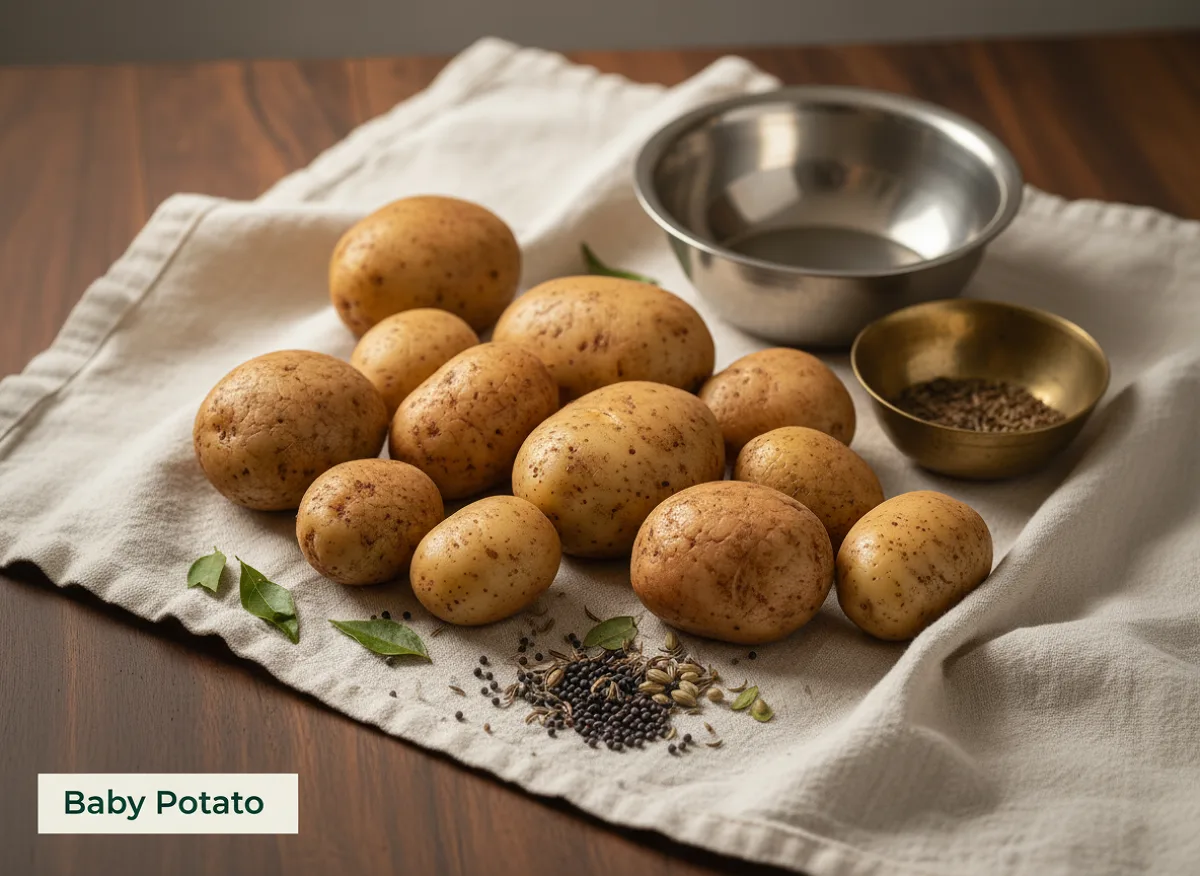
Baby potatoes (bebee aaloo) are small, waxy potatoes harvested early, prized in Indian kitchens for their tender skin, creamy texture, and ability to absorb spices. Commonly used whole in curries, roasts, and tempering-based dishes across regional Indian cooking (IFCT 2017, Ref #...
Nutrition per 100 g
Edible portion values from the master catalog.
More macros
Classification
About Baby Potato
What it is
Baby potatoes are immature potatoes harvested 60-90 days after planting, before they reach full size. They retain a thin, tender skin and creamy, waxy flesh that holds its shape well during cooking. Botanically the same as mature potatoes (Solanum tuberosum), they are a staple across Indian home kitchens and are classified under root and tubers in the Indian Food Composition Tables (IFCT 2017, Ref #F007).
Use in Indian Kitchen
Baby potatoes are beloved in Indian cooking for their whole-use convenience and delicate texture. In North India, they feature in curries like aloo do pyaza and are roasted with cumin and chilli powder. South Indian kitchens use them in sambar and potato fry (urundai varuval), while Bengali cuisine celebrates them in alu dum - a slow-cooked, spiced potato curry. They are equally at home in Punjabi aloo gobi and Maharashtrian batata chi bhaji. Their small size means no peeling is needed, making them a favourite for quick weeknight meals and festive gatherings alike. The tender skin absorbs tadka (tempering) beautifully, making them ideal for oil-based curries and dry preparations.
Key Nutrients
Baby potatoes contain carbohydrates (primarily starch), dietary fibre, vitamin C, potassium, and B vitamins including B6 and niacin. They also provide manganese and small amounts of iron and phosphorus. Nutrient composition varies slightly with soil and growing conditions; refer to IFCT 2017 for precise local values.
Health Benefits (Evidence-based)
- May support digestive health due to resistant starch content, especially when cooled after cooking.
- Good source of potassium, linked to healthy blood pressure regulation and heart function.
- Contain vitamin C, which supports immune function and collagen formation.
- Provide B vitamins that aid energy metabolism and nervous system health.
- Low glycaemic index when boiled, making them a gentler carbohydrate choice for blood sugar management.
- Naturally gluten-free and suitable for most dietary patterns.
Culinary Uses (Vegetarian)
- Whole in curries - aloo do pyaza, aloo gobi, sambar, alu dum, batata chi bhaji.
- Roasted or fried with spices - cumin, chilli powder, turmeric, and salt for a simple side dish.
- Boiled and added to salads, raita, or mixed vegetable preparations.
- Steamed and tempered with mustard seeds, curry leaves, and green chillies.
- In potato and paneer curries, or mixed with other vegetables in khichdi and one-pot meals.
Caution
Baby potatoes are generally safe for most people. Those managing blood sugar levels should monitor portion sizes, as potatoes are starchy. Green or sprouted potatoes contain solanine (a natural toxin) and should be avoided - store in a cool, dark place to prevent greening. Individuals with nightshade sensitivity may need to limit intake. Always cook thoroughly before eating.
References
- Indian Council of Medical Research - National Institute of Nutrition (ICMR-NIN). Indian Food Composition Tables 2017 (IFCT 2017). Reference #F007 - Root and Tubers category.
- Freedman, M. R. & Keast, D. R. (2011). White potatoes, including french fries, contribute shortfall nutrients to children's and adolescents' diets. Nutrition Research, 31(270-277). General reference on potato nutrient density and dietary role.
Health Benefits
- Improves Eye Health
- Supports Digestion
- Boosts Immunity
- Skin Health Support
Sourcing & Storage
Storage
Store baby potatoes in a cool, dark, well-ventilated place - ideally between 7-10°C (45-50°F). A paper bag or cardboard box in a pantry corner, away from direct sunlight and moisture, works well. Avoid plastic bags, which trap moisture and encourage sprouting. Keep away from onions and garlic, as they release gases that speed potato deterioration. In Indian kitchens during warm months, store in the coolest part of the kitchen or in a refrigerator crisper drawer if space allows.
Shelf Life
Well-stored baby potatoes keep for 2-3 weeks at room temperature in a cool, dark place, or up to 4-5 weeks in the refrigerator. Once cooked, store in an airtight container in the fridge for 3-4 days. Do not freeze raw baby potatoes, as they become mushy; however, cooked potato curries freeze well for up to 2-3 months.
Check Before You Buy
Choose baby potatoes that are firm to the touch, with unblemished, thin skin and no soft spots or wrinkles. Avoid any that are green, sprouted, or show signs of mould. The skin should be smooth and waxy, not dull or shrivelled. If buying from a mandi or kirana store, select potatoes of similar size so they cook evenly. Packed varieties should show a harvest or best-by date; check the bag for moisture or condensation, which indicates poor storage. Avoid potatoes that smell earthy or musty, as this suggests age or improper storage.
In Ayurveda
Baby potatoes are valued for their cooling properties and ability to balance the doshas, particularly Vata and Pitta. Rich in nutrients, they aid digestion, promote energy, and support overall health. Their gentle nature makes them ideal for nourishing meals.