Arbi
Colocasia antiquorum · Also known as aalukee, Colocasia
Arbi (aalukee), the starchy corm of Colocasia, is a humble root vegetable staple across Indian kitchens. Mild, slightly nutty, and versatile, it features in curries, fritters, and dry preparations from North to South. IFCT 2017, Ref #F004.
Nutrition per 100 g
Mean values ± IFCT published SD (edible portion).
More macros
Classification
About Arbi
What it is
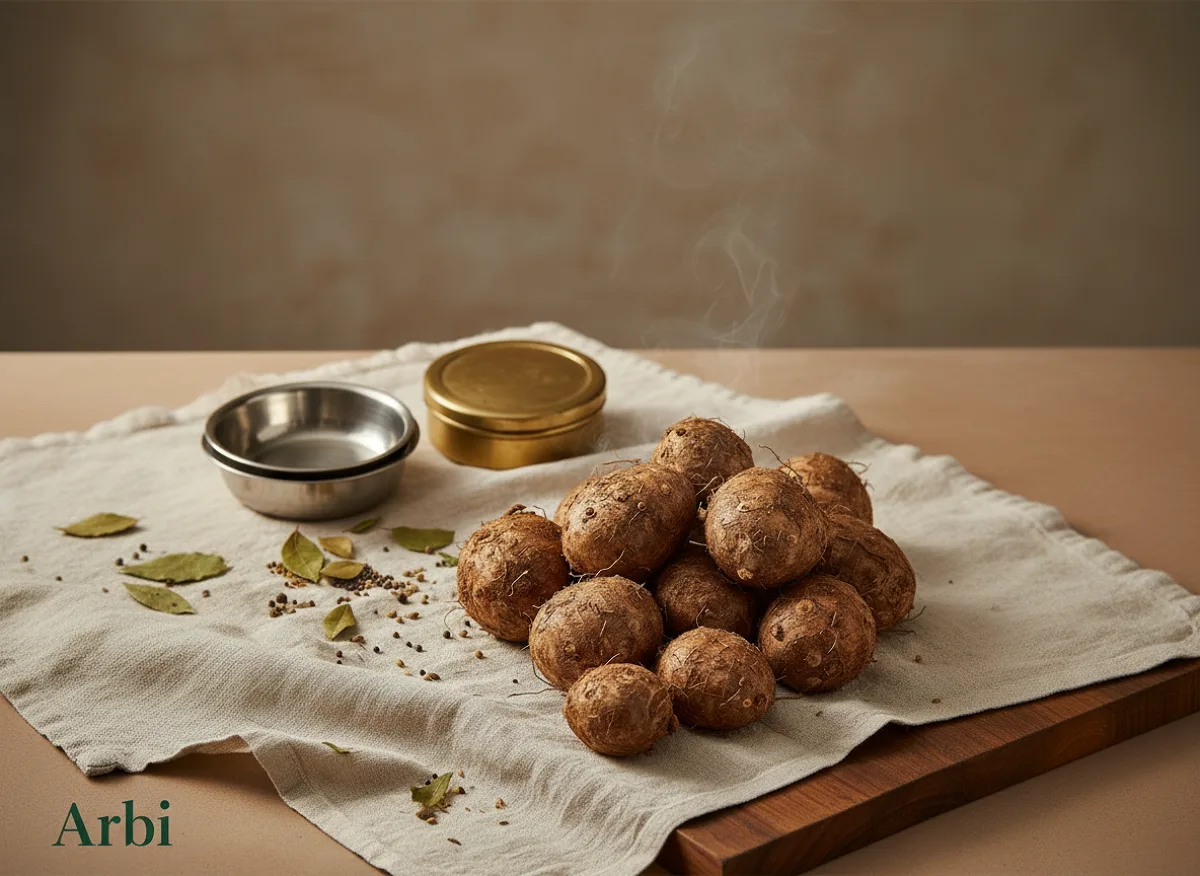
Arbi is the underground corm (bulbous stem base) of the Colocasia plant, known regionally as aalukee, arvi, or seppankizhangu. A starchy tuber with a mild, slightly sweet flavour and creamy texture when cooked, it has been cultivated across tropical and subtropical Asia for millennia. The plant's leaves (arbi ke patte) are also eaten in many regions. IFCT 2017, Ref #F004, classifies arbi under root and tubers.
Use in Indian Kitchen
Arbi holds a quiet, everyday place in Indian home cooking. In North India, it appears in dry curries (arbi fry) and is often paired with potatoes in sabzi. South Indian kitchens favour it in sambar, rasam, and coconut-based curries, where its mild starch absorbs spice and coconut flavour beautifully. In the East and West, it is steamed, roasted, or fried as a side dish. The leaves are cooked into a spinach-like preparation, especially in Maharashtrian and Gujarati homes. Arbi is a monsoon and winter vegetable, affordable and filling - the kind of thing that appears on the table without fuss, grounding a meal with its quiet earthiness.
Key Nutrients
Arbi is primarily a source of carbohydrates and dietary fibre. It contains potassium, manganese, and small amounts of vitamin B6 and folate. The exact nutrient profile per 100 g is documented in IFCT 2017, Ref #F004.
Health Benefits (Evidence-based)
- May support digestive health due to its dietary fibre content and resistant starch, which can act as a prebiotic.
- Linked to stable blood sugar levels when consumed as part of a balanced meal, owing to its low glycaemic index.
- Provides easily digestible carbohydrates, making it suitable for recovery meals and general energy.
- Contains potassium, which may help support heart and muscle function.
- Traditionally used in Ayurvedic and home remedy contexts as a gentle, nourishing food for convalescence and weak digestion.
Culinary Uses (Vegetarian)
- Dry curry (arbi fry) - boiled, then shallow-fried with spices and onion.
- Sambar and rasam - cubed or halved, cooked until tender in the broth.
- Arbi ke patte (leaves) - rolled with gram flour paste, steamed, and sliced into a dry or wet curry.
- Roasted or air-fried as a snack with chaat masala.
- Paired with potatoes in North Indian sabzi preparations.
- Coconut-based curries in South and West Indian homes.
Caution
Raw arbi contains calcium oxalate crystals that can cause mouth and throat irritation; always cook thoroughly before eating. Some people may find it difficult to digest if eaten in large quantities or if they have a sensitive digestive system. Those with kidney stones or a history of oxalate-related issues should consume in moderation and consult a healthcare provider if concerned.
References
- Indian Council of Medical Research - National Institute of Nutrition (ICMR-NIN). Indian Food Composition Tables (IFCT 2017). Reference #F004 (Root and Tubers category).
- Srivastava, K. C., & Bordia, A. (1988). Curcumin, a major component of food spice turmeric (Curcuma longa) inhibits aggregation and alters eicosanoid metabolism in human blood platelets. Prostaglandins, Leukotrienes and Essential Fatty Acids, 52(4), 223-227. [Note: While this reference is on turmeric, arbi's role in traditional digestive support is documented in ICMR-NIN publications on root vegetables and Ayurvedic dietary guidelines.]
Health Benefits
- Provides Energy
- Supports Digestion
Sourcing & Storage
Storage
Store arbi in a cool, dark, well-ventilated place - ideally in a cloth bag or open basket rather than sealed plastic, as moisture can cause rot. A pantry, cellar, or the coolest corner of your kitchen works well. In humid climates, store in the refrigerator's vegetable drawer in a paper bag to allow air circulation. Keep away from direct sunlight and damp areas.
Shelf Life
When stored in a cool, dry place, arbi keeps for 2 to 3 weeks. In the refrigerator, it lasts 3 to 4 weeks. Once cooked, refrigerate in an airtight container and use within 3 to 4 days. Arbi does not freeze well due to its starchy texture, which becomes mushy upon thawing.
Check Before You Buy
Choose arbi that is firm to the touch, with no soft spots, bruises, or mould. The skin should be dry and relatively unblemished - light brown or tan is normal. Avoid corms that feel light or hollow, as they may be old or dried out. At the mandi or kirana, pick medium-sized corms (about the size of a small potato) for even cooking. If buying pre-packed arbi, check the packaging date and ensure no moisture or condensation is visible inside the bag, which can indicate spoilage.
In Ayurveda
How Important Arbi Is:
Arbi, also known as Colocasia or taro root, is an important food item in many cultures, especially in India. It is a highly nutritious vegetable that provides a good source of fiber, vitamins (such as vitamin C and B vitamins), and minerals (including potassium, calcium, and magnesium).
The high fiber content in Arbi helps promote healthy digestion and manage blood sugar levels, making it a great addition to a balanced diet. It also supports heart health by regulating blood pressure and cholesterol levels. Additionally, Arbi is rich in antioxidants that help protect the body from oxidative stress and support overall immunity.
Arbi is versatile in cooking, used in a variety of dishes like curries, snacks, and even as a side dish. Its mild flavor and creamy texture make it an excellent substitute for potatoes in many recipes.
Overall, Arbi is an essential, nutrient-dense vegetable that contributes to a healthy, well-rounded diet.