Beetroot
Beta vulgaris · Also known as chukandar
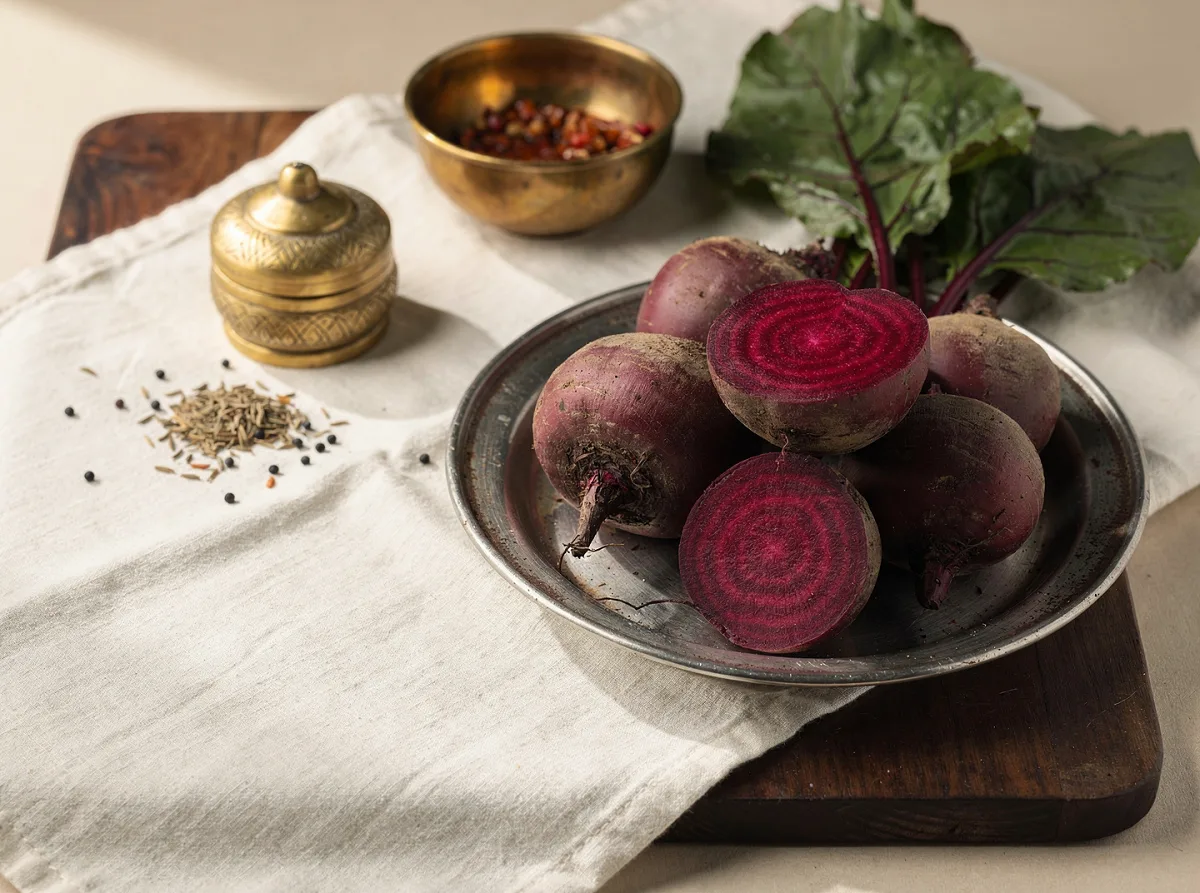
Beetroot, or chukandar, is a deep crimson root vegetable widely used across Indian kitchens for its earthy sweetness and vibrant colour. Rich in folate, manganese, and natural nitrates, it features in everything from salads and curries to traditional pickles and juices (IFCT 2017...
Nutrition per 100 g
Mean values ± IFCT published SD (edible portion).
More macros
Classification
About Beetroot
What it is
Beetroot is a globe-shaped root vegetable with deep purple-red flesh and a naturally sweet, earthy flavour. Native to the Mediterranean but now grown widely across India - particularly in cooler regions like Himachal Pradesh, Punjab, and parts of Maharashtra - it is classified as a root and tuber in the IFCT food composition tables (IFCT 2017, Ref #F001). Both the root and tender leaves (beetroot greens) are edible and nutritious.
Use in Indian Kitchen
Beetroot has found a comfortable place in modern Indian home cooking, though it is less traditional than potatoes or carrots. In North India, it appears in salads, raitas, and as a side vegetable; in the South, it is sometimes incorporated into sambar or stir-fried with coconut. The vegetable is also popular as a fresh juice - often blended with carrot, ginger, and lemon for a quick wellness drink. Beetroot pickles (achar) and chips are gaining ground in urban kitchens. Its natural sweetness and striking colour make it a favourite for festive dishes and health-conscious meals. The tender leaves, often overlooked, are excellent in dal or as a simple sautéed sabzi with mustard seeds and garlic.
Key Nutrients
Beetroot is a good source of folate (vitamin B9), manganese, and potassium. It also contains natural nitrates, which the body converts to nitric oxide, and betalains - water-soluble pigments with antioxidant properties. The greens are particularly rich in iron, calcium, and vitamins A and K. Exact nutrient composition varies with soil and growing conditions; refer to IFCT 2017 for standardised Indian values.
Health Benefits (Evidence-based)
- May support healthy blood pressure and circulation due to natural nitrates, which help relax blood vessels.
- Linked to improved blood flow and oxygen delivery during physical activity.
- Contains betalains and other antioxidants that may help reduce oxidative stress in the body.
- Good source of folate, important for cell division and DNA synthesis, especially during pregnancy.
- The fibre content supports digestive health and regular bowel function.
- Traditionally used in Ayurvedic and folk medicine to support liver function and detoxification.
Culinary Uses (Vegetarian)
- Raw in salads, slaws, and raitas - often grated or thinly sliced.
- Roasted or boiled as a side vegetable, seasoned with cumin, coriander, and a squeeze of lemon.
- In curries and sabzis, paired with potatoes, peas, or paneer.
- Beetroot juice or smoothies, blended with carrot, ginger, apple, and lemon.
- Pickled (achar) for long storage and as a tangy condiment.
- Beetroot greens sautéed with mustard seeds, garlic, and dried chilli, or stirred into dal.
- Beetroot chips, roasted or fried, as a snack.
Caution
- Beetroot is high in natural sugars; those managing blood sugar should consume in moderation and pair with protein or fat.
- The oxalates in beetroot may be a concern for people prone to kidney stones; consult a healthcare provider if at risk.
- Beetroot juice is concentrated; drinking large amounts may cause temporary red or pink urine and stools - this is harmless but can be alarming if unexpected.
- Those on blood-thinning medications should check with their doctor, as high nitrate intake may have mild interactions.
References
- Indian Council of Medical Research - National Institute of Nutrition (ICMR-NIN). Indian Food Composition Tables 2017. Hyderabad: NIN; 2017. [Root and Tubers category, Ref #F001]
- Clifford T, Howatson G, West DJ, Stevenson EJ. The potential benefits of red beetroot supplementation in health and disease. Nutrients. 2015;7(4):2801-2822.
Health Benefits
- Heart Health Support
- Improves Blood Flow
- Improves Hemoglobin
- Boosts Stamina
Sourcing & Storage
Storage
Store beetroot in a cool, dark place - ideally in the vegetable crisper of the refrigerator at 2-4°C. Remove any attached greens before storing (store greens separately in a damp cloth or plastic bag, as they wilt quickly). Keep beetroot in a perforated plastic bag or paper bag to allow air circulation and prevent moisture buildup. Avoid storing near ethylene-producing fruits like apples or bananas. In warm, humid Indian climates, refrigeration is essential to prevent sprouting and decay.
Shelf Life
Fresh, unpeeled beetroot keeps for 3-4 weeks in the refrigerator when stored properly. Beetroot greens last 3-5 days when wrapped in a damp cloth. Once cooked, beetroot lasts 3-5 days in an airtight container in the fridge. Beetroot juice should be consumed within 24 hours if refrigerated, or frozen in ice cube trays for up to 3 months. Pickled beetroot, when properly sealed, can last several months in a cool cupboard.
Check Before You Buy
Choose beetroot that is firm, heavy for its size, and free of soft spots, cracks, or blemishes. The skin should be smooth and deep crimson or purple-red in colour - avoid pale or dull specimens, which may be older or grown in poor soil. A fresh beetroot should have a slight earthy aroma. If buying from a mandi or kirana shop, gently squeeze to check firmness; reject any that feel spongy or have sprouted roots. Smaller to medium-sized beetroot (about 5-7 cm diameter) tend to be sweeter and more tender than very large ones. If greens are attached, they should be fresh, green, and crisp - a sign the beetroot was recently harvested. Avoid pre-packed beetroot with visible mould, slime, or strong fermented smell.
In Ayurveda
In Indian Ayurveda, beetroot is valued for its numerous health benefits. It is considered a cooling vegetable that helps balance Pitta dosha. Rich in nutrients, beetroot supports detoxification, improves digestion, and enhances blood circulation. Its high antioxidant content also promotes overall health and vitality.
In home remedies, beetroot is often used to boost hemoglobin levels and improve skin health. Beetroot juice is recommended for enhancing energy and stamina, while a paste made from beetroot can be applied to the skin to treat blemishes and promote a healthy glow. Overall, beetroot is a versatile ingredient in both Ayurvedic practices and everyday wellness.