Carrot
Dacus carota · Also known as Red Carrot, Desi Gajar, Gaajar, Gajar
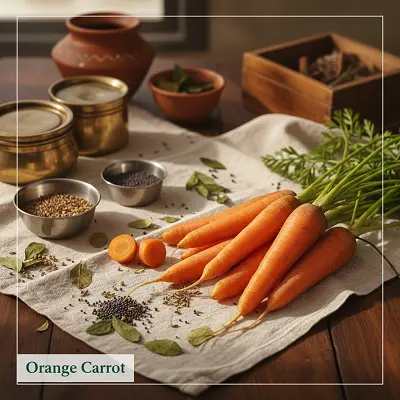
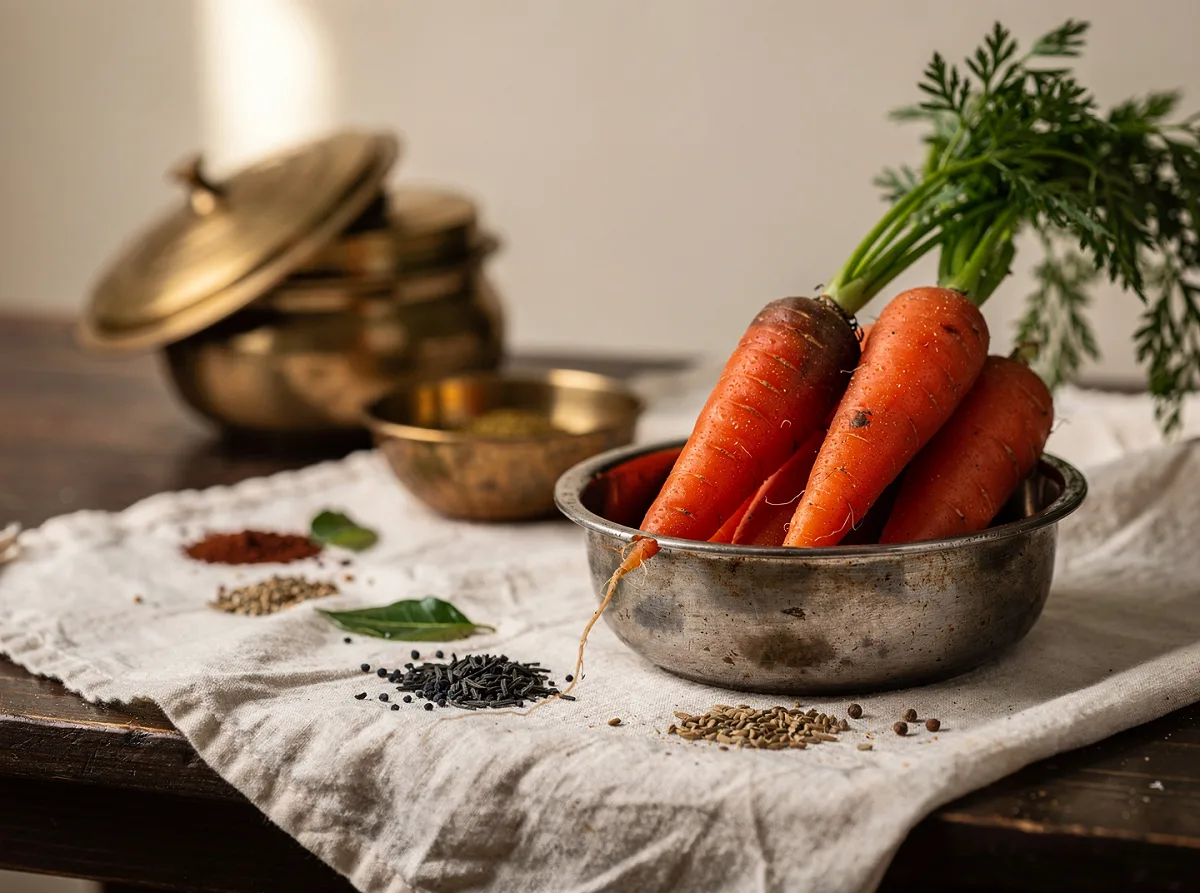
Carrot (गाजर, gajar) is a sweet, crunchy root vegetable with bright orange or deep red flesh, prized across Indian kitchens for its natural sugars and tender bite. Fresh carrots are grated into halwa, sliced thin for sabzi, or roasted whole with cumin and chaat masala. Their mild...
Nutrition per 100 g
Mean values ± IFCT published SD (edible portion).
More macros
Classification
About Carrot
What it is
Carrot (गाजर, gajar) is a sweet, crunchy root vegetable with smooth skin and bright orange or deep red flesh, depending on variety. The desi red carrot, smaller and earthier than its orange cousin, is treasured in Indian home cooking for its tender crumb and natural sugars. Fresh carrots are typically used whole, sliced, grated, or cubed, and are available year-round in markets, with peak season in winter months. (IFCT 2017, Ref #F003)
Use in Indian Kitchen
Carrots are a workhorse vegetable across Indian regions. In North India, they star in gajar ka halwa - a beloved winter dessert of grated carrot simmered with ghee, milk, and jaggery until jammy and rich. Across the South, carrots are diced into sambar and kootu, adding sweetness and body to lentil-based curries. They are also pan-fried as a simple sabzi with cumin seeds and green chilli, grated raw into salads and slaws, or roasted whole with chaat masala and lemon. A practical tip: if using older carrots that feel woody, cut them lengthwise to check the core; if it is thick and pale, grate or dice finely and cook longer to soften.
Key Nutrients
Carrots are rich in beta-carotene (a precursor to vitamin A), dietary fibre, potassium, and vitamin C. They also contain manganese and small amounts of B vitamins. Exact nutrient composition varies by variety and growing conditions; refer to IFCT 2017 (Ref #F003) for detailed Indian food composition data.
Health Benefits (Evidence-based)
- May support eye health and vision due to high beta-carotene content, which the body converts to vitamin A.
- Linked to improved digestive health through soluble and insoluble fibre, which may help maintain regular bowel function.
- May help maintain healthy blood sugar levels when eaten whole or lightly cooked, due to fibre content and low glycaemic index.
- Traditionally used in Ayurvedic and home remedies to support liver and kidney function.
- May contribute to heart health through potassium and antioxidants that support cardiovascular function.
Culinary Uses (Vegetarian)
- Gajar ka halwa - slow-cooked grated carrot with ghee, milk, and jaggery, finished with nuts and cardamom.
- Sambar and kootu - diced carrot as a key vegetable in South Indian lentil curries.
- Carrot sabzi - pan-fried with cumin, green chilli, and a pinch of turmeric.
- Gajar pickle - grated or sliced carrot preserved with mustard oil, spices, and salt for tangy condiment.
- Raw in salads, slaws, and raita - grated or julienned with curd, cumin, and fresh coriander.
- Roasted or grilled - whole or halved, tossed with chaat masala, lemon, and oil.
Caution
- Eating very large quantities of raw carrot over time may cause carotenemia (a harmless yellowing of skin); this reverses when intake is reduced.
- Those with known allergies to birch pollen may rarely experience oral allergy syndrome with raw carrot; cooking typically resolves this.
- Carrots are low in oxalates and generally safe for those managing kidney health, but individual tolerance varies - consult a healthcare provider if in doubt.
References
- Indian Council of Medical Research - National Institute of Nutrition (ICMR-NIN). Indian Food Composition Tables (IFCT 2017). Reference #F003 (Root and Tubers category).
- Sharma, P. C., Yelne, M. B., & Dennis, T. J. (2005). Database on Medicinal Plants Used in Ayurveda. Central Council for Research in Ayurvedic Sciences, New Delhi.
Health Benefits
- Supports Digestion
- Boosts Immunity
- Supports Eye Health
- Heart Health Support
- Improves Skin Health
Sourcing & Storage
Storage
Store carrots in a cool, dark place or in the refrigerator crisper drawer, ideally between 2-4°C. Remove any green tops before storing, as they draw moisture from the root. Keep carrots in a perforated plastic bag or paper bag to allow air circulation and prevent moisture buildup. Avoid storing near ethylene-producing fruits like apples or bananas, which can cause carrots to become bitter. In Indian climates, refrigeration is essential during warm months to extend shelf life.
Shelf Life
Fresh, whole carrots stored in the refrigerator will keep for 2-4 weeks when properly wrapped. Grated carrot should be used within 2-3 days and stored in an airtight container. Cooked carrot dishes (halwa, sabzi) will keep refrigerated for 3-4 days and can be frozen for up to 3 months. Once cut or grated, carrots oxidise and lose crispness; use as soon as possible for best texture and flavour.
Check Before You Buy
Choose carrots that are firm, smooth, and free of soft spots, cracks, or mould. Bright orange or deep red colour indicates freshness and good beta-carotene content; avoid pale or greyish carrots, which may be old or stored poorly. Smaller to medium carrots tend to be sweeter and more tender than very large ones. If buying from a mandi or loose vegetable stand, gently bend a carrot - it should snap cleanly, not bend limply. Packaged carrots should feel dry and not have condensation inside the bag, which signals moisture and early spoilage. Avoid carrots with sprouting green tops or a strong, musty smell.
In Ayurveda
In Ayurveda, carrot is considered a nourishing root vegetable with a sweet (madhura) taste and warming properties. It is traditionally believed to support digestion and strengthen the eyes due to its natural vitamin A content. Carrot is thought to help balance Vata dosha and is often recommended as a gentle, easily digestible food for overall wellness.