Wood Apple
Limonia acidissima · Also known as Bel, Koyeth Bael, Elephant apple, Kothu, Kaith, Bele, Bum choont, Vilam pazham, Kavath, Kaitha, Chaktora, Bilvaon (Gorakamli), Velega pandu
Wood apple, also called bael or बेल, is a hard-shelled tropical fruit with a distinctive woody exterior and fragrant, sticky pulp inside. Traditionally used in Indian beverages, chutneys, and Ayurvedic remedies, it is valued for its cooling properties and digestive benefits (IFCT...
Nutrition per 100 g
Mean values ± IFCT published SD (edible portion).
More macros
Classification
About Wood Apple
What it is
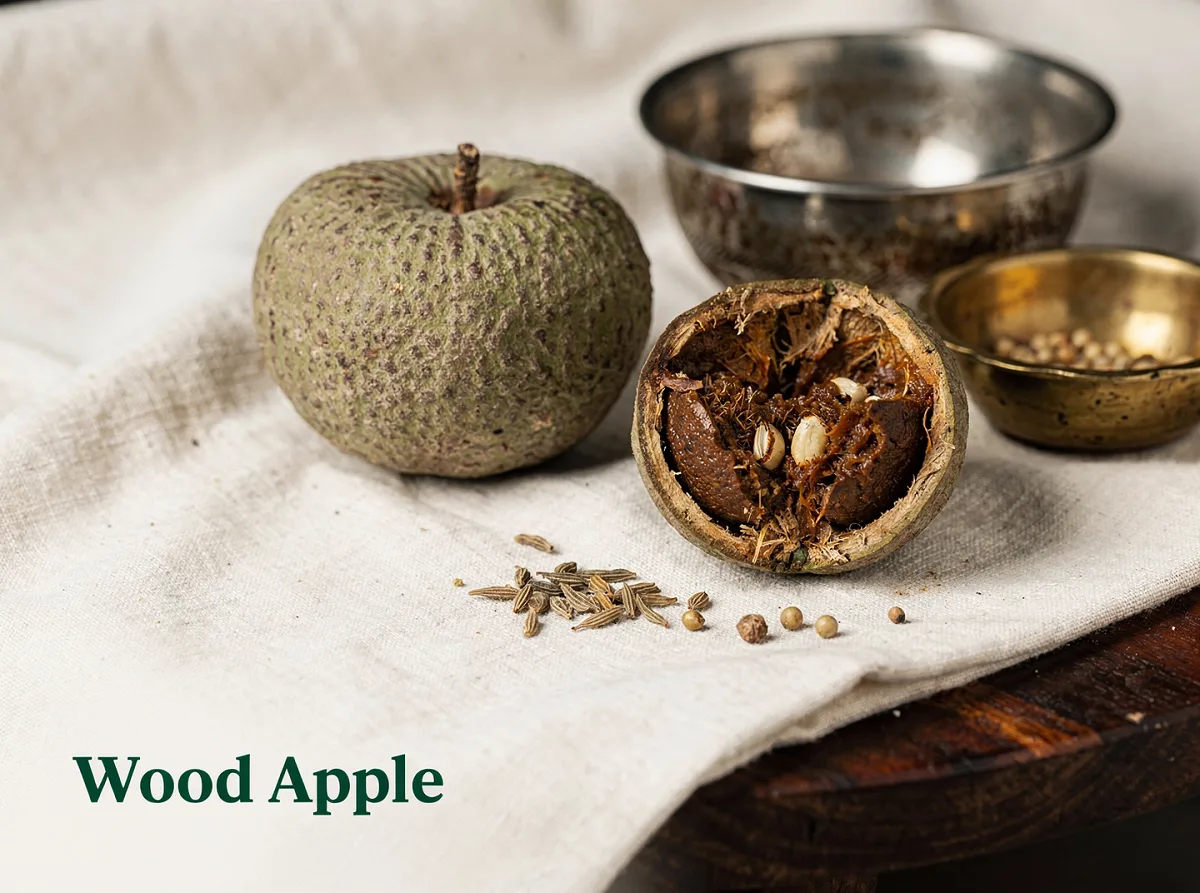
Wood apple is the fruit of Aegle marmelos, a tree native to the Indian subcontinent. It has a hard, woody shell (pale brown or greenish) and contains aromatic, sticky pulp with small seeds embedded throughout. The fruit is rarely eaten fresh as a whole; instead, the pulp is extracted and used in drinks, pastes, and traditional preparations. It is widely available in Indian markets, especially during summer months (IFCT 2017, Ref #E067).
Use in Indian Kitchen
Wood apple holds a special place across Indian regions, particularly in South and Central India. The pulp is traditionally mixed with water, jaggery, and spices to make a cooling summer drink - a beloved monsoon and summer remedy in many Indian households. In the South, it features in chutneys and as a souring agent in curries. The fruit is also dried and powdered for long-term storage and used in Ayurvedic formulations. Nostalgically, many recall their grandmother's wood apple sherbet on hot afternoons - a simple, refreshing drink that feels both medicinal and comforting.
Ayurvedic Connection
Wood apple is deeply rooted in Ayurvedic practice. It is considered cooling (sheet virya) and is traditionally used to balance pitta dosha. The fruit is believed to support digestion, ease constipation, and soothe inflammation in the digestive tract. Classical texts recommend it especially during summer and for those with excess heat or weak digestion. The pulp is often combined with ghee or honey to enhance its therapeutic effect.
Key Nutrients
Wood apple contains dietary fibre, vitamin C, and small amounts of calcium and phosphorus. The exact nutrient profile per 100 g is documented in IFCT 2017 (Ref #E067). The fruit also contains tannins and other phytochemicals that contribute to its traditional medicinal reputation.
Health Benefits (Evidence-based)
- May support digestive health and regular bowel function due to its fibre content and traditional use in Ayurvedic medicine.
- Linked to cooling and anti-inflammatory properties, making it valued in summer wellness routines.
- Contains vitamin C, which may support immune function and skin health.
- Traditionally used to soothe stomach discomfort and support overall gut wellness.
- The fruit's natural compounds may have mild antimicrobial properties, though more research is needed.
Culinary Uses (Vegetarian)
- Wood apple sherbet or drink: Pulp mixed with water, jaggery, and spices (cumin, black salt) - a classic summer cooler.
- Chutneys: Pulp blended with coconut, green chilli, and jaggery for a tangy-sweet condiment.
- Dried powder: Stored for year-round use in drinks, curries, or as a digestive aid.
- Curries and dal: Used as a souring agent in South Indian vegetable curries and sambar.
- Pickles: Occasionally preserved with spices for long-term storage.
Caution
Wood apple is generally safe for most people. However, those with sensitive digestion or a tendency towards loose stools should consume it in moderation, as the high fibre content may increase bowel movement. Pregnant and nursing mothers should consult a healthcare provider before using it medicinally. The hard shell requires careful opening to avoid splinters.
References
- Indian Council of Medical Research - National Institute of Nutrition (ICMR-NIN). Indian Food Composition Tables 2017 (IFCT 2017). Reference #E067 (Fruits category).
- Sharma, P. C., Yelne, M. B., & Dennis, T. J. (2005). Database on Medicinal Plants Used in Ayurveda. Central Council for Research in Ayurvedic Sciences, New Delhi.
Sourcing & Storage
Storage
Store whole wood apples in a cool, dry place away from direct sunlight at room temperature (15–25°C). In warm, humid climates, keep them in a well-ventilated basket or cloth bag to prevent moisture buildup and mould. Once the fruit is cut or the pulp extracted, store it in an airtight glass container in the refrigerator. Dried powder should be kept in a sealed, airtight jar away from moisture and heat.
Shelf Life
Whole, unripe wood apples can last 2 - 3 weeks at room temperature in a cool, dry place. Once ripe, they are best used within a few days. Extracted pulp keeps for 3 - 4 days in the refrigerator in an airtight container. Dried powder, when stored in an airtight jar away from moisture and heat, can last 6 - 12 months. Frozen pulp (in ice cube trays or containers) keeps for up to 3 months.
Check Before You Buy
Choose wood apples that feel heavy for their size and have a hard, intact shell with no cracks or soft spots. The fruit should emit a pleasant, aromatic fragrance when gently pressed near the stem - a sign of ripeness and quality. Avoid fruits with visible mould, dark patches, or a musty smell. When buying from a mandi or kirana store, ask the vendor to tap the fruit gently; a hollow sound indicates good pulp inside. If buying pre-extracted pulp or dried powder, check the packaging date and ensure the container is sealed and free from moisture or clumping.