Wild yam
Dioscorea versicolor · Also known as Jimikand, Suran, Ratalu, Kand, Vazhuthananga, Senai kizhangu, Zamikand
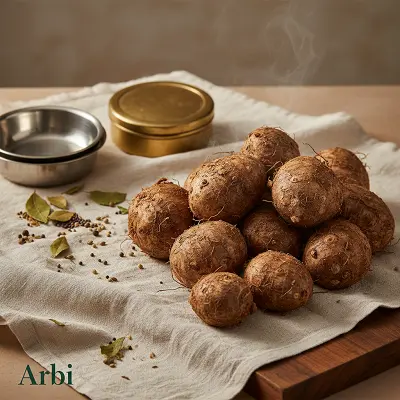
Wild yam (जिमीकंद, jimikand) is a starchy tuber with rough, bark-like skin and creamy white or pale yellow flesh inside. Firmer and less sweet than cultivated yam, it has an earthy, slightly nutty flavour and is prized in Indian home cooking for its digestive properties and versa...
Nutrition per 100 g
Edible portion values from the master catalog.
More macros
Classification
About Wild yam
What it is
Wild yam (जिमीकंद, jimikand) is a knobbly, irregular tuber with thick, rough, bark-textured skin and dense, pale cream or pale yellow flesh. Unlike the smoother cultivated yam, wild yam has a firmer, drier texture and a subtle earthy, slightly bitter undertone. It is a staple root vegetable across India, particularly in the South and West, valued for its long shelf life and traditional use in Ayurvedic cooking. (IFCT 2017, Ref #F019)
Use in Indian Kitchen
Wild yam is a workhorse tuber in South Indian vegetable curries, especially sambar and kootu, where its firm texture holds up well to long cooking. In the North and West, it is often roasted whole in hot ash or oven-baked, then peeled and served with a sprinkle of salt and chilli powder, or sliced thin and fried into crispy chips. A practical tip: soak peeled yam in water for 15-20 minutes before cooking to reduce any slight bitterness and prevent discolouration. The skin can cause mild itching on bare hands, so wear gloves when peeling or use a knife to scrape away the rough exterior.
Key Nutrients
Wild yam is rich in carbohydrates, dietary fibre, and potassium. It also contains vitamin B6, manganese, and smaller amounts of vitamin C and folate. The exact nutrient profile varies with soil and growing conditions; refer to IFCT 2017 for standardised Indian composition data.
Health Benefits (Evidence-based)
- May support digestive health due to its fibre content and traditional use in Ayurvedic digestive tonics.
- Linked to stable blood sugar levels when eaten in moderation, owing to its resistant starch and fibre.
- Rich in potassium, which supports heart and muscle function.
- Contains antioxidants and compounds traditionally used to ease inflammation and joint discomfort.
- Gluten-free and suitable for those avoiding wheat and refined grains.
Culinary Uses (Vegetarian)
- Roasted whole or halved, then peeled and served with salt and chilli powder.
- Diced into sambar, kootu, and other South Indian vegetable curries.
- Sliced thin and deep-fried for crispy chips or shallow-fried as a side dish.
- Boiled and mashed into a simple curry with onion, tomato, and spices.
- Stuffed with a spiced besan or onion-coriander filling and baked or pan-fried.
- Added to mixed vegetable pickles for its firm texture and long storage life.
Caution
- The raw skin and flesh can cause mild itching or irritation on sensitive skin; wear gloves when handling or peeling.
- Ensure thorough cooking; raw or undercooked yam may cause digestive discomfort.
- Those with a history of kidney stones should consume in moderation due to its oxalate content.
- If you have a known allergy to other tubers or root vegetables, introduce wild yam cautiously.
References
- Indian Council of Medical Research - National Institute of Nutrition (ICMR-NIN). Indian Food Composition Tables (IFCT) 2017. Reference F019 (Root and Tubers category).
- Longvah, T., Ananthan, R., Bhaskarachary, K., & Venkaiah, K. (2017). Indian Food Composition Database. ICMR-NIN, Hyderabad.
Sourcing & Storage
Storage
Store wild yam in a cool, dark, well-ventilated place (ideally 10-15°C) away from direct sunlight and moisture. A pantry, basement, or cool cupboard works well. Do not refrigerate unless the climate is very warm and humid; cold temperatures can cause the flesh to become watery. Keep tubers in a breathable cloth bag or open basket rather than sealed plastic, to allow air circulation and prevent mould. In tropical or monsoon climates, store in the coolest, driest corner of your kitchen and check weekly for sprouting or soft spots.
Shelf Life
When stored in cool, dry conditions, whole unpeeled wild yam can last 2-3 weeks to a month, sometimes longer if kept in ideal conditions (around 10-15°C). Once peeled or cut, use within 1-2 days if kept in the fridge in an airtight container. Cooked yam curry or roasted pieces will keep refrigerated for 3-4 days in a sealed container. Do not freeze raw yam, as it becomes mushy when thawed; however, cooked yam dishes can be frozen for up to 2 months.
Check Before You Buy
Choose wild yams that feel firm and heavy for their size, with no soft spots, bruises, or visible mould. The skin should be rough and intact, not cracked or peeling. Avoid tubers that are sprouting or have a musty smell. At the mandi or kirana shop, ask for recently harvested stock if possible; older yams may be drier inside. If buying pre-packed yams, check the packaging date and ensure the tubers are not sweating or showing condensation inside the bag, which signals moisture and early decay.
In Ayurveda
In Ayurvedic tradition, wild yam (jimikand) is considered a grounding tuber that helps balance Vata and Kapha doshas. It is classified as heavy to digest (guru) and is believed to strengthen digestive fire (agni) when properly prepared. Classically, it is recommended in moderate amounts, especially during warmer seasons and for individuals with Kapha-predominant constitutions.