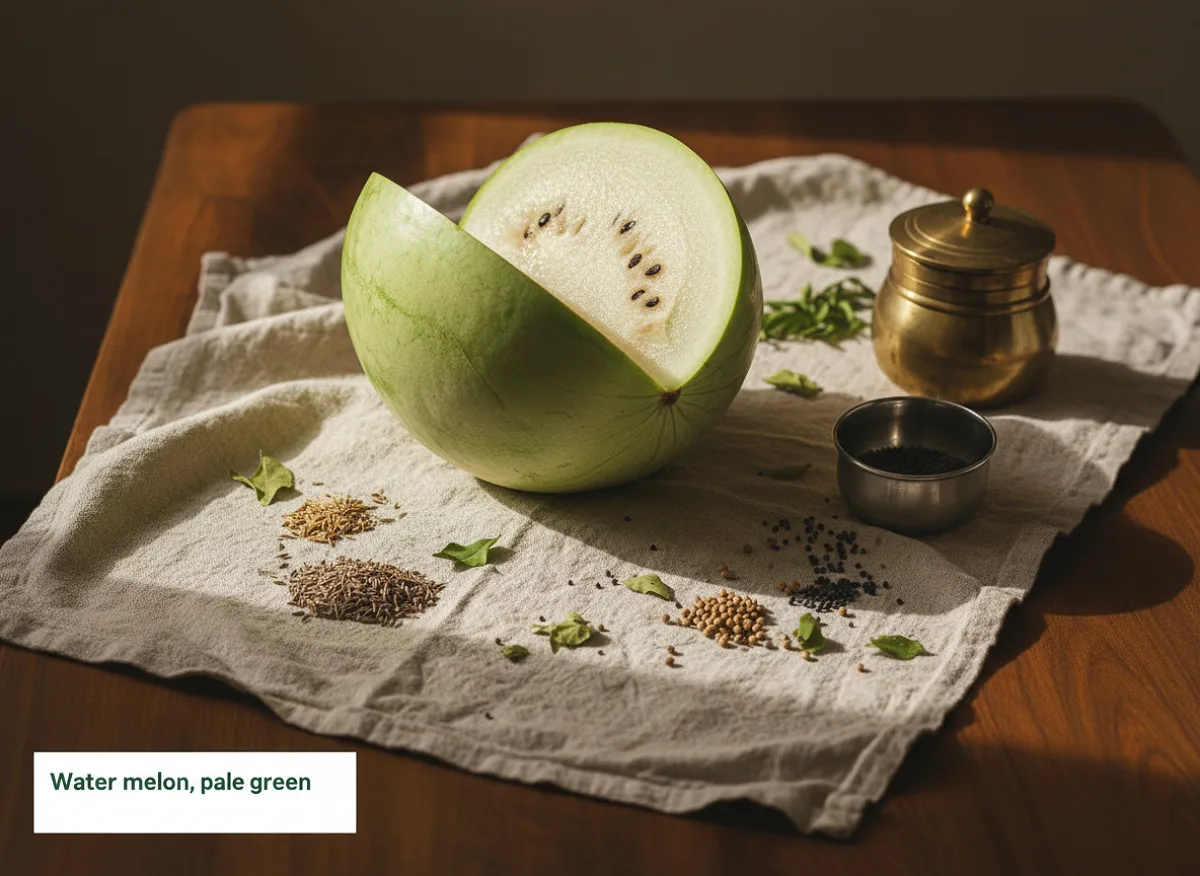
Water melon, pale green
Citrullus vulgaris · Also known as Tormuj, Tarmuj, Watermelon, Tadbuj, Tarbuj, Kallangadi, Hend wend, Soh watermelon, Bacchanga, Thannir mathan, Kalingad, Kharbuja, Tarvuja, Dawana, Darbusani, Puchakaya
Watermelon with pale green skin is a refreshing summer fruit rich in water and natural sugars, commonly enjoyed chilled as a snack or blended into drinks across Indian households. Light, hydrating, and naturally sweet, it's a staple during hot months (IFCT 2017, Ref #E066).
Nutrition per 100 g
Mean values ± IFCT published SD (edible portion).
More macros
Classification
About Water melon, pale green
What it is
Watermelon is a large, round to oblong fruit with a pale green rind and sweet, juicy pink or red flesh inside. Native to Africa but now grown widely across India, it belongs to the Cucurbitaceae family. The pale green variety is prized for its mild sweetness and high water content, making it ideal for hot climates (IFCT 2017, Ref #E066).
Use in Indian Kitchen
Watermelon is eaten fresh, chilled, and sliced as a simple summer dessert or snack across all regions. In North India, it appears at street stalls and family meals during May to August. South Indian homes blend it into cooling drinks or serve it with a pinch of salt and chaat masala. The seeds are sometimes roasted and eaten as a light snack. Watermelon is not typically cooked in traditional curries but is central to summer refreshment culture - a nostalgic memory of childhood afternoons, ice-cold slices shared on hot terraces, and the sound of the fruit vendor's call in the neighbourhood.
Key Nutrients
Watermelon is predominantly water (around 92%), making it very low in calories. It contains natural sugars (glucose, fructose), small amounts of fibre, vitamin C, vitamin A (as beta-carotene), potassium, magnesium, and lycopene - a powerful antioxidant that gives the flesh its red colour. The pale green variety typically has slightly lower lycopene than deep red varieties but remains a good source of hydration and micronutrients.
Health Benefits (Evidence-based)
- May support hydration and electrolyte balance due to high water and potassium content, especially useful during summer heat.
- Linked to cardiovascular health through lycopene and potassium, which may help maintain healthy blood pressure.
- Contains citrulline, an amino acid that may support blood vessel function and circulation.
- Provides vitamin C, supporting immune function and collagen formation.
- Low in calories and high in water, making it a satisfying choice for weight-conscious eating.
- May support eye health through beta-carotene and lutein content.
Culinary Uses (Vegetarian)
- Chilled slices served as a simple dessert or between-meal snack.
- Blended into fresh juices, smoothies, or cooling summer drinks (nimbu pani style).
- Mixed into fruit salads with other seasonal fruits and a light honey or lemon dressing.
- Sprinkled with chaat masala, black salt, and lemon juice for a savoury-sweet snack.
- Seeds roasted lightly and eaten as a light, crunchy snack or garnish.
- Occasionally used in traditional sherbets or cooling beverages in Mughlai cuisine.
Caution
- Very high water content means it fills the stomach quickly; eat in moderation if you have a small appetite or digestive sensitivity.
- Natural sugars are present; those managing blood sugar should be mindful of portion size.
- Watermelon is cooling in nature (Ayurvedic perspective); those with weak digestion or chronic cold may limit intake in winter.
- Ensure the fruit is ripe and fresh; unripe or spoiled watermelon can cause mild digestive upset.
References
- Indian Council of Medical Research - National Institute of Nutrition (ICMR-NIN). Indian Food Composition Tables (IFCT) 2017. Reference #E066 (Watermelon).
- National Institute of Nutrition, ICMR. Dietary Guidelines for Indians - A Manual. New Delhi: NIN Publications.
Sourcing & Storage
Storage
Store whole watermelons at room temperature (20-25°C) in a cool, dry, well-ventilated place away from direct sunlight for up to 2 weeks. Once cut, wrap the exposed flesh tightly in food-grade plastic wrap or place in an airtight container and refrigerate immediately. In Indian kitchens, many prefer to keep cut pieces in the coldest part of the fridge or in a steel container with a damp cloth to maintain moisture and coolness.
Shelf Life
An uncut, whole watermelon keeps for 7-14 days at room temperature, depending on ripeness at purchase and ambient temperature. Once cut and refrigerated, consume within 3-4 days for best flavour and texture. In very hot climates, cut watermelon should be eaten within 2-3 days. Freezing is not recommended as it damages the crisp texture, though blended watermelon juice can be frozen for up to 1 month.
Check Before You Buy
Choose a watermelon with a pale green, unblemished rind free of soft spots, cracks, or dark patches. The fruit should feel heavy for its size, indicating good water content. Tap the melon gently - a hollow, deep sound suggests ripeness. The underside (where it rested on the ground) should have a creamy yellow or pale spot, not white. Avoid watermelons with cuts, bruises, or signs of mould. At Indian mandis and kirana shops, ask the vendor to cut a small wedge so you can inspect the flesh - it should be bright pink or red (depending on variety), firm, and sweet-smelling, with no white streaks or watery patches that indicate overripeness or poor storage.