Water Chestnut
Eleocharis dulcis · Also known as Singhaada, Singhara, Pani Phal, Ling Nut
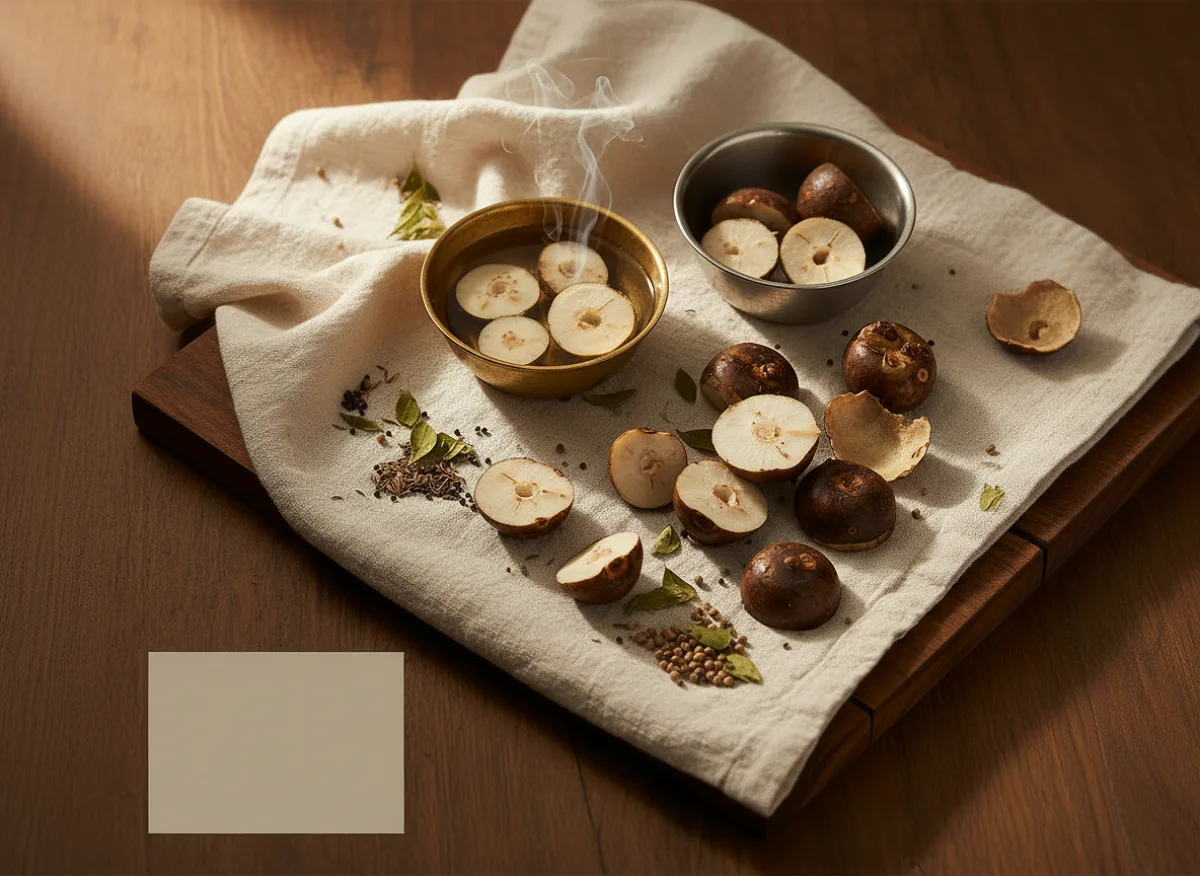
Water chestnut (singhaada) is a crunchy, starchy tuber with a papery brown shell and crisp ivory flesh, prized in Indian kitchens for its refreshing bite and delicate sweetness. Fresh or dried, it appears in South Indian sambar and rasam, North Indian halwas, and as a snack when...
Nutrition per 100 g
Edible portion values from the master catalog.
More macros
Classification
About Water Chestnut
What it is
Water chestnut (singhaada, pani phal) is an aquatic tuber with a distinctive hard, dark brown shell and pale, crisp flesh inside. The bulb is roughly walnut-sized, often with a flattened or slightly ridged shape. It is eaten fresh when in season (monsoon and early winter in India), boiled, roasted, or dried and ground into flour. The texture is firm and slightly sweet, quite unlike potato or other root vegetables. (IFCT 2017, Ref #F016)
Use in Indian Kitchen
Water chestnut is a seasonal favourite across Indian regions. In South India, it is diced into sambar and rasam for a subtle crunch and mild sweetness; in the North, it is boiled and eaten as a light snack, or ground into flour for halwa and kheer during fasting seasons. The dried form is ground into singhaada atta (water chestnut flour) and used in upma, porridge, and festival sweets. A practical tip: peel and slice fresh chestnuts just before cooking or serving to prevent discolouration; boil them whole first if you prefer easier peeling.
Key Nutrients
Water chestnut is predominantly starch and water, with modest protein and fibre. It contains carbohydrates, potassium, and trace minerals including manganese and copper. Exact nutrient composition is documented in IFCT 2017 (Ref #F016).
Health Benefits (Evidence-based)
- May support digestive health due to its fibre content and gentle, easily digestible starch.
- Low in fat and naturally low in calories, making it a light addition to meals.
- Provides potassium, which is linked to heart and kidney function.
- Traditionally used in Ayurvedic and folk medicine as a cooling, nourishing food during hot seasons.
- May help maintain steady energy levels due to its complex carbohydrate profile.
Culinary Uses (Vegetarian)
- Boiled and eaten whole as a light snack or side dish.
- Diced into sambar, rasam, and vegetable curries for texture and mild sweetness.
- Roasted or fried until golden for a crispy appetiser.
- Ground into flour (singhaada atta) for halwa, kheer, upma, and fasting-season sweets.
- Pickled or preserved in brine for year-round use.
Caution
- May cause allergic reactions in sensitive individuals; introduce gradually if new to your diet.
- High starch content means it should be eaten in moderation by those managing blood sugar levels.
- Always peel and cook thoroughly; raw water chestnut may carry parasites if sourced from untreated water.
References
- Indian Council of Medical Research - National Institute of Nutrition (ICMR-NIN). Indian Food Composition Tables (IFCT 2017). Hyderabad: NIN; 2017. Ref #F016 (Root and Tubers category).
- Gopalan C, Rama Sastri BV, Balasubramanian SC. Nutritive Value of Indian Foods. Hyderabad: National Institute of Nutrition, ICMR; 2016.
Health Benefits
- Provides Energy
- Supports Digestion
- Hydrates Body
Sourcing & Storage
Storage
Store fresh water chestnuts in a cool, dark, well-ventilated place (ideally 10-15°C) or in the refrigerator's vegetable drawer in a perforated plastic bag to allow air circulation. Keep them away from direct sunlight and moisture. Dried water chestnuts and singhaada flour should be stored in an airtight container in a cool, dry cupboard, away from humidity and pests. In humid Indian climates, consider adding a food-grade desiccant packet to dried goods.
Shelf Life
Fresh water chestnuts keep for 2-3 weeks in the refrigerator when stored properly; they may last up to 1 month in a cool cellar or root store. Once peeled or cooked, use within 1-2 days. Dried water chestnuts and singhaada flour remain shelf-stable for 3-6 months in an airtight container in a cool, dry place; discard if you notice any off-odour, discolouration, or insect damage.
Check Before You Buy
When buying fresh water chestnuts at the mandi or kirana, choose bulbs that are firm and heavy for their size, with no soft spots, cracks, or mould. The shell should be dark brown and intact. Avoid any that feel light or hollow, as they may be old or dried out inside. If buying pre-packed or peeled chestnuts, check the packaging date and ensure they are stored in clean brine or vacuum-sealed; discard if the liquid is cloudy or the smell is off.
In Ayurveda
Water chestnut is traditionally regarded in Ayurveda as a cooling (शीतल, sheetal) and light-to-digest ingredient. Its astringent taste (कषाय रस, kashaya rasa) is believed to help balance excess pitta (heat) and support digestive health. Classical texts and home remedy traditions suggest its use during hot seasons to promote general wellness and ease of digestion.