Turmeric Powder
Curcuma domestica · Also known as haldee paudar, pisee huee haldee, Ground Turmeric
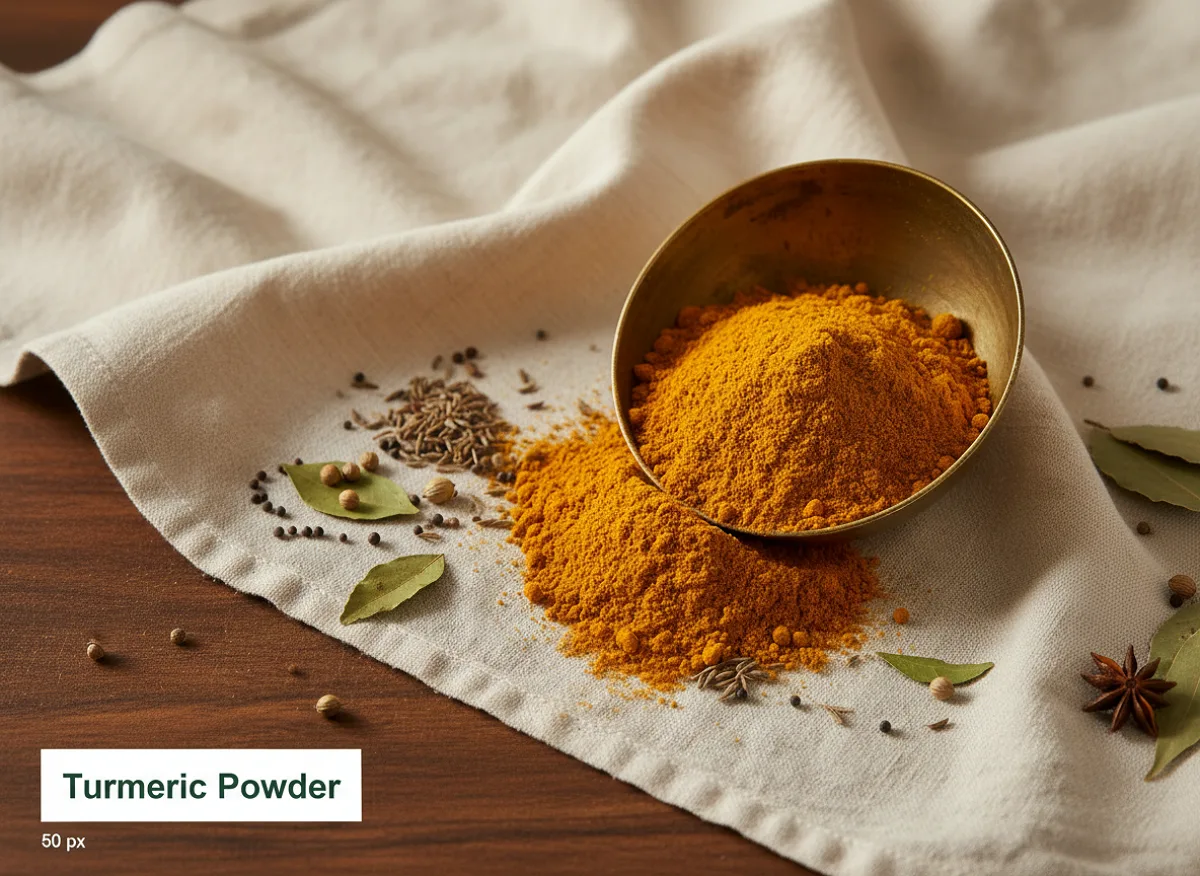
Turmeric powder, or haldee paudar, is the ground golden-yellow spice we reach for in almost every Indian kitchen. Made from dried turmeric root, it brings warmth, a gentle bitter earthiness, and that signature colour to dal, sabzi, rasam, and countless curries. A pinch goes into...
Nutrition per 100 g
Mean values ± IFCT published SD (edible portion).
More macros
Classification
About Turmeric Powder
Turmeric powder is the fine, bright golden-yellow ground spice made by drying and milling the rhizome of the turmeric plant. It has a warm, slightly bitter, earthy flavour with a faint peppery note - nothing harsh, just deeply comforting. The aroma is warm and dry, with a hint of mustiness that deepens when the powder hits hot oil or ghee in the pan.
In Indian cooking, turmeric powder is non-negotiable. We use it to colour and flavour dal, to season vegetable curries and fish preparations, to dust into yoghurt-based marinades, and to add to rice dishes. A small pinch goes into everyday dals and lentils; a fuller teaspoon into rich curries and meat dishes. It is often one of the first spices to hit the hot oil in a tadka, where it blooms and releases its full warmth into the dish.
Beyond the everyday curry pot, turmeric powder finds its way into chutneys, into milk-based drinks like haldi doodh (turmeric milk), and even into simple rice and yoghurt preparations. It is the spice that gives Indian food much of its characteristic golden hue and comforting depth.
Some of the traditional benefits associated with turmeric powder
- Known in Ayurveda for its warming and grounding properties
- Traditionally used to support general wellness and vitality
- Often included in warming milk drinks, especially in cooler months
- Valued for its role in everyday cooking and digestive traditions
- Considered a natural antiseptic in traditional home remedies
- Used in beauty and skincare preparations across Indian households
- Believed to support joint and muscle comfort when used regularly
Whether you are making a simple weekday dal or a festive biryani, turmeric powder is the spice that ties Indian food together - warm, familiar, and utterly essential.
Health Benefits
- Anti Inflammatory
- Boosts Immunity
- Detox Support
- Improves Joint Health
Sourcing & Storage
Storage
Store turmeric powder in an airtight glass jar or container, away from direct sunlight, heat, and moisture. Keep it in a cool, dry cupboard or pantry - not above the stove or near the kitchen window. In humid climates or during the monsoon season, store the jar in a cool corner of the kitchen or in the refrigerator to prevent the powder from absorbing moisture and clumping. Make sure the lid is sealed tightly after each use. If you notice any dampness or smell, discard and replace with fresh powder.
Shelf Life
Turmeric powder keeps well for about 6 to 12 months when stored in an airtight container in a cool, dry place. Once opened, use it within 6 months for the best colour and flavour. In humid weather or if stored in the refrigerator, it may last slightly longer. If you notice the powder has lost its bright golden colour, become dull, or developed an off smell, it is time to replace it.
Check Before You Buy
When buying turmeric powder from a local vendor or kirana shop, look for a bright, vibrant golden-yellow colour - this is a sign of freshness and quality. The powder should be fine and free-flowing, with no lumps or clumping. Smell it if you can - it should have a warm, earthy aroma, not musty or stale. Avoid powder that looks dull, greyish, or brownish, as this suggests age or poor storage. Check the packaging for any signs of moisture, dampness, or pest damage if buying pre-packed.
Be wary of turmeric powder that is unusually bright or unnaturally vivid in colour, as this may indicate adulteration with artificial dyes or lead oxide (a common adulterant). Buy from vendors you trust, and if possible, buy smaller quantities more often rather than storing large amounts. Always check the date on packaged powder and choose the most recent batch available.
In Ayurveda
Turmeric powder is highly revered for its medicinal properties. It balances the doshas - Vata, Pitta, and Kapha - supports digestion, and promotes detoxification. Known as "Haridra," it enhances immunity, alleviates inflammation, and is used in skincare. Its warm nature helps purify the body and mind.