Black Pepper
Piper nigrum · Also known as Piper Nigrum, Kaalee Mirch, King of Spices
Black pepper (kaalee mirch) is the dried berry of the pepper vine, native to Kerala's Western Ghats and a cornerstone of Indian cooking for millennia. Known as the "King of Spices," it brings warmth, bite, and depth to everything from dal to desserts (IFCT 2017, Ref #G031).
Nutrition per 100 g
Mean values ± IFCT published SD (edible portion).
More macros
Classification
About Black Pepper
What it is
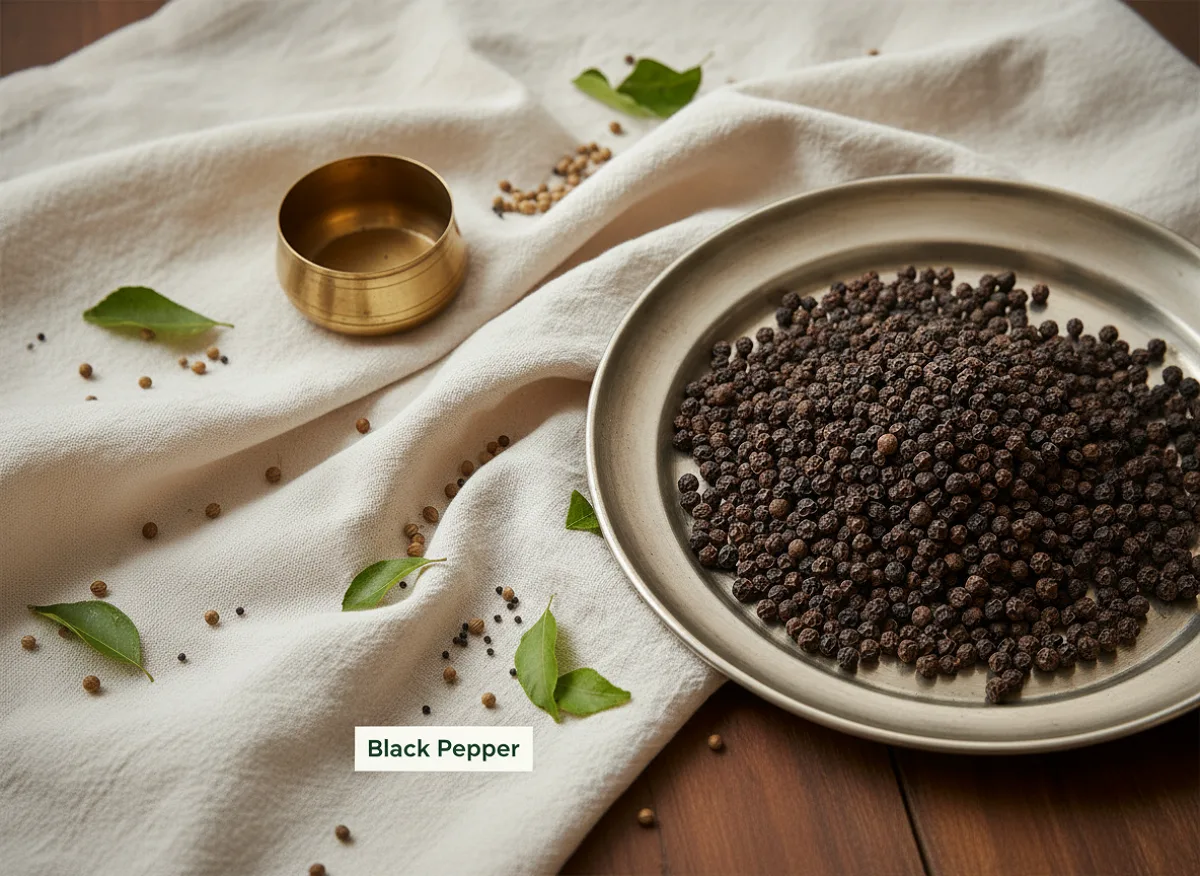
Black pepper is the sun-dried, unripe fruit of Piper nigrum, a climbing vine native to the monsoon forests of Kerala. Each peppercorn is a small, wrinkled sphere with a hard outer shell and aromatic seeds inside. It is the most widely traded spice globally and has been central to Indian cuisine and trade for over two thousand years (IFCT 2017, Ref #G031).
Use in Indian Kitchen
Black pepper appears across every Indian region, though its role shifts with tradition. In South Indian kitchens - Tamil, Telugu, Kannada, and Malayalam - it is a staple in sambar powder, rasam, and coconut-based curries, often ground fresh into pastes. North Indian cooking favours whole peppercorns in tadka (tempering), rice dishes, and meat curries, while Bengali and Odia kitchens use it in fish preparations and spiced lentils. It is equally at home in sweet dishes - cardamom-pepper milk, jaggery-pepper brittle, and traditional winter tonics. Unlike chilli, which brings heat, black pepper offers a slow, lingering warmth and a subtle floral note that deepens with cooking. It is one of the few spices that works equally well in savoury and sweet, making it indispensable in every Indian home.
Ayurvedic Connection
In Ayurveda, black pepper is considered ushna virya (heating in potency) and tikshna (sharp and penetrating). It is traditionally used to kindle agni (digestive fire), improve absorption of other herbs and foods, and support respiratory health. Classical texts recommend it in warm milk or ghee during winter, and it is a key ingredient in trikatu (the three-pepper blend with ginger and long pepper), a foundational digestive formula.
Key Nutrients
Black pepper contains piperine (the alkaloid responsible for its pungency), volatile oils, manganese, iron, and vitamin K. It also provides dietary fibre and trace amounts of calcium and magnesium. Exact nutrient composition per serving is documented in IFCT 2017, Ref #G031.
Health Benefits (Evidence-based)
- May enhance nutrient absorption, particularly of turmeric's curcumin and fat-soluble vitamins, when consumed together.
- Linked to improved digestive function and may help ease bloating and gas when used in warm preparations.
- Contains piperine, which has been studied for potential anti-inflammatory and antioxidant properties.
- Traditionally used to support respiratory comfort, especially in warm milk or herbal teas during cold months.
- May support healthy circulation and metabolic function as part of warming spice blends.
Culinary Uses (Vegetarian)
- Whole peppercorns in tadka for dal, rice, and vegetable curries.
- Ground into sambar powder, rasam powder, and garam masala blends.
- Cracked or coarsely ground over paneer, curd, and vegetable preparations.
- In warm milk with jaggery, ghee, and cardamom for winter comfort drinks.
- Sprinkled over soups, broths, and light vegetable stews.
- In sweet preparations - pepper brittle, jaggery-pepper laddu, and spiced milk puddings.
- As a finishing touch on salads, raita, and fresh chutneys.
Caution
Black pepper is generally safe in culinary amounts. Those with sensitive digestion, acid reflux, or gastric ulcers should use it sparingly or avoid concentrated doses. Piperine may interact with certain medications by affecting absorption; consult a healthcare provider if taking prescription drugs regularly. Excessive consumption may cause mouth or throat irritation. Pregnant and nursing women should use it in normal cooking amounts only, not as a supplement.
References
- Indian Council of Medical Research - National Institute of Nutrition (ICMR-NIN). Indian Food Composition Tables 2017. Reference #G031 (Condiments and Spices - Dry, Black Pepper).
- Srinivasan, K. (2007). Black pepper and its pungent principle-piperine: a review of diverse physiological effects. Critical Reviews in Food Science and Nutrition, 47(8), 735-748.
Health Benefits
- Improves Digestion
- Anti Inflammatory
- Boosts Metabolism
- Enhances Nutrient Absorption
Sourcing & Storage
Storage
Store black pepper in an airtight glass jar or container away from direct sunlight, heat, and moisture. Keep it in a cool, dry cupboard or pantry - not above the stove or near the kitchen window. In humid climates (common across India during monsoon), store in an airtight container with a silica gel sachet or in the refrigerator to prevent clumping and preserve aroma. Whole peppercorns retain flavour far longer than ground pepper.
Shelf Life
Whole black peppercorns keep for 3 - 4 years when stored properly in an airtight container at room temperature. Ground black pepper loses potency more quickly - typically 6 - 12 months - so it is best to grind peppercorns fresh as needed. Once opened, transfer to an airtight jar and use within 6 months for maximum flavour and aroma.
Check Before You Buy
Look for peppercorns that are dark, glossy black, and uniform in size with no visible mould, dust, or discolouration. They should feel hard and dense when pressed between your fingers - soft or shrivelled berries indicate age or poor storage. Smell should be warm, sharp, and aromatic; musty or flat aroma suggests loss of essential oils. Buy from reputable kirana shops or mandi vendors with good turnover, and check the harvest date on packaged goods. Avoid pre-ground pepper unless you will use it quickly, as it loses flavour rapidly. Whole peppercorns from Kerala (Malabar pepper) are considered the finest quality and command a premium, but good-quality pepper is also grown in Karnataka and other regions.
In Ayurveda
In Ayurveda, black pepper is revered for its warming properties and digestive benefits. It is known to stimulate appetite, enhance nutrient absorption, and balance doshas, particularly Kapha. Additionally, it acts as a natural remedy for respiratory issues, promoting overall wellness and vitality.