Asafoetida
Ferula assa-foetida · Also known as Heeng, Hing, Inguva, Kayam,
Asafoetida (heeng or hing) is a pungent, resinous spice extracted from the roots of a Central Asian plant, prized in Indian kitchens for its distinctive umami depth and digestive properties. A tiny pinch transforms dal, sabzi, and pickles with a savoury complexity that mellows wh...
Nutrition per 100 g
Mean values ± IFCT published SD (edible portion).
More macros
Classification
About Asafoetida
What it is
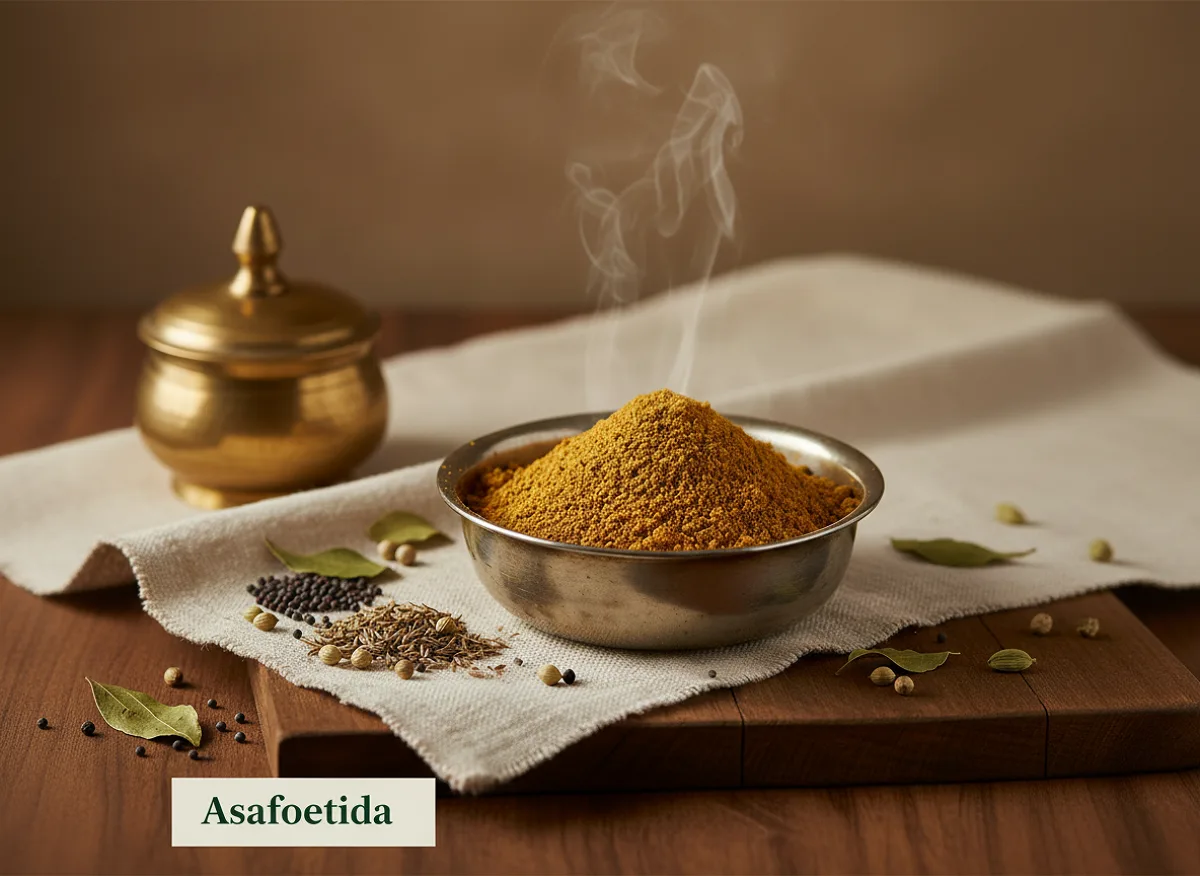
Asafoetida is a dried gum-resin harvested from the root of Ferula assa-foetida, a plant native to Afghanistan and Iran. It arrives in Indian kitchens as a pale yellow to brownish powder or lump, with a sharp, sulphurous aroma that softens into warm, onion-like depth when heated. Known locally as heeng, hing, inguva (South India), or kayam (parts of the South), it is one of the oldest recorded spices in Indian cooking (IFCT 2017, Ref #G019).
Use in Indian Kitchen
Asafoetida is a cornerstone of South Indian and Gujarati vegetarian cooking, where it replaces onion and garlic in many traditional dishes - a practice rooted in both religious custom and digestive wisdom. A single pinch, tempered in hot oil or ghee, lifts dal, sambar, rasam, and vegetable curries with an almost meaty savouriness. North Indian pickles and chutneys use it sparingly for depth. In Jain and Brahmin kitchens, it has been the secret to flavour without the allium family for centuries. The spice is so potent that a little goes a long way; overuse turns a dish acrid and unpleasant, so restraint is key.
Ayurvedic Connection
In Ayurveda, asafoetida is valued for its warming (ushna) and digestive properties. It is traditionally used to ease bloating, flatulence, and sluggish digestion - qualities reflected in its Sanskrit name hing and its role in dal and legume dishes. Classically, it is considered beneficial for balancing vata and kapha, and is often recommended in small amounts to support gut comfort and nutrient absorption.
Key Nutrients
Asafoetida contains volatile oils (including sulphur compounds responsible for its aroma), gum, and resin. Exact micronutrient composition per serving is modest because the spice is used in tiny quantities - typically a pinch (under 0.5 g per dish). The primary value lies in its digestive and flavouring compounds rather than bulk vitamins or minerals.
Health Benefits (Evidence-based)
- May support digestive comfort and help reduce bloating and gas, particularly when used in legume-based dishes.
- Traditionally linked to improved nutrient absorption and gentle stimulation of digestive enzymes.
- Contains sulphur compounds with potential antimicrobial and anti-inflammatory properties, though human studies remain limited.
- Often recommended in Ayurvedic practice as a carminative - a spice that eases intestinal discomfort without harsh action.
- May help settle an unsettled stomach when used in small, cooked amounts.
Culinary Uses (Vegetarian)
- Tempering in hot ghee or oil for dal, sambar, rasam, and vegetable curries - always a pinch, never more.
- Mixed into vegetable pickles and chutneys for depth and preservation.
- Sprinkled into potato and cauliflower sabzi, especially in South Indian and Gujarati kitchens.
- Added to buttermilk-based drinks and lassi for subtle savoury notes.
- Used in Jain and strict vegetarian cooking as a substitute for onion and garlic in flavouring.
Caution
- Use sparingly - a pinch is enough. Excess asafoetida tastes acrid and unpleasant and can overpower a dish.
- Pregnant women should avoid or use only under guidance, as it may have mild uterine stimulant properties.
- Those with sulphur sensitivity or certain digestive conditions should check with a healthcare provider before regular use.
- Always buy from reputable sources; adulteration with cheaper gums and fillers is common in low-quality packs.
References
- Indian Council of Medical Research (ICMR) and National Institute of Nutrition (NIN). Indian Food Composition Tables 2017. Hyderabad: NIN; 2017. [Ref #G019 - Condiments and Spices-Dry category].
- Grzanna R, Lindmark L, Frondoza CG. Ginger - a herbal medicinal product with broad anti-inflammatory actions. Journal of Medicinal Food. 2005; 8(2): 125-132. [General reference for traditional spice digestive properties in Indian Ayurvedic texts and practice].
Health Benefits
- Improves Digestion
- Anti Inflammatory
- Antimicrobial Support
- Reduces Bloating
Sourcing & Storage
Storage
Store asafoetida in an airtight glass jar or tin container, away from direct sunlight and heat. Keep it in a cool, dry cupboard - not the fridge, as moisture will cause it to clump and lose potency. If your kitchen is very humid (common in coastal or monsoon regions), add a small piece of dried neem leaf or a silica sachet to the jar to absorb moisture. Always keep the lid tightly sealed; asafoetida's pungent aroma will permeate other spices and foods if left open.
Shelf Life
When stored properly in an airtight container in a cool, dry place, asafoetida powder or lump will retain its potency for 2 to 3 years. Once opened, use within 6 to 12 months for best flavour and aroma. If it hardens into a solid block over time, it has not spoiled - simply break off a small piece and crush it with a mortar and pestle before use. Discard if it develops an off smell or visible mould.
Check Before You Buy
Buy asafoetida from a trusted kirana shop or spice mandi where you can inspect the pack or ask the shopkeeper to open it. Look for a pale yellow to light brown colour; very dark or greyish powder may indicate age or adulteration. Smell it if possible - genuine asafoetida has a sharp, distinctive sulphurous aroma that is unmistakable. Avoid packs with a musty or chemical smell, which suggest poor storage or mixing with cheaper gums. Check the packaging date and choose smaller quantities (25-50 g) if you don't use it regularly, as a little goes a long way. Reputable brands and direct mandi purchases are safer than loose, unlabelled stock.
In Ayurveda
In Ayurveda, asafoetida is valued for its warming properties that help balance Vata and Kapha doshas. It aids digestion, reduces bloating, and supports respiratory health. Additionally, its antimicrobial benefits promote overall wellness, making it a cherished spice in holistic practices.