Coriander Seed
Coriandrum sativum · Also known as dhaniya
Coriander seed (dhaniya) is the dried fruit of the coriander plant, a warm, citrusy spice essential to Indian cooking. Used whole or ground, it appears in curries, dals, pickles, and spice blends across the country (IFCT 2017, Ref #G024).
Nutrition per 100 g
Mean values ± IFCT published SD (edible portion).
More macros
Classification
About Coriander Seed
What it is
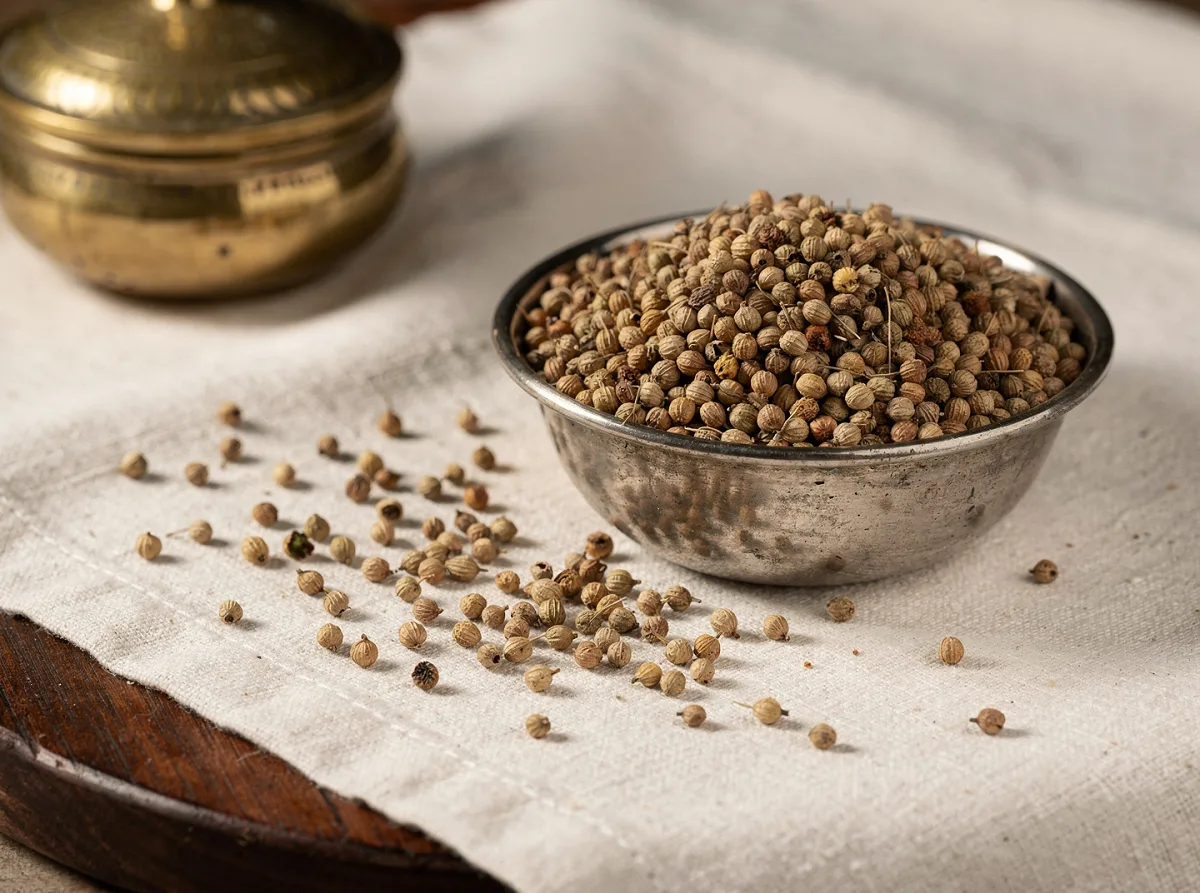
Coriander seed is the dried, ripe fruit of Coriandrum sativum, a herb native to the Mediterranean and South Asia. Small, round, and pale brown with a warm, slightly sweet and citrusy aroma, it is one of the oldest spices in Indian kitchens. The seed is distinct from fresh coriander leaves (cilantro), though both come from the same plant. Coriander seeds are used whole in tempering and pickling, or ground into a fine powder for curries and spice mixes (IFCT 2017, Ref #G024).
Use in Indian Kitchen
Coriander seed is a cornerstone of Indian cooking across all regions. In South India, it is roasted and ground as part of sambar powder and rasam masala; in North India, it features in garam masala and is tempered whole in dals and vegetable curries. In the West, it is essential to Gujarati and Maharashtrian spice blends, while in the East it appears in Bengali fish curries and vegetable preparations. The seed is often dry-roasted before grinding to deepen its flavour. Its warm, slightly sweet character makes it a natural partner to cumin, turmeric, and chilli. Many home cooks keep both whole seeds and ground powder on hand - the whole seed for tadka (tempering) and the powder for everyday cooking.
Ayurvedic Connection
In Ayurveda, coriander seed is considered cooling (sheeta virya) and is traditionally used to balance excess pitta. It is believed to support digestion and is often included in digestive spice blends and herbal preparations. Classical texts value it for its mild, balancing nature and its use in post-meal chutneys and cooling drinks.
Key Nutrients
Coriander seed contains volatile oils (including linalool and geraniol), dietary fibre, and minerals including iron, manganese, and magnesium. It also provides small amounts of calcium and phosphorus. Exact nutrient composition per serving is detailed in IFCT 2017, Ref #G024.
Health Benefits (Evidence-based)
- May support digestive comfort and help reduce bloating when used regularly in cooking.
- Linked to anti-inflammatory properties, traditionally valued in Ayurvedic and folk medicine.
- Contains antioxidants that may help protect cells from oxidative stress.
- Traditionally used to support healthy blood sugar levels as part of balanced meals.
- May help reduce mild water retention and support kidney function in classical Ayurvedic practice.
Culinary Uses (Vegetarian)
- Whole seeds: tempered in hot ghee or oil at the start of dal, vegetable curries, and lentil soups.
- Ground powder: mixed into sambar powder, rasam powder, garam masala, and dry spice rubs for vegetables.
- Roasted and ground: added to chutneys, pickles, and spice pastes.
- Infused in water or buttermilk: used in cooling summer drinks and digestive tonics.
- Paired with: cumin, turmeric, chilli, fenugreek, and asafoetida in most Indian spice blends.
Caution
Coriander seed is generally safe for most people when used as a culinary spice. Those with a known allergy to plants in the Apiaceae family (carrot, celery, parsnip) should be cautious. Pregnant women should use only in normal cooking amounts, not as a medicinal supplement. If taking blood-thinning medications, consult a healthcare provider before using coriander seed supplements, as it may have mild anticoagulant properties.
References
- Indian Council of Medical Research - National Institute of Nutrition (ICMR-NIN). Indian Food Composition Tables 2017. Hyderabad: ICMR-NIN; 2017. Ref #G024 (Coriander Seed, Dry).
- Singletary K. Coriander: Overview of potential health benefits. Nutrition Today. 2016; 51(1): 8-12.
Health Benefits
- Improves Digestion
- Boosts Immunity
- Detox Support
- Reduces Bloating
Sourcing & Storage
Storage
Store coriander seeds in an airtight glass jar or container away from direct sunlight, heat, and moisture. Keep in a cool, dry cupboard or spice rack. In humid climates (common in India during monsoon), store in the refrigerator in a sealed jar to prevent moisture absorption and loss of aroma. Whole seeds retain flavour better than ground powder, so grind only as needed.
Shelf Life
Whole coriander seeds keep for 6-8 months when stored in an airtight container in a cool, dry place. Ground coriander powder loses flavour more quickly and is best used within 3-4 months. Once opened, transfer to an airtight jar and use within the recommended timeframe. Refrigeration extends shelf life by 1-2 months in humid conditions.
Check Before You Buy
Look for seeds that are uniform in colour (pale brown to tan), dry, and free from dust or debris. Smell the seeds if buying from a mandi or loose spice vendor - they should have a warm, citrusy aroma. Avoid seeds that smell musty, stale, or have a dull grey appearance, which may indicate age or poor storage. Check packaged seeds for the manufacturing and expiry dates. Whole seeds are preferable to pre-ground powder, as they retain flavour and aroma longer and are less prone to adulteration.
In Ayurveda
Coriander Seeds are highly valued for their numerous health benefits.
They are known to balance the three doshas: Vata, Pitta, and Kapha. Coriander seeds help in digestion, alleviating issues like bloating and gas. Their cooling properties make them particularly beneficial for managing Pitta imbalances, especially in hot weather. Additionally, they are rich in antioxidants and have anti-inflammatory effects, promoting overall health. Coriander seeds also support detoxification, enhance appetite, and contribute to clear skin.