Black Cardamom
Elettaria cardamomum · Also known as Hill cardamom, Bengal cardamom, greater cardamom, बड़ी इलायची (badi ilayachi), काली इलायची (kali ilayachi)
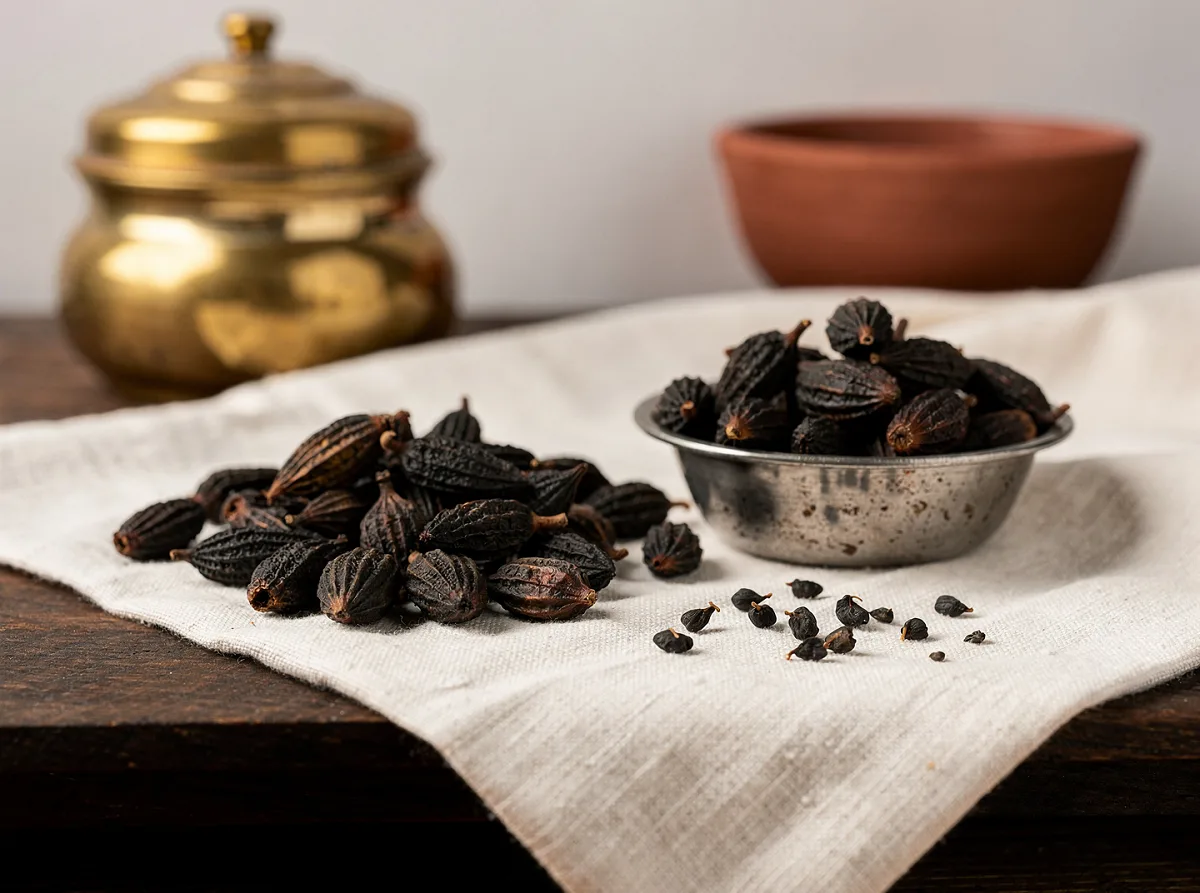
Black cardamom (बड़ी इलायची, badi ilayachi) is a large, smoky-scented dried pod with a bold, camphor-tinged warmth that sets it apart from its smaller green cousin. Used whole or crushed in North Indian curries, rice dishes, and garam masala blends, it brings depth and a subtle s...
Nutrition per 100 g
Mean values ± IFCT published SD (edible portion).
More macros
Classification
About Black Cardamom
What it is
Black cardamom (बड़ी इलायची, badi ilayachi) is a large, wrinkled dried pod, roughly the size of a small grape, with a deep brown to black exterior and a warm, smoky-camphor aroma. Unlike the smaller, greener green cardamom, black cardamom has a coarser texture and a more robust, slightly resinous flavour. It is used whole or crushed in Indian kitchens, particularly across North India, the Himalayan foothills, and parts of South India. (IFCT 2017, Ref #G021)
Use in Indian Kitchen
Black cardamom is a cornerstone of garam masala and appears whole in rice pilafs, vegetable biryanis, and slow-cooked curries where its smoky warmth can infuse the dish. In South India, it features in sambar and rasam powders, lending a deeper note than green cardamom alone. North Indian home cooks crush it into dal, khichdi, and vegetable stews. A single pod simmered in chai or added to rice water (chaas) imparts a subtle, warming complexity. Crush the pod lightly before use to release its oils; remove whole pods before serving or warn diners to set them aside.
Key Nutrients
Black cardamom contains volatile oils (including cineole and limonene), fibre, and trace minerals including manganese, iron, and calcium. Exact nutrient composition per serving varies with pod size and storage; refer to IFCT 2017 for standardised values.
Health Benefits (Evidence-based)
- May support digestive comfort and help ease bloating when used in warm spiced dishes.
- Traditionally linked to respiratory wellness and used in warming chai and herbal infusions.
- Contains antioxidant compounds that may help protect cells from oxidative stress.
- Often included in Ayurvedic formulations for its warming, carminative properties.
- May help freshen breath and support oral health when chewed or used in rinses.
Culinary Uses (Vegetarian)
- Whole pods in rice pilafs, vegetable biryanis, and slow-cooked curries.
- Crushed into garam masala blends and spice powders for sambar, rasam, and dal.
- Infused in chai, herbal teas, and warming milk drinks.
- Added to khichdi, vegetable stews, and lentil soups for depth.
- Paired with cinnamon, cloves, and bay leaves in rice and grain dishes.
Caution
- Use sparingly; the flavour is potent and can overpower a dish if too much is added.
- Pregnant or nursing women should consult a healthcare provider before using medicinal amounts.
- Those with sensitive digestion may find the smoky warmth too strong; start with a small pinch.
- Not a substitute for medical treatment; use as a culinary spice and traditional wellness support only.
References
- Indian Council of Medical Research - National Institute of Nutrition (ICMR-NIN). Indian Food Composition Tables 2017 (IFCT 2017). Reference #G021 - Condiments and Spices (Dry).
- Ravindran, P. N., & Madhusoodanan, K. J. (2008). Cardamom: The Genus Elettaria. Medicinal and Aromatic Plants - Industrial Profiles. Taylor & Francis.
Health Benefits
- Improves Digestion
- Boosts Immunity
- Relieves Bloating
- Respiratory Support
Sourcing & Storage
Storage
Store black cardamom pods in an airtight glass jar or metal tin away from direct sunlight, heat, and moisture. Keep in a cool, dry cupboard or pantry; in humid Indian climates, store in the refrigerator to prevent mould and preserve aroma. Whole pods retain flavour far longer than crushed cardamom, so buy and crush as needed. Keep away from strong-smelling foods and spices to avoid flavour transfer.
Shelf Life
Whole black cardamom pods, when stored in an airtight container in a cool, dry place, retain their aroma and potency for 6-8 months. Once crushed or ground, use within 2-3 months for best flavour. Refrigeration in humid climates can extend shelf life by several months. Discard if the pod loses its aroma or shows signs of mould or insect damage.
Check Before You Buy
Choose pods that are large, dark brown to black, and feel slightly oily to the touch - a sign of good volatile oil content. Avoid pods that are pale, shrivelled, or cracked, as these indicate age or poor storage. Smell the spice if buying from a loose bin or mandi; it should have a warm, smoky-camphor aroma, not musty or flat. Check packed spices for a clear date and seal; buy from reputable kirana shops or brands known for fresh stock. Beware of adulteration with cheaper cardamom varieties or exhausted (already-used) pods sold as fresh.
In Ayurveda
In classical Ayurvedic texts, black cardamom (badi ilayachi) is recognized for its warming (ushna) and pungent (katu) properties. It is traditionally used to support digestion, reduce bloating, and ease respiratory discomfort. The essential oils are believed to have a stimulating effect on the digestive fire (agni) and may help balance Vata and Kapha doshas when used in moderation.