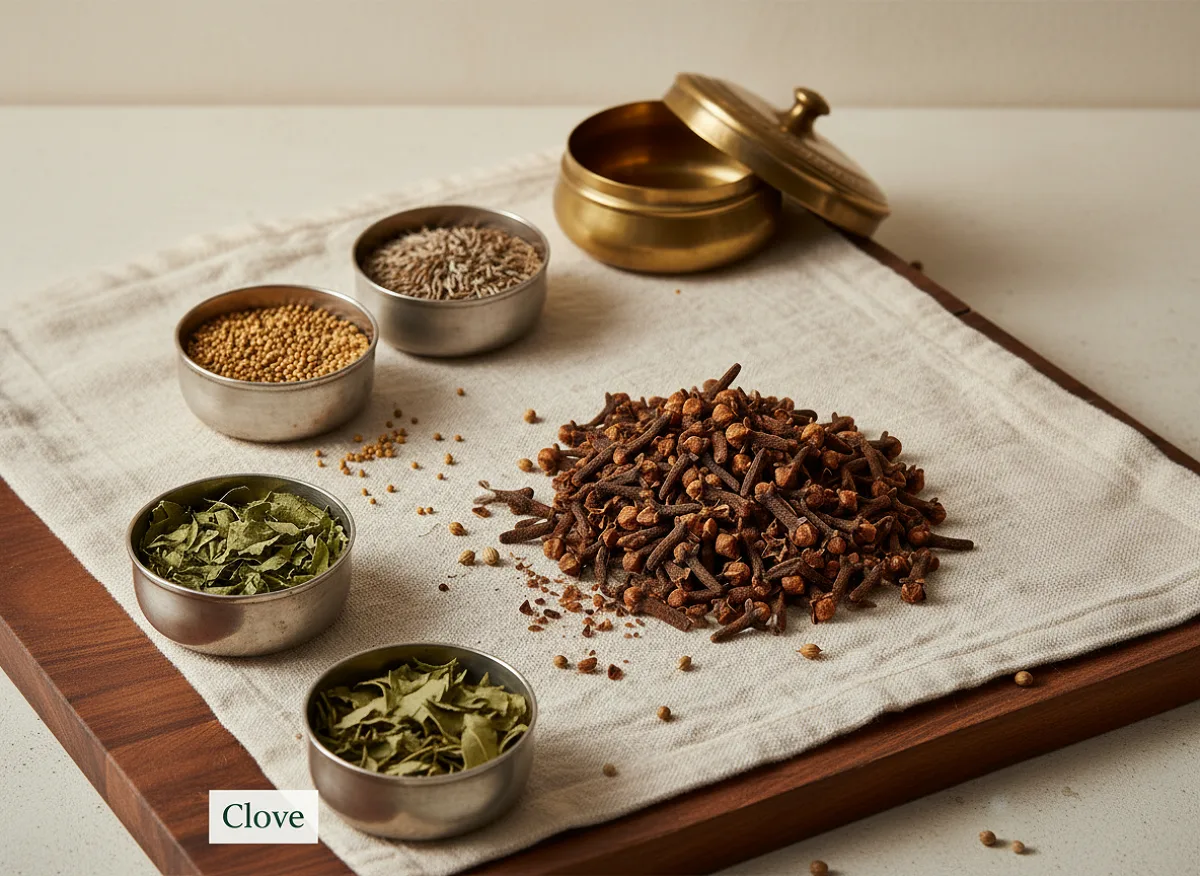
Clove
Syzygium aromaticum · Also known as laung, Lavinga, Lavang, Lavankapattai
Clove (laung) is the dried flower bud of the clove tree, a warm, intensely aromatic spice essential to Indian cooking. Used whole or ground, it brings depth to curries, rice dishes, and spice blends. (IFCT 2017, Ref #G023)
Nutrition per 100 g
Mean values ± IFCT published SD (edible portion).
More macros
Classification
About Clove
What it is
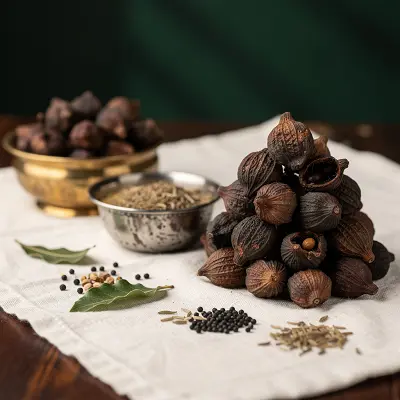
Clove, known as laung or lavang in Hindi and regional Indian languages, is the unopened dried flower bud of Syzygium aromaticum. Native to the Maluku Islands but now cultivated in Kerala and other tropical regions, cloves are harvested green and sun-dried until dark brown and nail-shaped. They are one of the oldest traded spices and remain a cornerstone of Indian kitchens. (IFCT 2017, Ref #G023)
Use in Indian Kitchen
Cloves appear across Indian regional cooking - whole in North Indian garam masala, rice pilafs, and meat curries; ground in South Indian sambar powder and rasam; and as a tempering spice in dals and vegetable curries. In Gujarati and Maharashtrian kitchens, they flavour sweet and savoury dishes alike. The spice is inseparable from festival cooking - biryani, kheer, and halwa would feel incomplete without its warm, slightly sweet bite. A pinch in chai or coffee is a quiet comfort many Indian homes return to, especially on cool mornings.
Ayurvedic Connection
In Ayurveda, clove is considered warming (ushna virya) and is traditionally used to support digestion and oral health. It is believed to balance vata and kapha doshas and is often recommended in classical texts as a digestive aid and mouth freshener. Clove oil has long been used in Indian home remedies for tooth discomfort and as a general warming agent in winter tonics.
Key Nutrients
Cloves are rich in volatile oils (including eugenol), phenolic compounds, and minerals such as manganese, iron, and calcium. They also contain vitamin K and dietary fibre. Exact nutrient composition per serving is detailed in IFCT 2017, Ref #G023.
Health Benefits (Evidence-based)
- May support digestive comfort and reduce bloating when used in cooking or as a spice infusion.
- Linked to antioxidant and anti-inflammatory properties, which may help protect cells from oxidative stress.
- Traditionally used to support oral health and freshen breath, with some evidence for antimicrobial activity.
- May help regulate blood sugar levels when included as part of a balanced diet, though more research is ongoing.
- The warming nature makes it useful in winter cooking and may support circulation and comfort in cold weather.
Culinary Uses (Vegetarian)
- Whole cloves in garam masala, biryani, pulao, and rice dishes.
- Ground clove in sambar powder, rasam powder, and spice blends.
- Tempering in dals, curries, and vegetable sabzis.
- Infused in chai, coffee, and warm milk drinks.
- Whole or crushed in pickles, chutneys, and preserves.
- A single clove or two in kheer, halwa, and Indian sweets for subtle warmth.
Caution
- Use sparingly - clove is potent and a little goes a long way. Excess can overpower a dish.
- Pregnant women should use only in culinary amounts (not medicinal doses).
- Those with bleeding disorders or taking blood-thinning medications should consult a healthcare provider before using clove supplements or oils.
- Clove oil applied directly to skin or gums can irritate sensitive tissues; always dilute or use in food form.
- Whole cloves can be a choking hazard for very young children; grind or use in infusions for small children.
References
- Indian Council of Medical Research - National Institute of Nutrition (ICMR-NIN). Indian Food Composition Tables (IFCT) 2017. Reference #G023 (Clove, Condiments and Spices - Dry).
- Cortés-Rojas, D. F., Souza, C. R. F., & Oliveira, W. P. (2014). Clove (Syzygium aromaticum, Myrtaceae): A precious spice. Asian Pacific Journal of Tropical Biomedicine, 4(2), 90-96.
Health Benefits
- Improves Digestion
- Boosts Immunity
- Antimicrobial Support
- Relieves Toothache
Sourcing & Storage
Storage
Store whole cloves in an airtight glass jar or container away from direct sunlight, heat, and moisture. Keep in a cool, dry place - ideally a kitchen cupboard away from the stove. Ground clove loses potency faster and should be stored in a small, tightly sealed jar. In humid Indian climates, consider adding a food-grade silica packet to the jar to prevent moisture absorption. Keep away from strong-smelling foods as clove readily absorbs odours.
Shelf Life
Whole cloves retain their flavour and aroma for 1 to 2 years when stored properly in an airtight container. Ground clove is best used within 6 months for maximum potency, though it remains safe longer. Once opened, check for any musty smell or loss of aroma before use - this signals the spice has lost its essential oils and should be replaced.
Check Before You Buy
Look for whole cloves that are dark brown, plump, and nail-shaped with a closed bud at the top. They should feel slightly oily and release a strong, warm aroma when crushed gently - a sign of high essential oil content. Avoid cloves that are pale, shrivelled, or have an open bud, as these indicate age or poor storage. Buy from reputable kirana shops or mandi vendors with good turnover. If buying pre-ground clove, choose sealed packets from trusted brands and check the manufacturing date; ground clove loses potency quickly and should smell distinctly aromatic when opened.
In Ayurveda
Clove, known as "Laung" in Ayurveda, is valued for its digestive aid properties, anti-inflammatory effects, and rich antioxidant content. It promotes oral health, alleviates respiratory issues, and enhances vitality, making it a versatile spice for overall wellness.