Ajwain
Trachyspermum ammi · Also known as ajavain, Omum, Celery, Carom Seeds
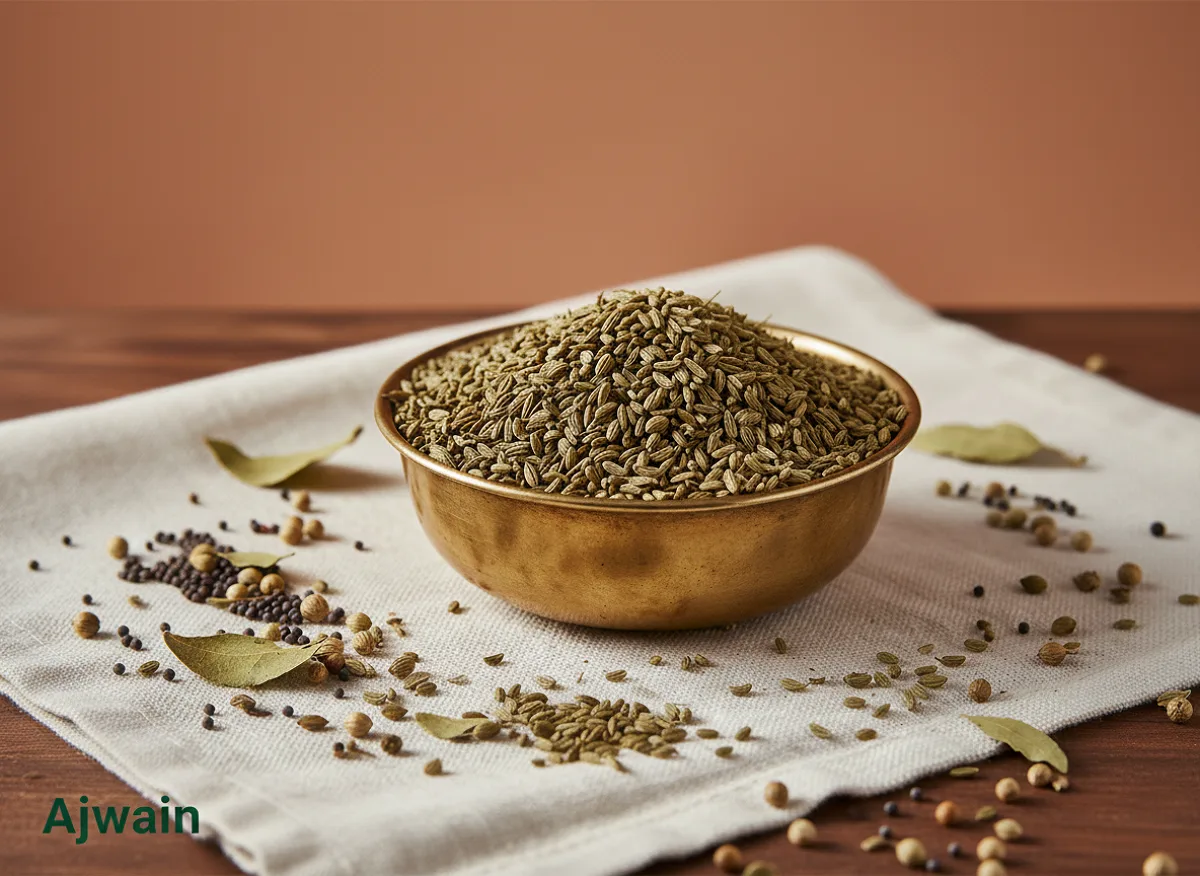
Ajwain (ajavain), also called carom seeds, are tiny, oval-shaped spice seeds with a warm, slightly bitter flavour reminiscent of thyme. A staple in Indian kitchens, they are commonly used whole in tempering or ground into spice blends. IFCT 2017, Ref #G029.
Nutrition per 100 g
Mean values ± IFCT published SD (edible portion).
More macros
Classification
About Ajwain
What it is
Ajwain seeds come from the Trachyspermum ammi plant, native to the eastern Mediterranean and South Asia. Small, ridged, and brownish-grey in colour, they have a pungent, slightly bitter taste with notes of thyme and oregano. In Indian cooking, they are used whole or crushed, and are a key ingredient in many regional spice blends. IFCT 2017, Ref #G029.
Use in Indian Kitchen
Ajwain is treasured across India, though it holds special place in North Indian and Gujarati kitchens. In the North, it seasons breads like paratha and puri, and flavours savoury snacks such as namkeen and mathri. South Indian cooks add it to dal and vegetable curries for digestive warmth. It is a key tempering spice in sambar and rasam powders, and features in pickle and achaar recipes across regions. Traditionally, ajwain water (ajwain ka pani) is given to babies and new mothers for digestive comfort. The seeds are often roasted lightly before use to deepen their flavour and reduce any raw edge.
Ayurvedic Connection
In Ayurveda, ajwain is valued for its warming (ushna) and digestive properties. It is believed to balance Vata and Kapha doshas and is traditionally used to support digestion, reduce bloating, and ease mild stomach discomfort. The seeds are often steeped in warm water or added to warm milk as a home remedy for digestive wellness.
Key Nutrients
Ajwain contains essential oils (including thymol), fibre, and minerals such as calcium and iron. Exact nutrient composition per serving is documented in IFCT 2017, Ref #G029. The seeds are typically used in small quantities, so they contribute flavour and traditional wellness support rather than bulk nutrition.
Health Benefits (Evidence-based)
- May support digestive comfort and reduce bloating when consumed in traditional preparations.
- Contains thymol, an essential oil traditionally linked to antimicrobial and anti-inflammatory properties.
- Historically used to ease mild stomach discomfort and support overall digestive wellness.
- May help reduce gas and support healthy digestion when added to legume-based dishes.
- Traditionally valued in Ayurvedic practice for warming the digestive system.
Culinary Uses (Vegetarian)
- Tempering (tadka) in dal, sambar, and rasam.
- Seasoning for breads: paratha, puri, naan, and roti.
- Flavouring for savoury snacks: namkeen, mathri, chikhalwali, and pakora batters.
- Pickling and achaar recipes across regions.
- Spice blends for vegetable curries and stir-fries.
- Infused in warm water or milk as a digestive drink.
- Seasoning for paneer dishes and vegetable fritters.
Caution
- Use in moderation; ajwain is potent and a little goes a long way.
- Pregnant women should consult a healthcare provider before consuming ajwain in medicinal quantities, though culinary amounts are generally safe.
- Those with sensitive digestion may find large amounts warming or stimulating; start with small quantities.
- Allergic reactions are rare but possible; discontinue if any unusual symptoms occur.
References
- Indian Council of Medical Research - National Institute of Nutrition (ICMR-NIN). Indian Food Composition Tables (IFCT) 2017. Reference #G029 (Condiments and Spices - Dry).
- Sharma, P. C., Yelne, M. B., & Dennis, T. J. (2005). Database on Medicinal Plants Used in Ayurveda. Central Council for Research in Ayurvedic Sciences, New Delhi.
Health Benefits
- Improves Digestion
- Antimicrobial Support
- Reduces Bloating
- Relieves Gas
Sourcing & Storage
Storage
Store ajwain seeds in an airtight glass jar or container away from direct sunlight, heat, and moisture. Keep in a cool, dry place - ideally a kitchen cupboard or spice rack away from the stove. In humid climates, store in the refrigerator to prevent moisture absorption and preserve the essential oils that give ajwain its flavour and aroma.
Shelf Life
Whole ajwain seeds retain their flavour and potency for 6 to 8 months when stored in an airtight container in a cool, dry place. Once opened, use within 3 to 4 months for best flavour. Ground ajwain loses potency faster and should be used within 2 to 3 months. Refrigeration can extend shelf life by a few weeks in humid conditions.
Check Before You Buy
Look for seeds that are uniform in colour - a brownish-grey with no discolouration or dark spots. They should feel dry and crisp, not sticky or clumpy. Smell the seeds if possible; fresh ajwain has a strong, pungent, slightly thyme-like aroma. Avoid seeds that smell musty, stale, or lack fragrance, as this indicates age or poor storage. Check the packaging date on branded packs and buy from reputable kirana shops or mandis with good turnover to ensure freshness.
In Ayurveda
Ajwain is valued for its warming properties and ability to aid digestion. It alleviates gas and bloating, enhances appetite, and supports respiratory health. Known for its antimicrobial effects, ajwain is often used in remedies to balance vata and kapha doshas.