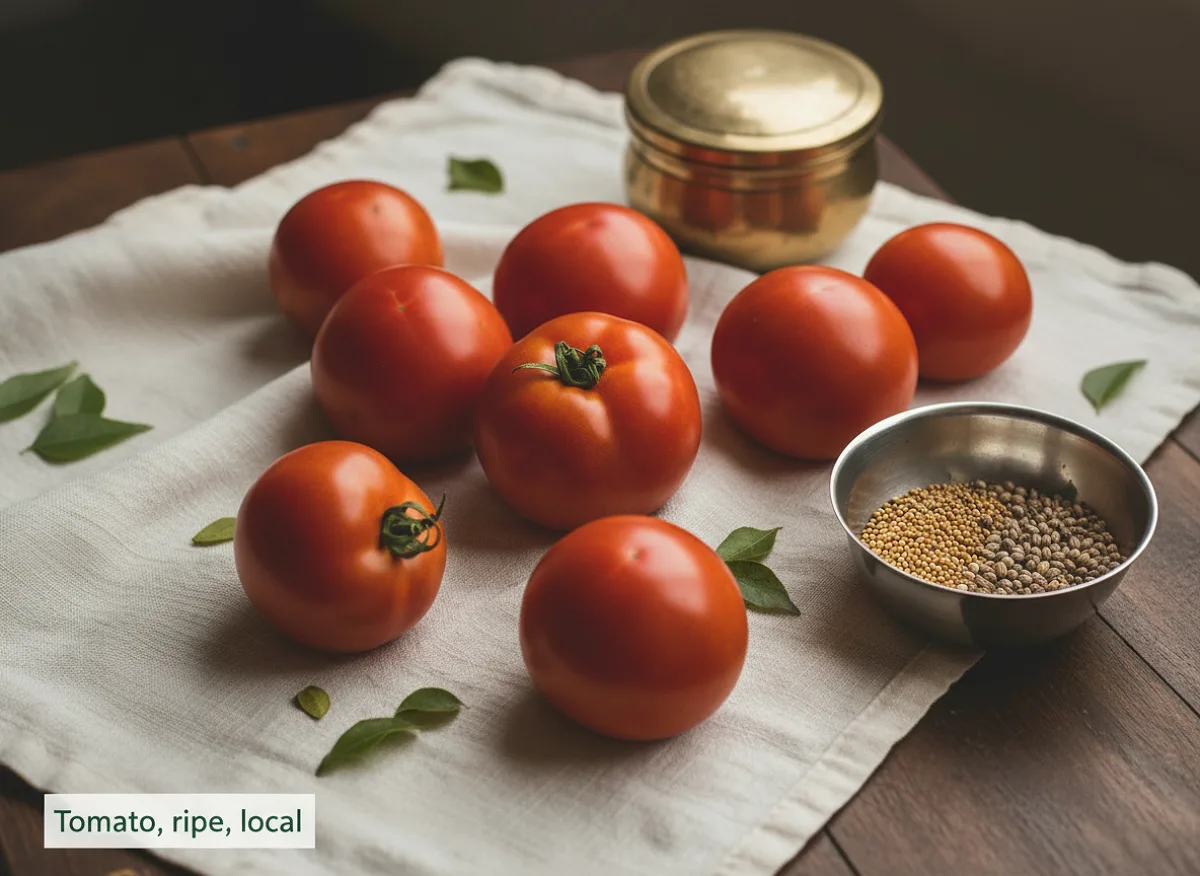
Tomato, ripe, local
Lycopersicon esculentum · Also known as Poka bilahi, Tomato, Tameta, Tamator, Goore Hannu, Rowangun, Takkali pazham, Khamen ashinba, Velvangi, Gholobheda, Bilati Baigan, Pakke tamator, Rakta phalam, Soh saw khasii, Ramamulagakaya, Pakka tamatar.
Ripe, local tomatoes are the backbone of Indian home cooking - a soft, juicy fruit packed with lycopene and vitamin C. Used fresh in chutneys, curries, salads, and sambhar, they bring natural acidity and sweetness to countless regional dishes. (IFCT 2017, Ref #D076)
Nutrition per 100 g
Mean values ± IFCT published SD (edible portion).
More macros
Classification
About Tomato, ripe, local
What it is
The ripe tomato is a soft, fleshy fruit from the nightshade family, typically red when mature and bursting with juice and seeds. Local, seasonal tomatoes - whether from your mandi, kirana, or kitchen garden - are the soul of Indian home cooking. They are eaten raw, cooked into curries, or reduced to a tangy base for countless dishes. (IFCT 2017, Ref #D076)
Use in Indian Kitchen
Tomatoes are universal across Indian regions, yet each kitchen has its own rhythm. In the South, they anchor sambhar and rasam with their tartness; in the North, they build the gravy for butter chicken and dal makhani. In the East, they brighten fish curries and vegetable stir-fries. Summer brings a glut of sweet, thin-skinned varieties perfect for fresh salads and chutneys; winter tomatoes are firmer and ideal for long-cooking curries. Many home cooks still preserve tomato paste or pickle surplus tomatoes for the lean months - a quiet act of kitchen wisdom passed down through generations.
Key Nutrients
Ripe tomatoes are a good source of lycopene (a powerful antioxidant), vitamin C, potassium, and folate. They also contain vitamin A, fibre, and small amounts of iron and calcium. Exact nutrient composition varies with ripeness, variety, and growing conditions; refer to IFCT 2017 (Ref #D076) for detailed micronutrient profiles.
Health Benefits (Evidence-based)
- Lycopene, especially abundant in ripe red tomatoes, is linked to heart health and may help reduce inflammation in the body.
- Vitamin C supports immune function and collagen formation, aiding skin and bone health.
- Potassium helps regulate blood pressure and supports cardiovascular wellness.
- The fibre and low calorie density make tomatoes a natural fit for weight-conscious eating.
- Traditionally used in Ayurvedic and home remedies to aid digestion and improve appetite.
- May help reduce oxidative stress due to their antioxidant profile.
Culinary Uses (Vegetarian)
- Fresh in salads, sliced with onion and coriander, dressed with salt and lemon.
- Cooked into curries - dal, sabzi, paneer dishes, and gravies for rice and bread.
- Blended or crushed as a base for sambhar, rasam, and chutneys.
- Roasted or charred for smoky depth in North Indian curries.
- Fermented or pickled for long storage and tangy condiments.
- Reduced to a paste or sauce for layering flavour in slow-cooked dals and vegetable stews.
Caution
- Those with acid reflux or sensitive digestion may find raw or large quantities of tomato triggering; cooking can reduce acidity.
- Tomatoes contain alkaloids (solanine) in small amounts; not a concern for most, but those with certain joint conditions may wish to moderate intake.
- Pesticide residue is common in non-organic tomatoes; wash thoroughly or choose local, trusted sources.
- Unripe (green) tomatoes contain higher solanine levels and should not be eaten raw in quantity.
References
- Indian Council of Medical Research - National Institute of Nutrition (ICMR-NIN). Indian Food Composition Tables (IFCT) 2017. Reference #D076 (Other Vegetables - Tomato, ripe, local).
- National Institute of Nutrition, ICMR. Dietary Guidelines for Indians - A Manual. 2nd ed. Hyderabad: NIN; 2011.
Sourcing & Storage
Storage
Store ripe tomatoes at room temperature, away from direct sunlight and heat, in a cool, dry corner of your kitchen or pantry - not in the fridge, as cold dulls their flavour and texture. If you must refrigerate (in very hot, humid climates), place them in the crisper drawer and bring to room temperature before use. Keep them in a single layer, not piled, to prevent bruising. In peak summer, a clay pot or open basket with good air circulation works best. Avoid plastic bags, which trap moisture and hasten decay.
Shelf Life
Ripe tomatoes keep for 3 - 5 days at room temperature if stored properly. Slightly underripe tomatoes last longer (up to a week). Once cut, use within a day or two; store cut pieces in an airtight container in the fridge. Tomato paste or sauce, once cooked and cooled, keeps refrigerated for up to a week in a glass jar, or frozen for 2 - 3 months. Whole tomatoes do not freeze well, but cooked tomato preparations freeze excellently.
Check Before You Buy
Choose tomatoes that are firm yet yield slightly to gentle pressure - a sign of ripeness without mushiness. Look for a deep red colour (or the natural colour of the variety) and a faint, sweet aroma near the stem. Avoid tomatoes with soft spots, cracks, blemishes, or a wrinkled skin. Check the underside for mould or rot. Local, seasonal tomatoes from your mandi are often fresher and cheaper than packaged imports; ask the vendor when they were picked. If buying packaged tomatoes, inspect the container for bruised or leaking fruit. Reject any with a greenish tinge or hard, pale appearance - they will not ripen well at home and lack flavour.