Tomato
Lycopersicon esculentum · Also known as tamaatar
Tomato (tamaatar) is a soft, juicy fruit-vegetable rich in lycopene and vitamin C, used fresh or cooked across Indian kitchens. A staple in curries, chutneys, rasam, and salads, it brings acidity and depth to countless regional dishes (IFCT 2017, Ref #D075).
Nutrition per 100 g
Mean values ± IFCT published SD (edible portion).
More macros
Classification
About Tomato
What it is
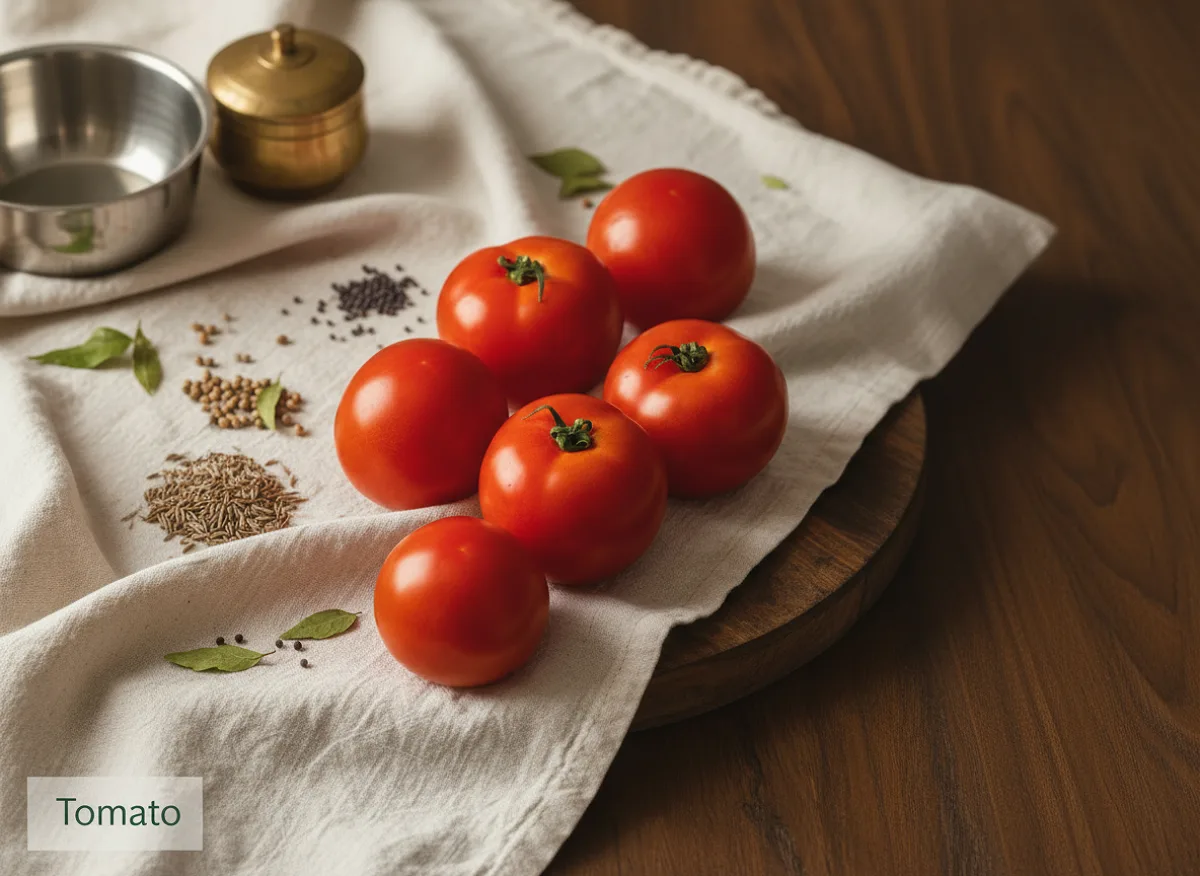
Tomato is a soft, round or oval fruit-vegetable with thin skin and juicy flesh, ranging from deep red to orange depending on ripeness and variety. Native to the Americas but now integral to Indian cooking for centuries, it thrives in warm climates across the subcontinent. The composition is documented in IFCT 2017, Ref #D075.
Use in Indian Kitchen
Tomato is foundational across all Indian regions. In the South, it stars in sambar, rasam, and coconut-based curries; in the North, it anchors gravies for paneer and dal; in the East, it features in fish curries and vegetable stir-fries; in the West, it's essential to Gujarati and Maharashtrian sabzis and chutneys. Fresh tomatoes are chopped into salads and raita, while cooked tomatoes build the base of countless curries. Seasonal gluts are preserved as pickle, paste, or dried slices. For many home cooks, a good tomato can make or break a dish - its acidity and sweetness balance spices and create depth that no shortcut can replicate.
Key Nutrients
Tomatoes are a good source of vitamin C, potassium, and lycopene (a carotenoid antioxidant). They also contain folate, vitamin A, and dietary fibre. Exact nutrient composition varies by ripeness and variety; refer to IFCT 2017, Ref #D075 for standardised Indian food values.
Health Benefits (Evidence-based)
- May support heart health through potassium content and lycopene's antioxidant action.
- Linked to skin and eye health due to vitamin A and lycopene.
- Vitamin C content may help with immune function and iron absorption.
- Traditionally used in Ayurvedic cooking to aid digestion and balance pitta when ripe and well-cooked.
- Lycopene is better absorbed when tomatoes are cooked with a little fat (ghee or oil), making cooked tomato dishes more bioavailable than raw.
Culinary Uses (Vegetarian)
- Base for curries, gravies, and dal tadka across all regions.
- Fresh in salads, raita, and as a side with meals.
- Cooked into sambar, rasam, and vegetable stir-fries.
- Blended into chutneys, sauces, and soups.
- Preserved as pickle, paste, or dried slices for off-season use.
- Stuffed with spiced paneer or lentil filling for a main dish.
Caution
Tomatoes are acidic and may cause discomfort in people with acid reflux or sensitive digestion; cooking and pairing with ghee or oil can ease this. Those on certain medications (e.g. blood thinners) should consume consistently rather than in sudden large amounts. Unripe green tomatoes contain alkaloids and should not be eaten raw in quantity.
References
- Indian Council of Medical Research - National Institute of Nutrition (ICMR-NIN). Indian Food Composition Tables 2017 (IFCT 2017). Reference #D075 - Other Vegetables category.
- National Institute of Nutrition, ICMR. Dietary Guidelines for Indians - A Manual. New Delhi: ICMR-NIN; 2011.
Health Benefits
- Antioxidant
- Hydration
- Boosts Immunity
- Supports Heart Health
- Improves Skin Health
Sourcing & Storage
Storage
Store ripe tomatoes at room temperature (20-25°C) away from direct sunlight and in a well-ventilated area; they will ripen further and develop flavour. Once fully ripe, move to the refrigerator (4-8°C) to slow decay, but remove 30 minutes before cooking to restore flavour. Keep away from ethylene-producing fruits (apples, bananas) to avoid over-ripening. In humid Indian climates, ensure good air circulation to prevent mould; do not store in sealed plastic bags.
Shelf Life
Ripe tomatoes last 3-5 days at room temperature and up to 1-2 weeks in the refrigerator when stored in a breathable container or paper bag. Once cut, use within 1-2 days. Cooked tomato curry or sauce keeps 3-4 days in the fridge; tomato paste or pickle lasts several months when stored in an airtight container in a cool, dry place.
Check Before You Buy
Choose tomatoes that are firm to the touch with unblemished, glossy skin and a deep red colour (or the expected colour for the variety). Smell the base - a ripe tomato should have a mild, sweet fragrance. Avoid soft spots, cracks, or signs of mould. If buying from a mandi or kirana, gently squeeze to check firmness without bruising. Packed tomatoes should show no condensation inside the container, which signals decay. Reject any with a greenish tinge at the shoulders, as these are underripe and will lack sweetness and acidity balance.
In Ayurveda
In Ayurveda, tomatoes are valued for their cooling properties and ability to balance Pitta dosha. They are rich in nutrients and antioxidants, promoting digestion and skin health. However, it's recommended to consume them cooked, especially in the evening, for better digestibility.