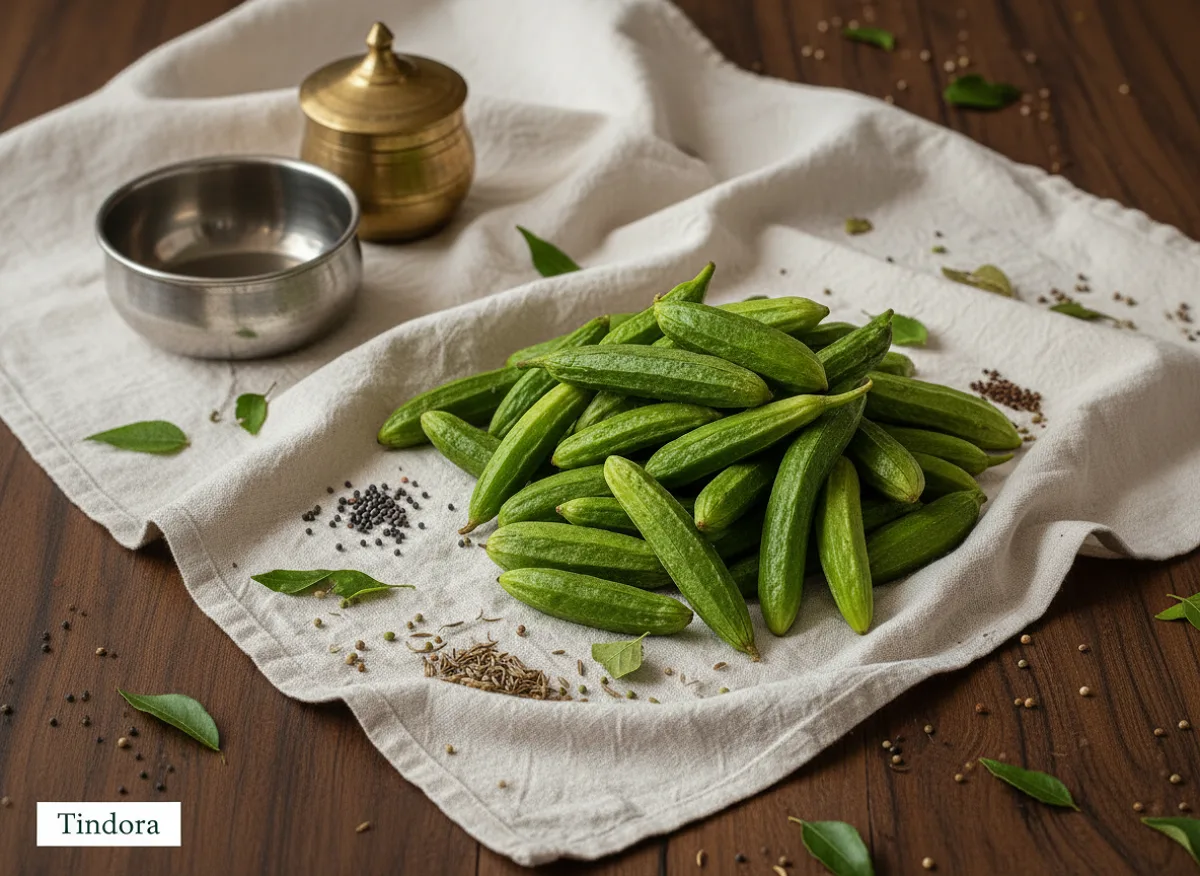
Tindora
Coccinia cordifolia · Also known as Kovai, Ivy Gourd, Kundru, तिंडोरा (Tindora)
Tindora, also called kovai or kundru, is a slender, ridged green vegetable with a crisp, slightly tangy flesh that softens beautifully when cooked. Fresh tindora is a summer favourite across Indian kitchens, especially in the South and West, where it is pan-fried until golden, st...
Nutrition per 100 g
Mean values ± IFCT published SD (edible portion).
More macros
Classification
About Tindora
What it is
Tindora (तिंडोरा, tindora) is a slender, ridged green vegetable pod, typically 5-8 cm long, with a thin skin and tender, pale green flesh inside. It belongs to the ivy gourd family and is known by many regional names - kovai in Tamil and Kannada, kundru in Hindi and Marathi. The pods have a mild, slightly tangy taste and a pleasant crunch when cooked lightly, though they soften quickly if simmered longer. Fresh tindora is a seasonal summer vegetable, most abundant from May to September, and is a staple in South Indian, Maharashtrian, and Gujarati home kitchens. (IFCT 2017, Ref #D054)
Use in Indian Kitchen
Tindora shines in simple, quick-cooking preparations. In South India, it is pan-fried with mustard seeds, curry leaves, and a pinch of turmeric - a dish called kovai fry or tindora vazhaicha. In Maharashtra and Gujarat, it is often stuffed with a spiced besan-onion filling and shallow-fried until crispy, or cooked dry with peanuts and jaggery for a sweet-savoury side. It also works well in light curries, sambar, and kootu, where its mild flavour absorbs the spices without overpowering. A practical tip: slice tindora lengthwise or into rounds, sprinkle with salt, and let it sit for 10 minutes before cooking to reduce any slight bitterness and help it cook evenly. Pair it with tamarind, coconut, or a squeeze of lemon for brightness.
Key Nutrients
Tindora is low in calories and rich in dietary fibre, supporting digestive health. It contains vitamin C for immunity, small amounts of iron and calcium, and various phytonutrients. Exact nutrient composition per 100 g is available in IFCT 2017 (Ref #D054); values vary slightly with freshness and growing conditions.
Health Benefits (Evidence-based)
- High in dietary fibre, which may support healthy digestion and regular bowel function.
- Low in calories and fat, making it a light addition to weight-conscious meals.
- Contains vitamin C, linked to immune support and collagen formation.
- Provides small amounts of iron and calcium, contributing to overall mineral intake.
- Traditionally used in Indian home remedies for mild digestive discomfort, though clinical evidence is limited.
Culinary Uses (Vegetarian)
- Pan-fried tindora fry with mustard seeds, curry leaves, and turmeric.
- Stuffed tindora (kundru bhare) with spiced besan and onion filling, shallow-fried.
- Dry curry with peanuts, coconut, and jaggery.
- Light sambar or kootu with lentils and vegetables.
- Sliced into salads or quick stir-fries with minimal oil.
- Pickled or preserved for off-season use.
Caution
Tindora is generally safe for all ages. Those with sensitive digestion may find it easier to digest when cooked soft rather than raw. If you have a known allergy to gourds or cucurbits, introduce tindora cautiously. Always wash thoroughly before use to remove any soil or residue.
References
- Indian Council of Medical Research - National Institute of Nutrition (ICMR-NIN). Indian Food Composition Tables 2017 (IFCT 2017). Reference #D054 (Other Vegetables - Tindora).
- National Institute of Nutrition, Hyderabad. Nutritive Value of Indian Foods. ICMR publications on vegetable composition and seasonal availability in Indian markets.
Health Benefits
- Supports Digestion
- Boosts Immunity
- Weight Management Support
- Heart Health Support
- Regulates Blood Sugar
Sourcing & Storage
Storage
Store fresh tindora in a cool, dry place or in the vegetable compartment of the refrigerator in a perforated plastic bag or paper towel to allow air circulation. Keep away from direct sunlight and moisture. In warm, humid climates, refrigeration extends shelf life significantly. Do not wash before storage; wash only just before cooking to prevent premature softening.
Shelf Life
Fresh tindora keeps for 3-5 days in the refrigerator when stored properly, and 1-2 days at room temperature in cool weather. Once cooked, tindora dishes are best consumed within 1-2 days when refrigerated. Pickled or preserved tindora can last several weeks to months in an airtight jar, depending on the preservation method and storage conditions.
Check Before You Buy
Choose tindora pods that are bright green, firm, and free of soft spots, blemishes, or yellowing. The skin should feel smooth and slightly waxy, not wrinkled or dull. Avoid pods that are too large or thick, as they tend to be fibrous and less tender; young, slender pods (5-7 cm) are ideal. Check that they snap cleanly when bent gently - a sign of freshness. At the mandi or kirana shop, buy from vendors with good turnover; tindora is best used within a day or two of harvest. If buying pre-packed, check the date and ensure the pods are not crushed or discoloured inside the pack.
In Ayurveda
Tindora (Ivy Gourd) is not extensively documented in classical Ayurvedic texts as a named ingredient with specific rasa, guna, or virya classifications. However, it belongs to the broader category of light, cooling gourds and vegetables traditionally valued in Ayurvedic seasonal eating. In South Indian Ayurvedic practice, it is often used during summer months for its cooling (sheeta virya) properties and digestive support. Modern Ayurvedic practitioners sometimes recommend it for pitta pacification due to its mild, non-heating nature and high water content.