Tapioca
Manihot esculenta · Also known as Sabudana, cassava root, cassava starch, sago
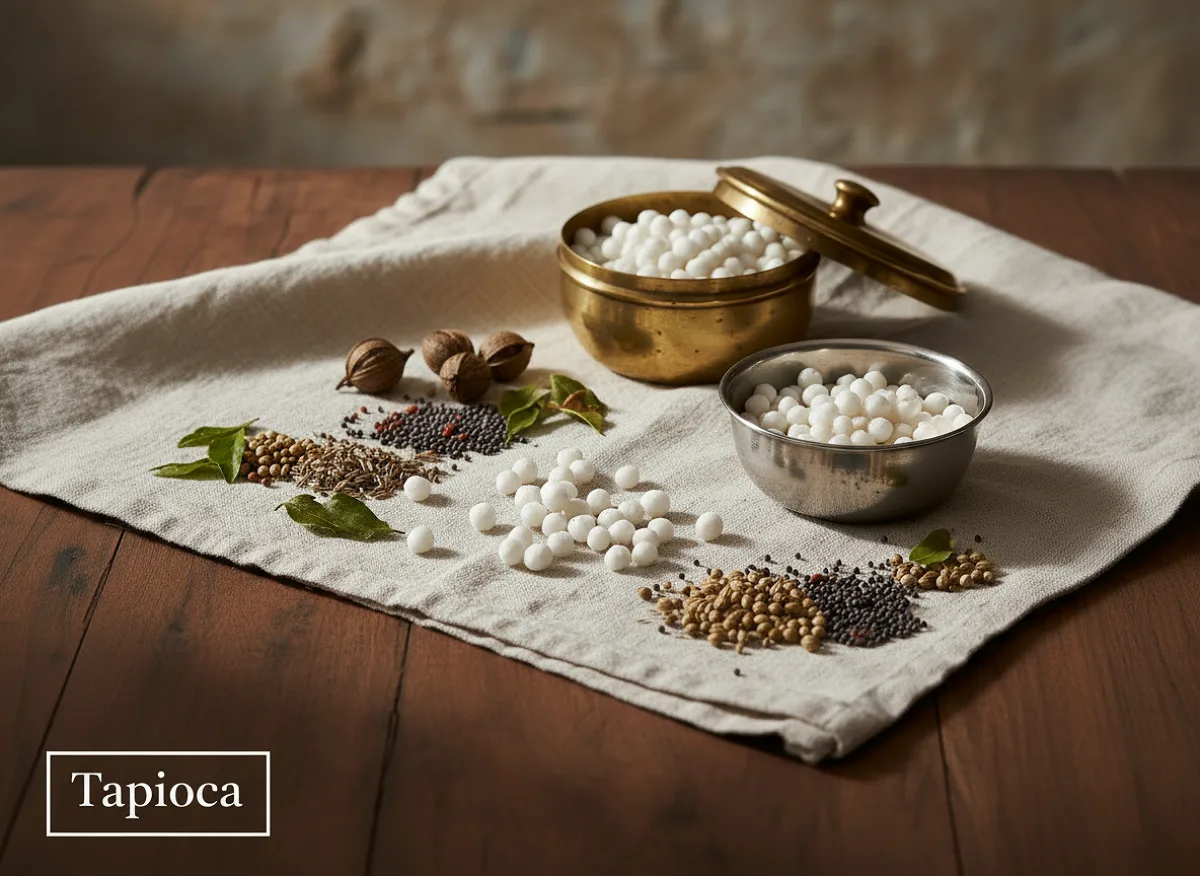
Tapioca (sabudana) is a starchy extract from cassava root, sold as small white pearls or flour in Indian kitchens. Mild, neutral flavour and quick-cooking texture make it a comfort food staple - especially in fasting (vrat) dishes, khichdi, and sweet puddings. When soaked and pan...
Nutrition per 100 g
Mean values ± IFCT published SD (edible portion).
More macros
Classification
About Tapioca
What it is
Tapioca, known as sabudana in Hindi and regional Indian languages, is a starchy carbohydrate extracted from cassava root. It appears as small, translucent white pearls (most common in home kitchens) or as a fine powder. The pearls are bland and absorb flavour readily, making them a versatile canvas for spices, jaggery, and aromatics. Cassava is a tropical root crop; tapioca processing yields this shelf-stable, quick-cooking ingredient that has become integral to Indian fasting cuisine and everyday comfort cooking. (IFCT 2017, Ref #F015)
Use in Indian Kitchen
Sabudana is most celebrated in vrat (fasting) dishes - sabudana khichdi, a light one-pot meal of soaked pearls, roasted peanuts, boiled potatoes, and tempering of cumin and green chilli, is a breakfast favourite during Navratri and other fasts. Beyond fasting, it appears in sweet puddings (sabudana kheer), as a thickener in soups, and mixed into fritters. In South India, tapioca pearls are sometimes used in payasam. A practical tip: always soak pearls in water for 30 minutes to 2 hours before cooking - they absorb liquid and become tender and translucent, ready for a quick pan-fry or boil. The starch swells gently, creating a light, slightly chewy texture that pairs beautifully with tempering of mustard seeds, curry leaves, and asafoetida.
Key Nutrients
Tapioca is primarily carbohydrate (starch), with small amounts of protein and negligible fat. It contains minimal fibre, vitamins, and minerals in its refined form. Exact nutrient composition per 100 g is available in IFCT 2017 (Ref #F015); the ingredient is energy-dense and easily digestible, making it suitable for convalescence and fasting periods.
Health Benefits (Evidence-based)
- Quick source of energy due to high carbohydrate content - useful for post-workout recovery or light meals.
- Easily digestible starch, traditionally used during fasting and for those with sensitive digestion.
- Gluten-free by nature, suitable for those avoiding wheat and other gluten-containing grains.
- Neutral flavour allows it to absorb spices and nutrients from accompanying ingredients (peanuts, potatoes, ghee, tempering).
- Low in sodium and fat when prepared without excess oil, supporting lighter meal options.
Culinary Uses (Vegetarian)
- Sabudana khichdi - soaked pearls pan-fried with roasted peanuts, boiled potatoes, cumin, and green chilli.
- Sabudana kheer - sweet pudding made with milk, jaggery, and cardamom.
- Sabudana vada - fritters of soaked pearls, boiled potatoes, and spices, deep-fried until golden.
- Thickener in vegetable soups and broths.
- Payasam ingredient in South Indian sweets.
- Mixed into upma or porridge for added texture.
Caution
- Tapioca is refined starch with minimal fibre; those managing blood sugar should consume in moderation and pair with protein and fat (peanuts, ghee, curd) to slow digestion.
- Not a significant source of micronutrients on its own - balance with nutrient-dense vegetables, legumes, and dairy.
- Always soak pearls thoroughly before cooking to ensure even hydration and avoid a gritty texture.
References
- Indian Council of Medical Research - National Institute of Nutrition (ICMR-NIN). Indian Food Composition Tables (IFCT 2017). Reference #F015 (Root and Tubers category).
- Gopalan, C., Rama Sastri, B. V., & Balasubramanian, S. C. (2007). Nutritive Value of Indian Foods. National Institute of Nutrition, ICMR, Hyderabad.
Health Benefits
- Provides Energy
- Easy Digestion
- Supports Weight Gain
Sourcing & Storage
Storage
Store tapioca pearls or powder in an airtight container in a cool, dry place away from direct sunlight and moisture. In tropical or humid climates, keep in a sealed glass jar or food-grade plastic container with a tight lid. Avoid damp kitchens or areas prone to condensation. Refrigeration is not necessary for dry tapioca, but it may extend shelf life in very humid conditions. Once opened, reseal promptly to prevent moisture absorption and clumping.
Shelf Life
Properly stored dry tapioca pearls or powder can last 6 to 12 months in a cool, dry pantry. In humid climates or after opening, use within 3 to 6 months for best quality and texture. Once cooked (soaked and prepared), sabudana khichdi or kheer should be consumed within 1 to 2 days when refrigerated in an airtight container.
Check Before You Buy
When buying tapioca pearls, look for uniform, small white or off-white spheres free of discolouration, cracks, or dark spots. Avoid packages with visible moisture, clumping, or a musty smell, which indicate age or improper storage. Check the packaging date and choose products from reputable brands or trusted kirana shops. Bulk purchases from mandi or loose bins should be inspected for insects or debris. Tapioca powder should be fine, dry, and free-flowing with no lumps or off-odours.
In Ayurveda
Tapioca (sabudana) is not extensively documented in classical Ayurvedic texts as a primary ingredient. However, in traditional Indian home practice, it is valued as a light, easily digestible carbohydrate source, particularly during fasting and recovery periods. Its neutral taste and quick-cooking nature make it suitable for gentle digestion support.