Tamarind pulp
Tamarindus indicus · Also known as Imli, tamarind paste, tamarind concentrate, puliyodare, pulimozha, amli
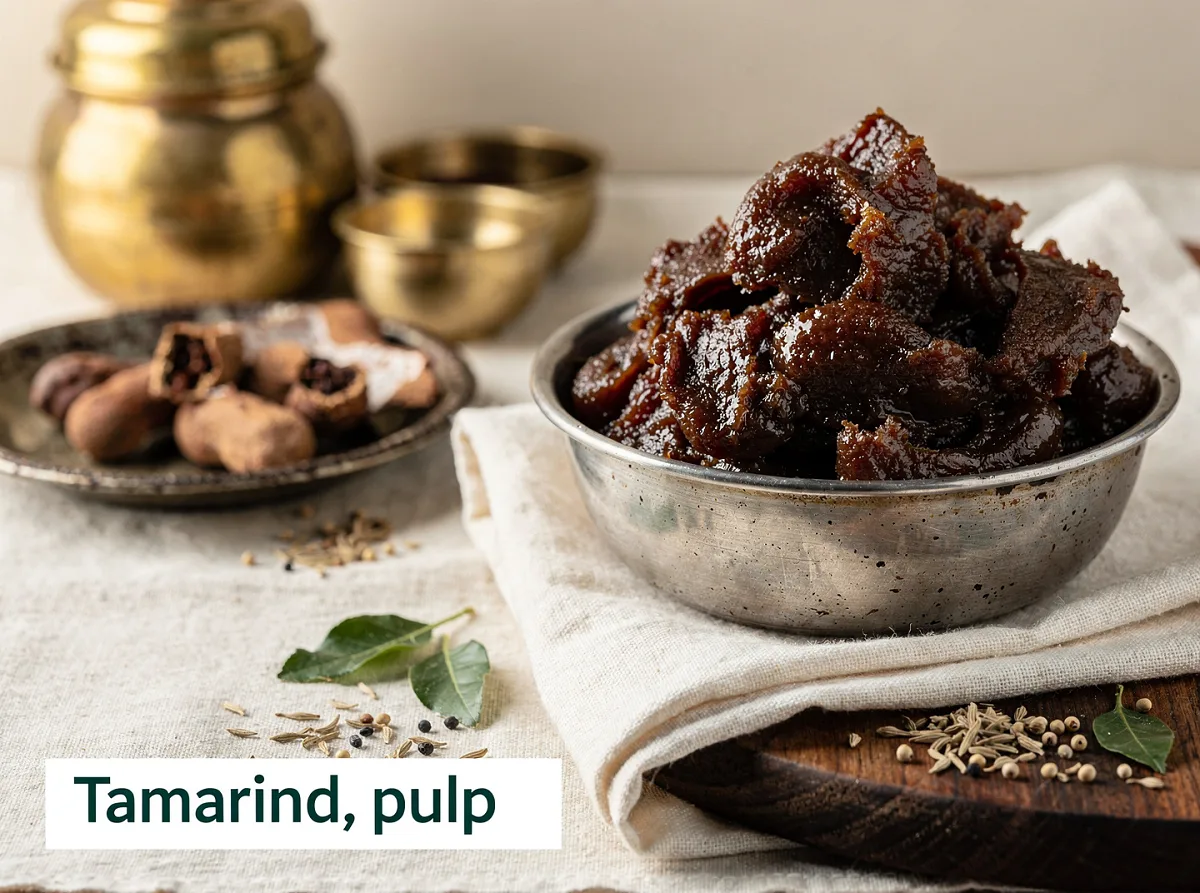
Tamarind pulp (इमली, imli) is the soft, sticky paste extracted from the pods of the tamarind tree - a souring agent as essential to South Indian cooking as lemon is to the North. Dark brown, intensely sour-sweet, and packed with natural tartness, it forms the backbone of sambar,...
Nutrition per 100 g
Mean values ± IFCT published SD (edible portion).
More macros
Classification
About Tamarind pulp
What it is
Tamarind pulp (इमली, imli) is the soft, fibrous paste extracted from inside tamarind pods - the fruit of a large tropical tree native to Africa but now woven into the fabric of Indian cooking, especially in the South and West. The pulp is dark brown, sticky, and intensely sour-sweet, with a complex flavour that balances tartness with subtle fruity notes. It is sold as a concentrated paste or block, ready to soak and strain, or sometimes as a dried cake. Tamarind pulp is the souring agent of choice in sambar, rasam, and countless chutneys, pickles, and curries where lime or yoghurt would be too sharp or thin. (IFCT 2017, Ref #E064)
Use in Indian Kitchen
Tamarind pulp is the soul of South Indian cooking. A small ball, soaked in warm water and strained, becomes the tangy base for sambar - the vegetable and lentil stew that anchors every South Indian meal. It sharpens rasam, the peppery lentil broth, and sweetens tamarind chutneys served alongside dosa and idli. In the West, it flavours sweet-sour curries, chutneys, and the iconic tamarind-jaggery paste that glazes snacks. North Indian home cooks use it in chutneys and to balance rich meat gravies (though vegetarian dal and vegetable curries benefit equally). A practical tip: soak the pulp in warm water for 10-15 minutes, then rub it through a fine sieve to separate the fibres and seeds - this yields a smooth liquid that blends seamlessly into any dish. The pulp's natural tartness means you can reduce salt and oil, letting other spices shine.
Key Nutrients
Tamarind pulp is a source of vitamin C, potassium, magnesium, and dietary fibre. It also contains tartaric acid and other organic acids that give it its distinctive sour taste. Exact nutrient composition varies with processing and moisture content; refer to IFCT 2017 (Ref #E064) for standardised values.
Health Benefits (Evidence-based)
- May support digestive health - the fibre and natural acids in tamarind are traditionally used to ease constipation and promote regular bowel movement.
- Linked to antioxidant activity - tamarind contains polyphenols that may help protect cells from oxidative stress.
- May help regulate blood sugar - some studies suggest tamarind's compounds could slow sugar absorption, though evidence in humans remains limited.
- Traditionally used to ease inflammation - classical Ayurvedic texts reference tamarind's cooling properties, though clinical evidence is modest.
- May support bone health - the mineral content (magnesium, potassium) contributes to skeletal function, though tamarind alone is not a primary source.
Culinary Uses (Vegetarian)
- Sambar - the foundational South Indian vegetable and lentil stew.
- Rasam - a peppery, tangy lentil broth served as a digestive.
- Tamarind chutney - a sweet-sour condiment for dosa, idli, and vada.
- Curries and gravies - balancing richness in vegetable curries, dal, and paneer dishes.
- Pickles and preserves - a natural preservative and souring agent in mango and vegetable pickles.
- Sweet-sour glazes - combined with jaggery for snacks and fried vegetables.
Caution
- High in natural sugars - those managing blood sugar should use in moderation and account for it in their daily intake.
- Acidic nature - excessive consumption may erode tooth enamel or irritate sensitive stomachs; rinse mouth after use if concerned.
- Laxative effect - the fibre and acids can have a mild laxative action; start with small amounts if new to tamarind.
- Allergies are rare but possible - discontinue if any unusual reaction occurs.
References
- Indian Council of Medical Research - National Institute of Nutrition (ICMR-NIN). Indian Food Composition Tables (IFCT 2017). Reference #E064 (Tamarind, pulp).
- Bhadoriya, S. S., Ganeshpurkar, A., Narwaria, J., Rai, G., & Jain, A. P. (2011). Tamarindus indica: Extent of explored potential. Pharmacognosy Reviews, 5(9), 73-81. - A comprehensive review of tamarind's traditional and phytochemical properties.
Sourcing & Storage
Storage
Store tamarind pulp in an airtight container in a cool, dry place away from direct sunlight and moisture. In humid climates, keep it in the refrigerator or a sealed glass jar to prevent mould and fermentation. If the pulp is very sticky, you can wrap it in parchment paper before placing it in the container. Avoid storing near strong-smelling foods, as tamarind can absorb odours.
Shelf Life
Well-stored tamarind pulp keeps for 6-12 months in a cool, dry cupboard, and up to 18-24 months in the refrigerator. Once opened or soaked, use the prepared tamarind liquid within 2-3 days if refrigerated, or freeze it in ice-cube trays for up to 3 months for longer storage.
Check Before You Buy
Look for tamarind pulp that is dark brown, moist, and free of hard lumps or mould. The paste should smell distinctly sour and fruity, not musty or fermented. Avoid blocks that are rock-hard or have visible white spots (mould). If buying from a mandi or loose from a kirana shop, ask the vendor when it was packed; fresher stock will have a more vibrant aroma. Packaged tamarind should have a clear expiry date and be sealed properly. Some commercial pastes contain added sugar or salt - check the label if you prefer unsweetened pulp.
In Ayurveda
In classical Ayurveda, tamarind is classified under the amla rasa (sour taste) and is considered warming in nature (ushna virya). Traditional texts recognize it as a digestive stimulant that kindles agni (digestive fire) and helps break down food. It is traditionally used to relieve constipation and improve appetite. However, excessive consumption may aggravate pitta dosha, particularly in hot seasons, and can erode tooth enamel over time. Pregnant women are advised to consume it in moderation, as large quantities may stimulate uterine contractions.