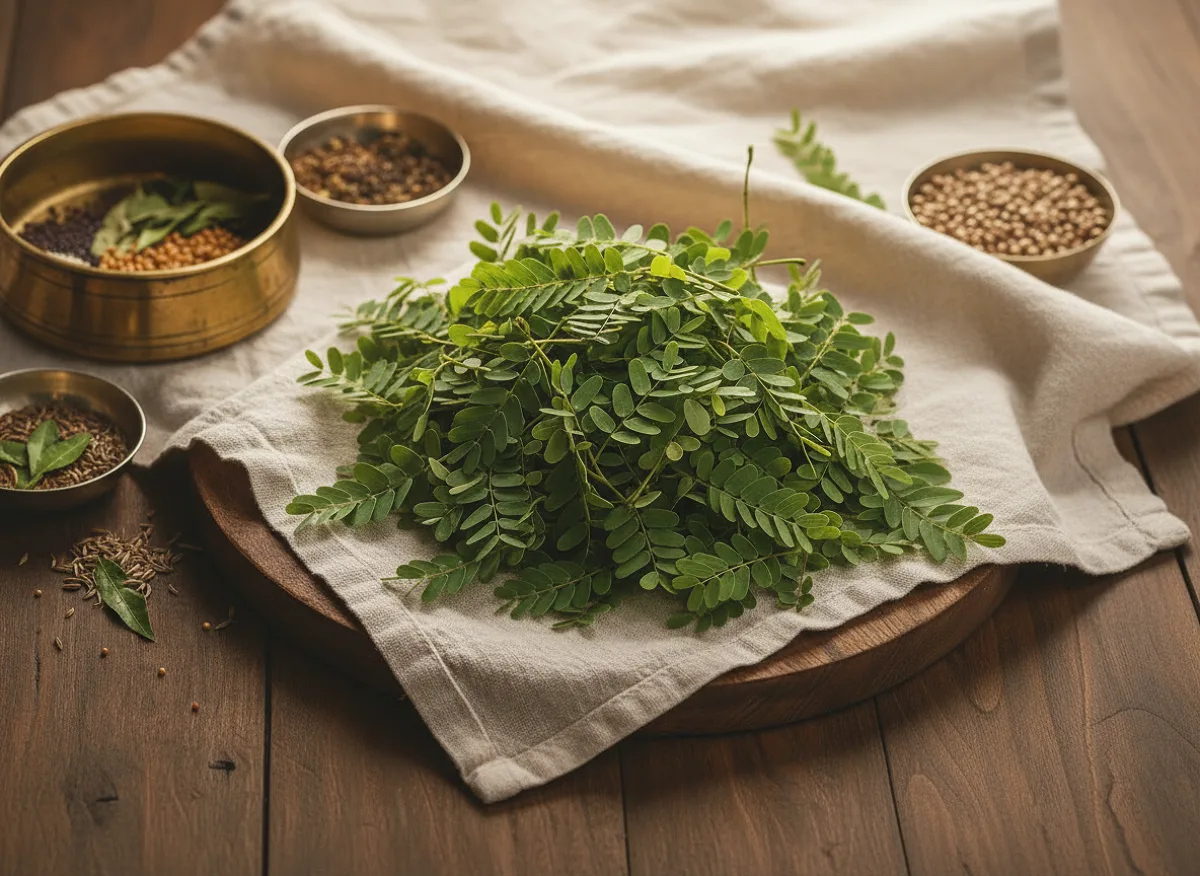
Tamarind leaves, tender
Tamarindus indica · Also known as Tetul pata, Amli na pan, Imli patte, Hunise chiguru, Puliam ilaigal, Chinchecha pala, Tentuli, Chinta chiguru, Teteli paat, Mange Mana, Sla sohkyntoi
Tender tamarind leaves (इमली के पत्ते, imli ke patte) are feathery, bright green leaflets with a pleasantly tart, lemony tang. Harvested young and soft, they bring a gentle sour note to sambar, rasam, and leafy stir-fries across South and East India. A pinch of salt and quick coo...
Nutrition per 100 g
Mean values ± IFCT published SD (edible portion).
More macros
Classification
About Tamarind leaves, tender
What it is
Tender tamarind leaves are the young, feathery leaflets of the tamarind tree (Tamarindus indica), prized in Indian kitchens for their mild, citrusy sourness. When picked young, they are soft, bright green, and delicate - quite different from the mature, tougher leaves. They add a subtle tang and fresh herbal note to dishes without the sharp punch of tamarind pulp. (IFCT 2017, Ref #C034)
Use in Indian Kitchen
Tender tamarind leaves are a staple in South Indian sambar and rasam, where they contribute a gentle sour flavour and body to the broth. In East India, they feature in leafy sabzi and stir-fries (often called "tetul pata bhaja" in Bengali kitchens), paired with mustard seeds, dried chilli, and a touch of turmeric. The leaves are also used fresh in chutneys and as a souring agent in dal and vegetable curries across the Deccan. A practical tip: add them near the end of cooking to preserve their tender texture and bright colour; prolonged heat can turn them dull and stringy.
Key Nutrients
Tender tamarind leaves are a source of vitamin C, calcium, and iron. They also contain fibre and small amounts of B vitamins. Exact nutrient composition varies with harvest season and growing conditions; refer to IFCT 2017 for detailed micronutrient profiles.
Health Benefits (Evidence-based)
- May support digestive health through their mild sour and fibre content, traditionally used to aid digestion in sambar and rasam broths.
- Linked to antioxidant activity due to vitamin C and polyphenols, which may help protect cells from oxidative stress.
- Calcium and iron content may contribute to bone and blood health when consumed regularly as part of a balanced diet.
- Traditionally used in Ayurvedic and folk medicine to support liver and digestive function, though clinical evidence is limited.
Culinary Uses (Vegetarian)
- Sambar and rasam - a defining souring agent in South Indian broths.
- Leafy stir-fries (tetul pata bhaja, imli patte usli) - tempered with mustard seeds, dried chilli, and turmeric.
- Dal and vegetable curries - added for gentle sourness and body.
- Fresh chutneys and pickles - blended with coconut, chilli, and spices.
- Soups and light broths - for a herbal, citrusy note.
Caution
- Tender tamarind leaves are generally safe for most people. Those with sensitive digestion or acid reflux may find the sourness uncomfortable in large quantities.
- Pregnant and nursing mothers should consume in moderation as part of normal cooking, not as a medicinal supplement.
- Pesticide residue is possible if leaves are not from a trusted source; wash thoroughly before use.
References
- Indian Council of Medical Research - National Institute of Nutrition (ICMR-NIN). Indian Food Composition Tables (IFCT) 2017. Reference #C034 (Green Leafy Vegetables - Tamarind leaves, tender).
- Bhattacharya, A., Pal, S., Sharma, A., & Dey, S. (2008). Antioxidant activity of polyphenols from tamarind (Tamarindus indica L.) fruit pulp. Journal of Food Biochemistry, 32(6), 745-756.
Sourcing & Storage
Storage
Store tender tamarind leaves in a breathable cloth bag or perforated plastic bag in the refrigerator crisper drawer, away from direct moisture. In warm, humid climates, keep them in a cool, well-ventilated spot or wrap loosely in damp kitchen paper to prevent wilting. Avoid airtight containers, which trap moisture and cause yellowing and decay.
Shelf Life
Tender tamarind leaves stay fresh for 3-5 days in the refrigerator when stored properly. In a cool pantry or during monsoon, they may last 1-2 days. For longer storage, blanch and freeze in airtight containers for up to 2-3 months, though texture will soften slightly upon thawing.
Check Before You Buy
Look for bright green, tender leaflets with no yellowing, browning, or wilting. The leaves should feel soft and pliable, not papery or brittle. Avoid bundles with a musty or fermented smell, which signals decay. If buying from a mandi or kirana, check that the leaves are free of insects, dirt, and excess moisture. Packaged leaves should have a harvest date and be stored in a cool section; reject any with visible mould or discolouration.
In Ayurveda
In classical Ayurvedic texts, tamarind leaves are recognized for their sour (amla) rasa and cooling (sheeta) virya. They are traditionally used to support digestion and kindle agni (digestive fire) without excessive heat. The leaves are often recommended in Ayurvedic home remedies to balance Pitta when used in moderation, and to aid in the absorption of nutrients from meals.