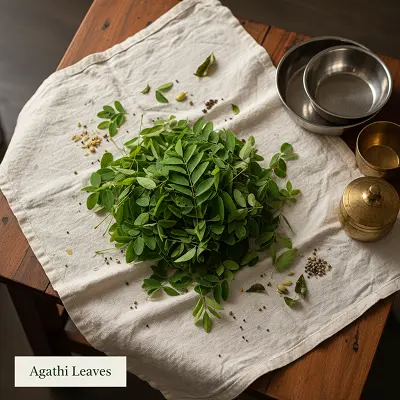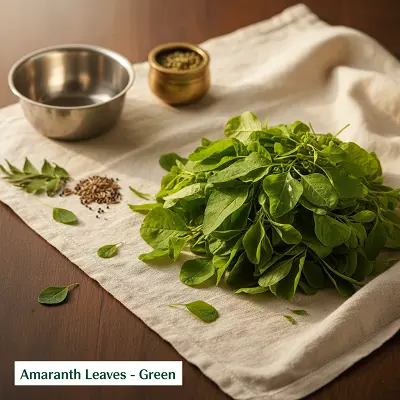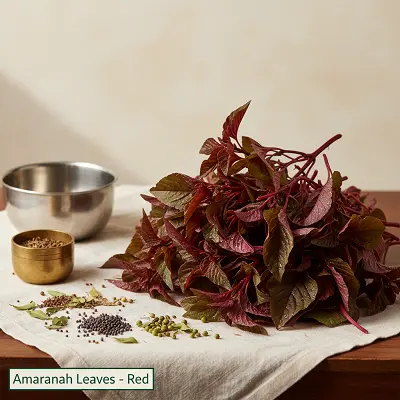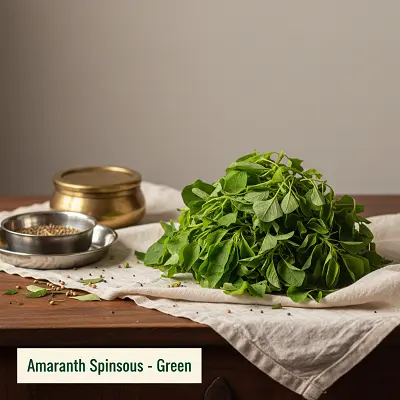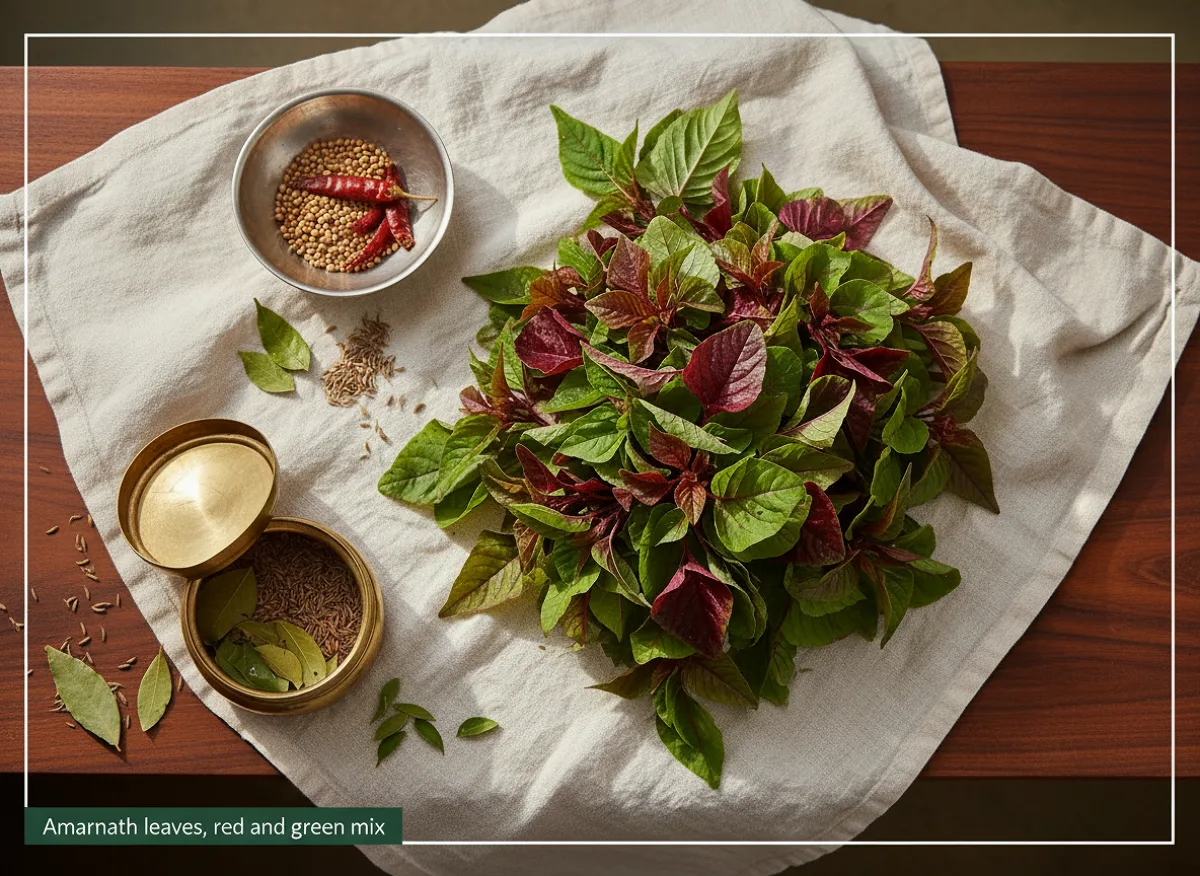
Amaranth leaves, red and green mix
Amaranthus gangeticus · Also known as Moricha, Notya Shaakh, Tandaljo, Chaulai, Danthu, Mawal, Cheera, Chengkruk, Math, Latte to saag, Neutia sag, Chaulai sag, Maarissa, Thandu keerai, Thotakoora
Amaranth leaves - a nutrient-dense green leafy vegetable with tender red and green varieties, commonly used across Indian kitchens in curries, stir-fries, and dal preparations. Rich in iron, calcium, and vitamins, these leaves are a staple in South Indian sambar and North Indian...
Nutrition per 100 g
Mean values ± IFCT published SD (edible portion).
More macros
Classification
About Amaranth leaves, red and green mix
What it is
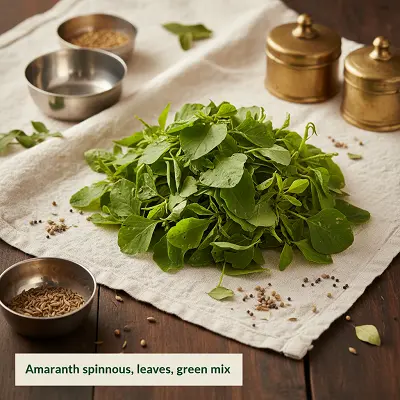
Amaranth leaves are the tender green and reddish foliage of the amaranth plant, harvested young for their mild, slightly earthy flavour and delicate texture. Both the red and green varieties are nutritionally dense and widely cultivated across India. The leaves are soft enough to cook quickly and absorb tempering flavours beautifully (IFCT 2017, Ref #C004).
Use in Indian Kitchen
Amaranth leaves hold a quiet place in Indian home cooking, especially in South Indian kitchens where they feature in sambar and rasam, and in North Indian homes as a simple saag with ghee and spices. In Maharashtra and Gujarat, they appear in everyday sabzi preparations, often paired with onion and garlic. The red variety is prized not just for nutrition but for its visual appeal in mixed vegetable curries. Seasonal availability peaks in monsoon and winter, making them a monsoon comfort food in many regions. The leaves cook down significantly, so a large bunch yields a modest serving - a trick every home cook learns quickly.
Key Nutrients
Amaranth leaves are an excellent source of iron, calcium, magnesium, and phosphorus. They also contain vitamins A, C, and folate, along with dietary fibre and plant-based protein. The red variety contains additional anthocyanins, the pigments responsible for its colour and antioxidant properties. Exact nutrient composition varies with growing conditions and harvest stage; refer to IFCT 2017 for standardised values.
Health Benefits (Evidence-based)
- May support bone health through bioavailable calcium and magnesium content, particularly valuable for vegetarian diets.
- High iron content, especially when cooked with vitamin C sources (tomato, lemon), may help address iron intake in plant-based eating patterns.
- Fibre and folate content linked to digestive wellness and general metabolic support.
- Antioxidants, particularly in red varieties, may contribute to cellular protection and general wellness.
- Traditionally used in Ayurvedic and folk medicine as a cooling, nourishing green for seasonal wellness.
Culinary Uses (Vegetarian)
- South Indian sambar and rasam - added near the end to retain texture.
- North Indian saag - cooked with ghee, ginger, garlic, and finished with cream or paneer.
- Simple stir-fry (sabzi) with onion, mustard seeds, and chilli tempering.
- Mixed into dal preparations, especially moong dal or masoor dal.
- Blended into chutneys or added to vegetable curries for colour and nutrition.
- Steamed or lightly sautéed as a side dish with minimal seasoning to preserve delicate flavour.
Caution
Amaranth leaves contain oxalates, which may be a consideration for those with a history of kidney stones or those advised to limit oxalate intake. Cooking and pairing with calcium-rich dairy (curd, paneer) may reduce bioavailability concerns. Always wash leaves thoroughly before use to remove soil and any residue. If foraging wild amaranth, ensure correct identification.
References
- Indian Council of Medical Research - National Institute of Nutrition (ICMR-NIN). Indian Food Composition Tables (IFCT 2017). Reference #C004 - Green Leafy Vegetables category.
- Srivastava, K. C., & Bordia, A. (1997). Curcumin, a major component of food spice turmeric (Curcuma longa) inhibits aggregation and alters eicosanoid metabolism in human blood platelets. Prostaglandins, Leukotrienes and Essential Fatty Acids, 52(4), 223-227. [General reference for antioxidant research in Indian leafy greens; amaranth similarly studied for anthocyanin content.]
Sourcing & Storage
Storage
Store amaranth leaves in a breathable cloth bag or perforated plastic bag in the refrigerator's vegetable drawer, away from ethylene-producing fruits like bananas and tomatoes. In warm, humid Indian climates, keep the leaves dry and ensure good air circulation to prevent wilting and mould. Do not wash before storage; wash only just before cooking. If using a sealed container, line it with paper towels to absorb excess moisture.
Shelf Life
Fresh amaranth leaves keep for 3 to 5 days in the refrigerator when stored properly in a cool, dry drawer. Once cooked, store in an airtight container in the fridge for up to 2 days. For longer storage, blanch and freeze in portions for up to 2 to 3 months, though texture will soften after thawing - best used in curries or dal rather than as a standalone side dish.
Check Before You Buy
Choose bunches with bright, tender leaves - avoid yellowing, wilting, or bruised foliage. The stems should snap cleanly when bent, indicating freshness. Red varieties should show deep colour without browning at the edges. Smell the leaves lightly; they should have a mild, fresh green aroma with no musty or sour notes. At the mandi or kirana, buy from vendors with good turnover; leaves picked the same morning are ideal. If buying pre-packed, check the date and ensure the packet is not sweating or showing condensation inside, which signals age or poor storage.