Amaranth Leaves - Red
Amaranthus gangeticus · Also known as chaula, rajgira
Red amaranth leaves (chaula or rajgira) are tender, nutrient-dense greens commonly used across Indian home kitchens. A staple in South Indian sambar and North Indian saag preparations, they offer iron, calcium, and vitamins in every handful (IFCT 2017, Ref #C003).
Nutrition per 100 g
Edible portion values from the master catalog.
More macros
Classification
About Amaranth Leaves - Red
What it is
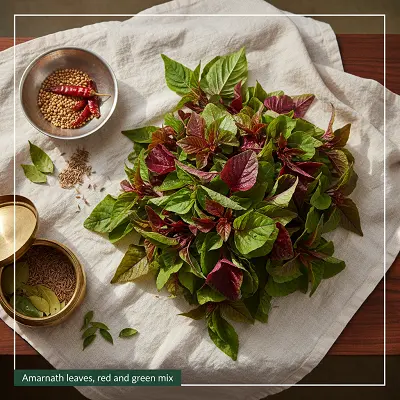
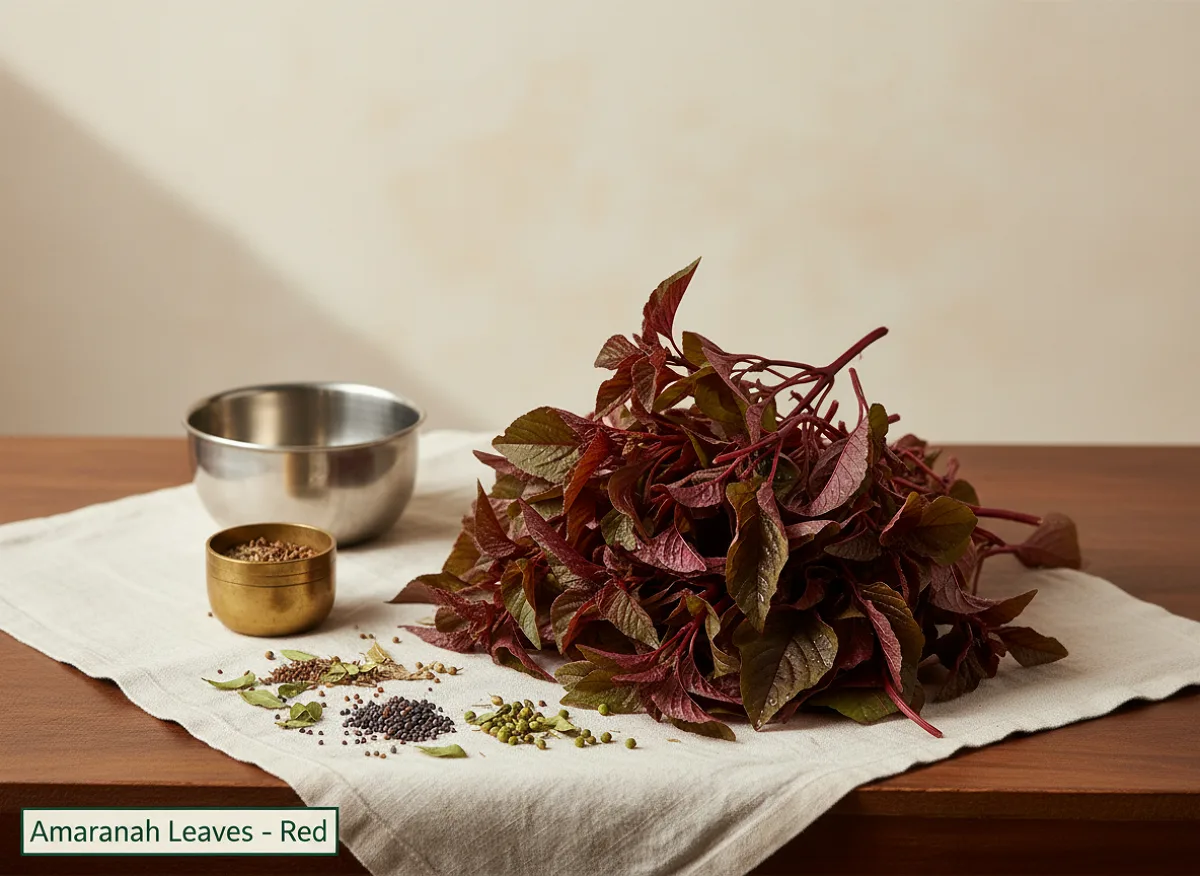
Red amaranth leaves are the edible leafy greens of the amaranth plant, prized for their deep crimson or burgundy colour and tender texture. Known as chaula in Hindi, rajgira in parts of North India, and often simply as amaranth greens in English, they belong to the Amaranthaceae family. These leaves are a traditional green leafy vegetable across Indian regions and are classified under IFCT 2017, Ref #C003.
Use in Indian Kitchen
Red amaranth leaves hold a quiet, everyday place in Indian home cooking. In South India, they are a beloved addition to sambar and rasam, lending earthiness and body to the broth. North Indian kitchens fold them into saag, often paired with mustard greens or spinach, and temper them with cumin and garlic. In Maharashtra and Gujarat, they appear in simple stir-fries with minimal oil and spice. The leaves are seasonal - most tender and abundant during monsoon and early winter - and grandmothers have long valued them as a monsoon tonic, believing them to cool the body and aid digestion. Their mild, slightly earthy flavour makes them forgiving for both everyday dal-rice meals and festive preparations.
Key Nutrients
Red amaranth leaves are rich in iron, calcium, magnesium, and phosphorus. They also contain vitamins A, C, and folate, along with dietary fibre and plant-based protein. Exact nutrient composition per 100 g is documented in IFCT 2017, Ref #C003; values vary slightly with harvest season and growing conditions.
Health Benefits (Evidence-based)
- May support bone health due to high calcium and magnesium content, particularly valuable for vegetarian diets.
- Iron and folate content may help maintain healthy haemoglobin levels and support energy in everyday activity.
- High in antioxidants and vitamin C, linked to immune support and general wellness.
- Fibre content may aid digestive comfort and regularity when consumed regularly.
- Traditionally used in Ayurvedic and home remedy contexts as a cooling, nourishing green for seasonal wellness.
Culinary Uses (Vegetarian)
- Sambar and rasam - a classic South Indian pairing with lentils and spices.
- Saag - North Indian creamed or dry preparations, often with ghee and spices.
- Simple stir-fry (sabzi) - tempered with mustard seeds, cumin, and green chilli.
- Dal - stirred into moong or masoor dal for added nutrition and colour.
- Chutneys and fresh greens - occasionally ground into coconut or peanut chutneys.
- Rice and roti meals - a side vegetable with everyday Indian meals.
Caution
Red amaranth leaves contain oxalates, which may be a consideration for those with a history of kidney stones or those advised to limit oxalate intake. Cooking reduces oxalate content. Always wash leaves thoroughly before use to remove soil and any residue. If you are on blood-thinning medication, consume in moderation and consult your healthcare provider, as leafy greens contain vitamin K.
References
- Indian Council of Medical Research - National Institute of Nutrition (ICMR-NIN). Indian Food Composition Tables (IFCT 2017). Reference #C003 - Green Leafy Vegetables category.
- National Institute of Nutrition, ICMR. Nutritive Value of Indian Foods. Hyderabad: NIN Publications.
Health Benefits
- Antioxidant
- Supports Bone Health
- Supports Digestion
- Boosts Immunity
- Improves Hemoglobin
Sourcing & Storage
Storage
Store red amaranth leaves in a breathable cloth bag or perforated plastic bag in the refrigerator's vegetable drawer, away from direct moisture pooling. In Indian kitchens, many prefer to wrap them loosely in newspaper or a dry cloth to absorb excess moisture while allowing air circulation. Keep away from ethylene-producing fruits like tomatoes and bananas. In warm, humid climates, use the coldest part of your fridge and check daily for wilting.
Shelf Life
When stored properly in the refrigerator, red amaranth leaves remain fresh and tender for 3 to 5 days. Once cooked, they keep for 1 to 2 days in an airtight container in the fridge. For longer storage, blanch and freeze in portions for up to 2 to 3 months, though texture will soften slightly upon thawing - best used in cooked dishes like sambar or dal rather than fresh preparations.
Check Before You Buy
Choose bunches with deep, vibrant red or burgundy leaves that feel crisp and tender to the touch - avoid any that are yellowed, wilted, or slimy. Leaves should snap cleanly when bent. Check the stems: they should be fresh and not woody or discoloured. At the mandi or kirana shop, ask for recently harvested bunches and avoid those stored in direct sunlight or left in plastic bags for hours. If buying pre-packed greens, check the date and ensure the pack is cool and free of condensation or browning.
In Ayurveda
Amaranth Leaves are important for their rich nutritional profile, offering essential vitamins A, C, and K, along with minerals like iron and calcium. They support overall health by boosting immunity, promoting digestion, and enhancing bone strength. Their high antioxidant content also helps combat oxidative stress. Amaranth Leaves are valued for their anti-inflammatory properties. They can be used to alleviate skin irritations when applied topically or consumed as juice to improve energy and vitality. Their versatility makes them a valuable addition to both diet and natural health solutions.