Agathi Leaves
Sesbania grandiflora · Also known as Agasthya, Gaach Munga
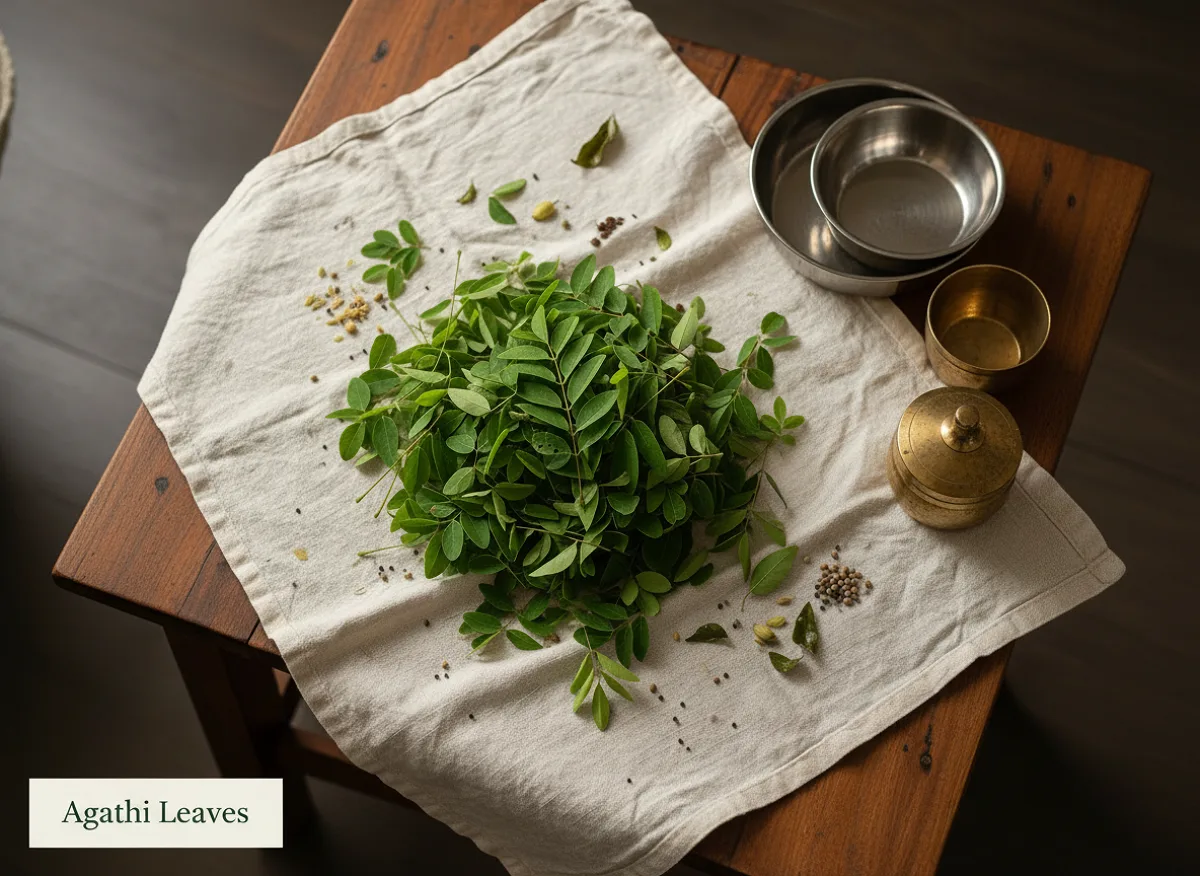
Agathi leaves, also known as Agasthya or Gaach Munga, are tender green leafy vegetables commonly used across South Indian kitchens. With a mild, slightly bitter flavour and delicate texture, they're a staple in sambar, rasam, and simple stir-fries, bringing both nutrition and an...
Nutrition per 100 g
Edible portion values from the master catalog.
More macros
Classification
About Agathi Leaves
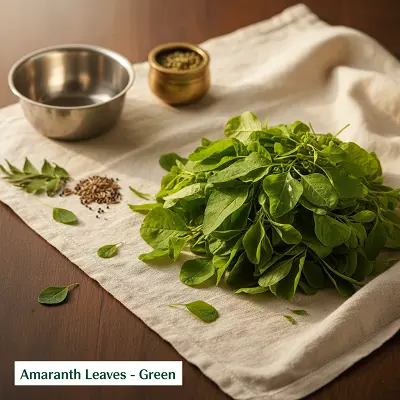
Agathi leaves are the soft, feathery green foliage of a fast-growing tree, prized in Indian home cooking for their tender texture and subtle bitter-green taste. When fresh, they have a bright, almost translucent quality and a gentle aroma that becomes more pronounced when cooked. The leaves are delicate enough to wilt quickly in heat, making them ideal for quick curries and broths where they soften into the dish without losing their character.
In South Indian kitchens, agathi leaves appear most often in sambar - where they add body and a traditional green note - and in rasam, where their mild bitterness complements the sharp spice and tamarind. They're also simply stir-fried with mustard seeds, curry leaves, and a touch of coconut, or folded into dal at the last moment. In some regions, tender agathi shoots are eaten as a quick sabzi with onion and spices. The leaves are best used fresh and young; older, tougher leaves can become stringy.
Traditionally, agathi has been valued in Ayurvedic practice for its cooling nature and gentle digestive properties. Home cooks have long relied on it as a nourishing green to rotate through the week, especially during warmer months when the plant grows abundantly.
Some of the traditional benefits associated with agathi leaves:
- Known for a cooling, balancing effect in warm-season cooking
- Traditionally used to support gentle digestion
- Valued as a mild, easily digestible green leafy vegetable
- Often recommended in Ayurvedic practice for its light nature
- Used in traditional remedies for minor respiratory comfort
- Considered nourishing for regular inclusion in everyday meals
- Believed to have a gentle detoxifying quality when eaten regularly
In the kitchen, agathi leaves are most rewarding when treated simply - a quick tadka of mustard seeds and curry leaves, a handful stirred into warm sambar, or a light stir-fry with minimal spice to let their natural flavour shine through.
Health Benefits
- Anti Inflammatory
- Supports Bone Health
- Supports Digestion
- Boosts Immunity
- Improves Hemoglobin
Sourcing & Storage
Storage
Agathi leaves are best used fresh, ideally within a day or two of purchase. Store them in a breathable cloth bag or paper wrap inside the vegetable drawer of your fridge, away from moisture. Do not wash them before storage, as excess water will cause them to wilt and decay quickly. In humid Indian weather, keep them in the coolest part of your fridge and check daily for any yellowing or slime. If you must store them longer, spread the leaves on a clean cloth, allow them to air-dry slightly, then layer them between paper towels in an airtight container in the fridge - this helps reduce moisture buildup.
Shelf Life
Fresh agathi leaves keep best for 2 to 3 days when stored properly in the refrigerator. Once wilting begins, use them immediately in cooked dishes rather than raw preparations. In very humid conditions, they may deteriorate faster, so check them daily. Agathi does not freeze well, as the delicate leaves become mushy when thawed. For longer storage, some home cooks dry the leaves in shade and store them in an airtight jar, where they will keep for several weeks - though dried agathi has a more muted flavour and is best used in sambar or rasam rather than fresh preparations.
Check Before You Buy
When buying agathi leaves from a local vendor or market, look for bright, tender green foliage with no yellowing, browning, or dark spots. The leaves should feel crisp and snap cleanly when bent; limp or slimy leaves indicate age or poor storage. Avoid bundles with a strong, unpleasant smell - fresh agathi has a mild, pleasant green aroma. Check that the stems are not woody or thick; younger, thinner stems mean more tender leaves. In humid weather, inspect carefully for any signs of mould or moisture damage inside the bundle.
If buying pre-packed agathi, check the packaging for moisture inside and ensure the leaves are not crushed or discoloured. Avoid any bundles with visible insects, debris, or a musty smell. Fresh agathi is seasonal and most abundant during the warmer months; if you find it year-round at a vendor, ask when it was harvested to gauge freshness. Always buy from a vendor with good turnover, as agathi deteriorates quickly once picked.
In Ayurveda
Agathi leaves hold significant importance in Indian Ayurveda, celebrated for their medicinal properties and nutritional value. Rich in vitamins and minerals, they are believed to promote digestive health, support immune function, and enhance overall vitality. The leaves are often used in Ayurvedic formulations to treat ailments such as respiratory issues and inflammation.
In addition to their culinary uses, Agathi leaves are also employed in home remedies. They can be used to prepare herbal teas that help soothe coughs and improve digestion. The leaves are sometimes applied externally to relieve skin irritations and promote healing. Their versatile nature makes them a valuable component in both dietary and therapeutic practices in Ayurveda.