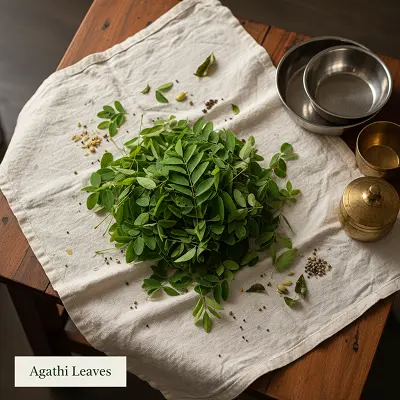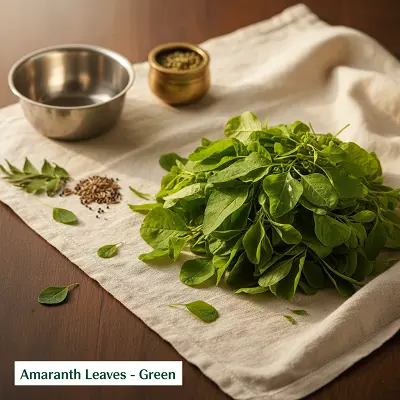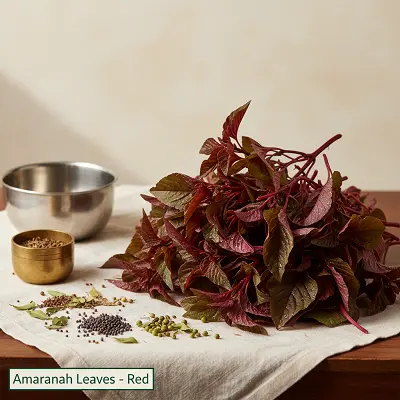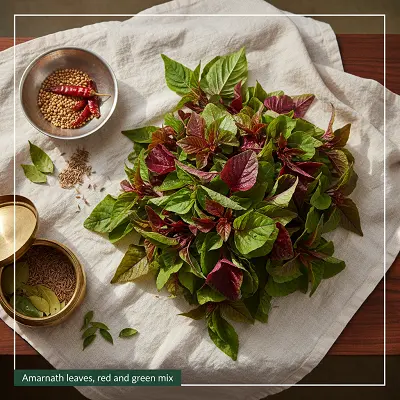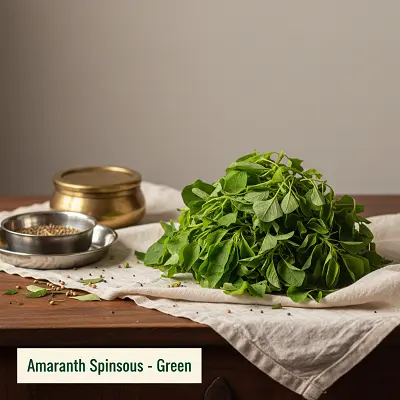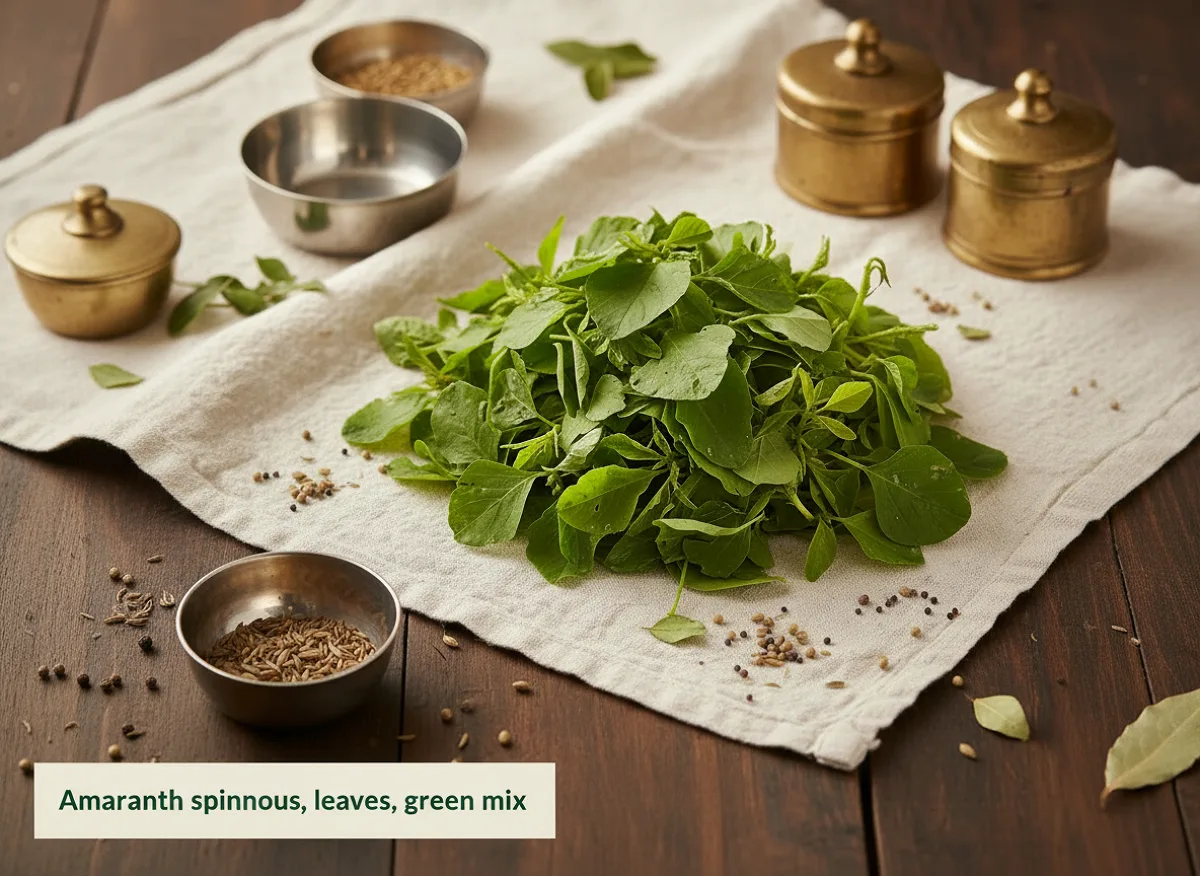
Amaranth spinosus, leaves, green mix
Amaranthus spinosus · Also known as Moricha sak, Kanta-notya, Kanta vado tandaljo, Kantewali-notya, Mulla danthu, Mawal, Mullancheru- cheera, Chengkruk, Kantemanth, Kanta notay shak, Kantewali chaulai, Mulaikeerai, Mulla thotakura.
Amaranth spinosus, commonly called चौलाई (chaulai) or नटे शाक (nate shaak) in Hindi, is a tender green leafy vegetable widely grown across Indian home gardens and markets. Rich in minerals and vitamins, it is a staple in regional Indian cooking, particularly in the South and East...
Nutrition per 100 g
Mean values ± IFCT published SD (edible portion).
More macros
Classification
About Amaranth spinosus, leaves, green mix
What it is
Amaranth spinosus is a fast-growing, hardy leafy green with tender stems and broad leaves, native to tropical regions and now cultivated across India. The entire plant - leaves and young stems - is edible and commonly harvested when 4-6 weeks old. It thrives in warm seasons and is a monsoon and summer favourite in Indian kitchens. (IFCT 2017, Ref #C005)
Use in Indian Kitchen
Chaulai holds a cherished place in South Indian, East Indian, and parts of North Indian home cooking. In Tamil Nadu and Andhra Pradesh, it is cooked as a simple stir-fry (साग / sag) with mustard seeds, curry leaves, and coconut. In Bengal and Odisha, tender leaves are added to dal or made into a light, comforting sabzi. North Indian home cooks often blanch and chop it into rotis or mix it into dal. The plant is seasonal - most abundant during the monsoon and early summer - and is considered a cooling, easily digestible green. Many grandmothers keep a small patch in the kitchen garden for quick harvesting; it grows so fast that a few plants yield leaves throughout the season.
Key Nutrients
Amaranth spinosus leaves are a good source of calcium, iron, magnesium, and phosphorus. They also contain vitamins A, C, and folate, along with dietary fibre. Exact nutrient composition is documented in IFCT 2017 (Ref #C005); values vary slightly with harvest stage and growing conditions.
Health Benefits (Evidence-based)
- May support bone health due to its calcium and magnesium content, particularly valuable for vegetarian diets.
- Iron and folate content may help maintain healthy blood levels, especially when consumed regularly as part of a balanced diet.
- High in antioxidants and vitamin C, which may support immune function and skin health.
- Dietary fibre supports digestive wellness and may aid regular bowel function.
- Traditionally valued in Ayurvedic and folk medicine as a cooling, easily digestible green suitable for all seasons.
- Low in oxalates compared to some other leafy greens, making it gentler on those monitoring mineral absorption.
Culinary Uses (Vegetarian)
- Stir-fried with mustard seeds, curry leaves, and coconut (South Indian style).
- Cooked into dal or mixed vegetable curries for added nutrition and mild flavour.
- Blanched and folded into roti or paratha dough.
- Added to sambar or rasam for a light, leafy texture.
- Sautéed with garlic, ginger, and green chilli as a simple everyday sabzi.
- Mixed into curd-based dishes or added to buttermilk for a cooling summer drink.
Caution
Amaranth spinosus is generally safe for most people. Those with a history of kidney stones or on a restricted potassium diet should consume in moderation and consult a healthcare provider, as leafy greens contain minerals that may need monitoring in specific conditions. Always wash thoroughly before use to remove soil and any residue. Ensure the plant is grown without harmful pesticides, especially if harvesting from home gardens or local markets.
References
- Indian Council of Medical Research - National Institute of Nutrition (ICMR-NIN). Indian Food Composition Tables (IFCT 2017). Reference #C005 - Green Leafy Vegetables category.
- National Institute of Nutrition, ICMR. Nutritive Value of Indian Foods. Hyderabad: NIN Publications; updated periodically for leafy vegetable composition and seasonal variation.
Sourcing & Storage
Storage
Store fresh amaranth spinosus leaves in a breathable cloth bag or perforated plastic bag in the refrigerator's vegetable drawer, away from direct moisture pooling. In Indian kitchens, many prefer to keep the bunch loosely wrapped in damp newspaper or a cotton cloth to maintain moisture without causing rot. Keep away from ethylene-producing fruits (bananas, apples) which can hasten wilting. In warm, humid climates, store in the coldest part of the fridge and use within 1-2 days for best texture.
Shelf Life
Fresh amaranth spinosus leaves keep for 3-4 days in the refrigerator when stored in a breathable container. Once cooked, the dish is best consumed the same day or within 24 hours when refrigerated. Blanched and frozen leaves (in airtight containers or freezer bags) can be stored for up to 2-3 months and are convenient for off-season use in dals and curries.
Check Before You Buy
Choose bunches with bright green, tender leaves free from yellowing, browning, or wilting. Stems should snap cleanly when bent and feel crisp, not limp or slimy. Avoid bunches with insect damage, holes, or a musty smell. At the mandi or kirana, select plants harvested the same morning if possible; older bunches lose their delicate texture quickly. If buying pre-packed greens, check the date and ensure the packaging is intact with no condensation inside. Amaranth spinosus should feel light and airy in the hand, not dense or waterlogged.