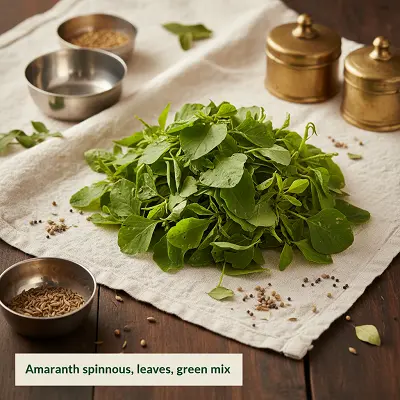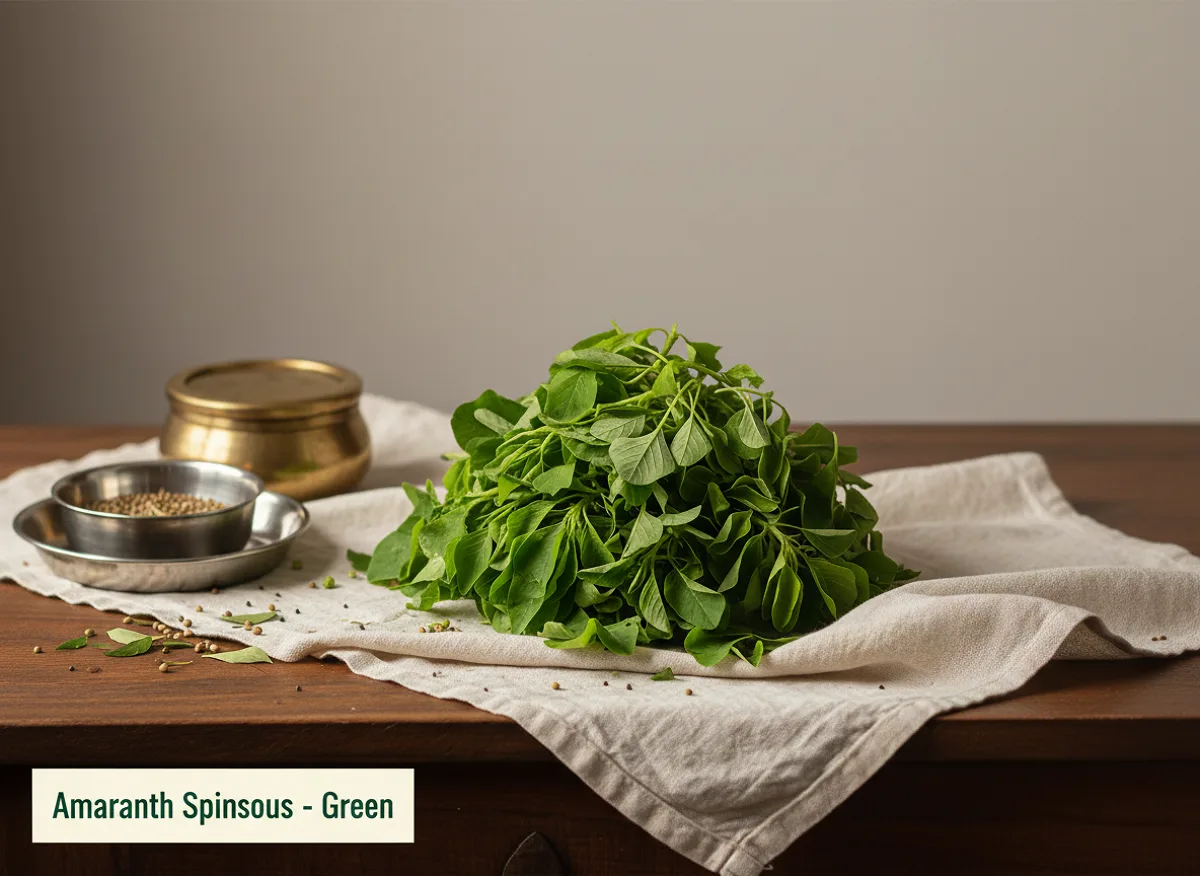
Amaranth Spinosus - Green
Amaranthus spinosus · Also known as Ramdana
Amaranth Spinosus, commonly called Ramdana or Chaulai in Hindi, is a tender green leafy vegetable widely used across Indian home kitchens. Rich in minerals and vitamins, it features in regional sabzis, dal preparations, and traditional remedies (IFCT 2017, Ref #C006).
Nutrition per 100 g
Edible portion values from the master catalog.
More macros
Classification
About Amaranth Spinosus - Green
What it is
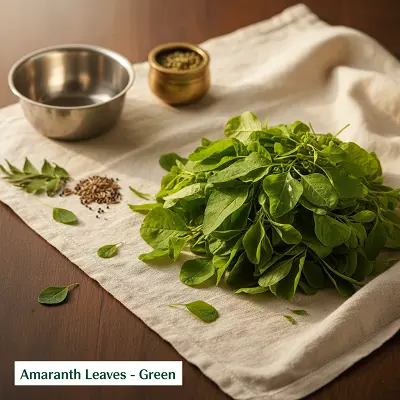
Amaranth Spinosus is a soft, leafy green vegetable belonging to the Amaranthaceae family. Known locally as Ramdana, Chaulai, or Kuppai Keerai in South India, it grows as a bushy annual herb with tender stems and broad leaves. The plant is hardy, drought-tolerant, and thrives in Indian summers and monsoons, making it a staple in home gardens and markets across the country (IFCT 2017, Ref #C006).
Use in Indian Kitchen
Ramdana holds a cherished place in Indian home cooking, particularly in North and South Indian kitchens. In the North, it is commonly cooked as a simple tadka sabzi with onions, tomatoes, and spices, or mixed into dal for added nutrition and mild flavour. Southern kitchens feature it in sambar, rasam, and as a side sabzi with coconut and chillies. In many regions, it is also dried and stored for off-season use. Traditionally, grandmothers have recommended it for new mothers and growing children because of its iron and mineral content. The tender leaves have a slightly earthy, mild taste that pairs well with everyday spices like cumin, mustard seeds, and asafoetida.
Key Nutrients
Amaranth Spinosus is a good source of iron, calcium, magnesium, and phosphorus. It also contains vitamins A, C, and folate, along with dietary fibre. The exact nutrient profile per 100 g is documented in IFCT 2017, Ref #C006, and varies slightly with harvest season and growing conditions.
Health Benefits (Evidence-based)
- May support bone health and strength due to its calcium and magnesium content, particularly valuable for growing children and older adults.
- Linked to improved iron status and may help maintain healthy haemoglobin levels, especially when consumed regularly as part of a balanced diet.
- High in dietary fibre, which may support digestive health and regular bowel function.
- Contains antioxidants and vitamin C, which may help protect cells and support immune function.
- Traditionally used in Indian home remedies to support lactation and postpartum recovery in new mothers.
- Low in calories and high in nutrients, making it a nutrient-dense choice for everyday meals.
Culinary Uses (Vegetarian)
- Cooked as a simple tadka sabzi with onions, tomatoes, cumin, and mustard seeds.
- Mixed into dal (moong, masoor, or chana dal) for added nutrition and mild flavour.
- Included in sambar and rasam in South Indian cooking.
- Blanched and added to curd rice or mixed vegetable curries.
- Dried and stored for use in winter months, then rehydrated and cooked.
- Lightly sautéed with garlic, ginger, and green chillies as a quick side dish.
Caution
- Those with a history of kidney stones or high oxalate sensitivity may wish to consume in moderation, as leafy greens contain oxalates.
- Always wash thoroughly before use to remove soil and any residual pesticides.
- If taking blood-thinning medications, maintain consistent intake rather than sudden large increases, as high vitamin K content may interact.
References
- Indian Council of Medical Research - National Institute of Nutrition (ICMR-NIN). Indian Food Composition Tables (IFCT) 2017. Reference #C006 - Green Leafy Vegetables category.
- National Institute of Nutrition, ICMR. Nutritive Value of Indian Foods. Hyderabad: NIN Publications.
Health Benefits
- Anti Inflammatory
- Supports Bone Health
- Supports Digestion
- Boosts Immunity
- Improves Hemoglobin
Sourcing & Storage
Storage
Store fresh Amaranth Spinosus in a breathable cloth bag or perforated plastic bag in the refrigerator crisper drawer, away from direct moisture and ethylene-producing fruits. In Indian summers, use the coldest part of your fridge (usually the back of the lower shelf). Keep away from direct sunlight and damp corners of the kitchen. For longer storage, blanch the leaves briefly, squeeze out excess water, and freeze in airtight containers or zip-lock bags for up to 3 months.
Shelf Life
Fresh Amaranth Spinosus keeps for 3 to 5 days when stored in the refrigerator crisper in cool, dry conditions. Once cooked, consume within 1 to 2 days when refrigerated in an airtight container. Frozen blanched leaves retain quality for up to 3 months. Dried Ramdana, when stored in an airtight container away from moisture and heat, can last 6 to 8 months.
Check Before You Buy
Choose bunches with bright green, tender leaves free from yellowing, wilting, or dark spots. Stems should be soft and snap easily when bent - avoid thick, woody stems. Smell should be fresh and earthy, not musty or fermented. Check that leaves are not slimy or overly moist, which indicates decay. At the mandi or kirana, buy from vendors with good turnover to ensure freshness. If buying pre-packed bundles, verify the packing date and avoid bags with condensation or browning leaves inside.
In Ayurveda
Amaranth spinosus is important for its rich nutritional profile, providing essential vitamins A, C, and K, as well as minerals like iron and calcium. These nutrients support overall health, enhance immunity, and promote digestive wellness. Amaranth spinosus is valued for its anti-inflammatory and detoxifying properties. It can be consumed as a juice to boost energy or applied topically to soothe skin irritations. Its versatility makes it a valuable addition to both daily diets and natural health practices.