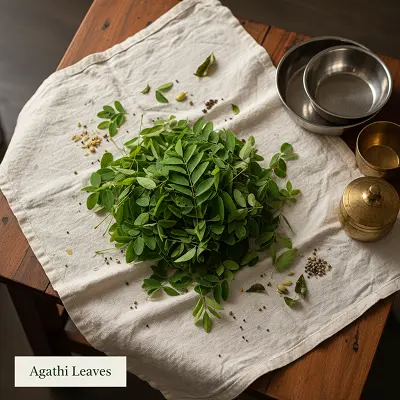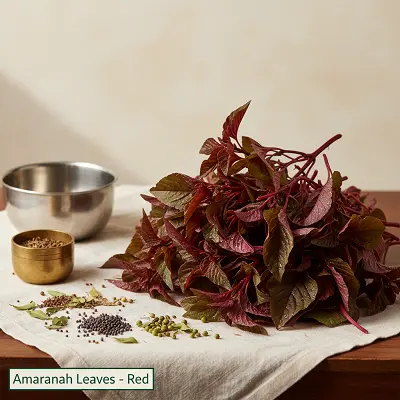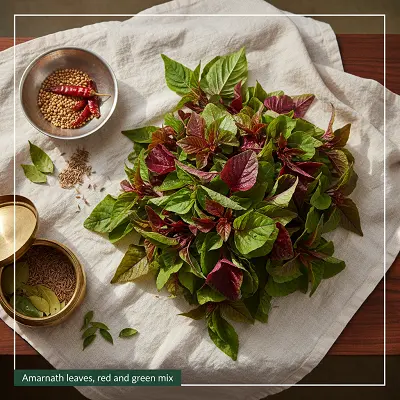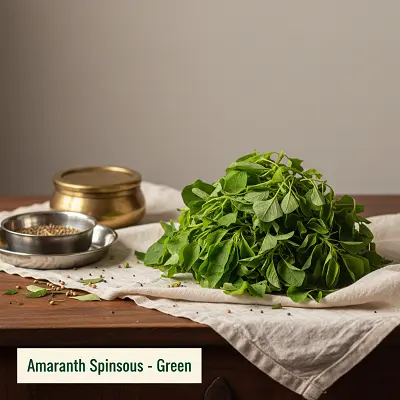
Amaranth Leaves - Green
Amaranthus gangeticus · Also known as amaranth-leaves-green
Amaranth leaves (also called चौलाई / chaulai in Hindi) are tender, mild-flavoured green leafy vegetables commonly used across Indian kitchens. Rich in iron, calcium, and fibre, they are a staple in regional sabzi dishes and are traditionally valued in Ayurvedic cooking (IFCT 2017...
Nutrition per 100 g
Mean values ± IFCT published SD (edible portion).
More macros
Classification
About Amaranth Leaves - Green
What it is
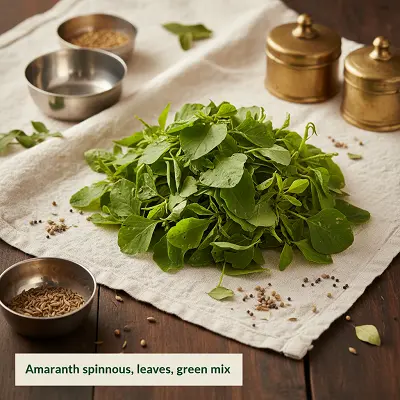
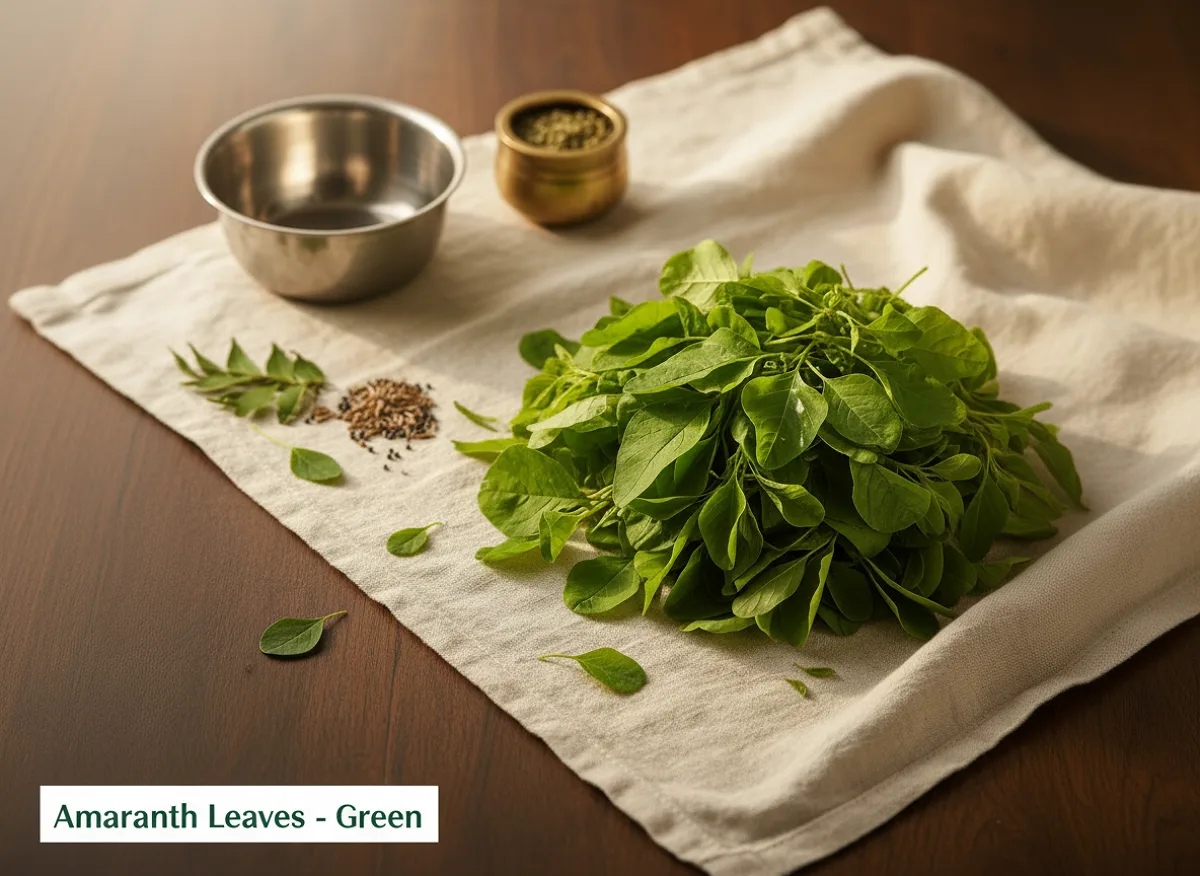
Amaranth leaves are the soft, edible foliage of the amaranth plant, harvested when young and tender. They have a mild, slightly earthy flavour and delicate texture. Widely grown across India as a monsoon and summer crop, they are classified as a green leafy vegetable in the IFCT 2017 food composition tables (Ref #C002) and are a traditional source of micronutrients in Indian home cooking.
Use in Indian Kitchen
Amaranth leaves feature prominently in regional Indian cooking. In North India, they are often cooked as a simple tadka sabzi with onions, garlic, and spices. South Indian kitchens use them in sambar and rasam, while in Maharashtra and Gujarat they appear in everyday dal-based curries. The leaves are also popular in East Indian cuisine, where they are sometimes paired with lentils or made into a light stir-fry. Traditionally harvested during the monsoon, they are considered a cooling, easily digestible green and have long been part of grandmother's kitchen wisdom for building strength and vitality.
Ayurvedic Connection
In Ayurvedic tradition, amaranth leaves are regarded as light (laghu) and cooling (sheeta virya), making them suitable for balancing pitta dosha. They are traditionally used to support digestion and are believed to nourish the blood and tissues. The leaves are often recommended in classical texts as a gentle, nutritive green for all constitutions, particularly valued during warm seasons.
Key Nutrients
Amaranth leaves are a good source of iron, calcium, magnesium, and phosphorus. They also contain vitamins A, C, and folate, along with dietary fibre. Exact nutrient composition per 100 g is documented in IFCT 2017 (Ref #C002); values vary slightly depending on harvest stage and growing conditions.
Health Benefits (Evidence-based)
- May support bone health due to their calcium and magnesium content, particularly valuable for vegetarian diets.
- Linked to improved iron status when consumed regularly, especially important for those at risk of anaemia.
- High in dietary fibre, which may aid digestive regularity and support gut health.
- Rich in antioxidants and vitamin C, which may help protect cells and support immune function.
- Traditionally used to support lactation and postpartum recovery in Indian home medicine.
- Low in calories and high in nutrients, making them a nutrient-dense addition to everyday meals.
Culinary Uses (Vegetarian)
- Cooked as a simple tadka sabzi with onions, garlic, ginger, and green chilli.
- Added to dal (moong, masoor, or chana dal) for extra nutrition and mild flavour.
- Included in sambar and rasam in South Indian cooking.
- Stir-fried with coconut and spices as a light side dish.
- Mixed into curd-based curries or paired with paneer for a protein boost.
- Blanched and added to dough for rotis or parathas for a subtle green colour and nutrition.
Caution
Amaranth leaves contain oxalates, which may be a concern for those with a history of kidney stones or certain mineral absorption issues; cooking helps reduce oxalate content. Those on blood-thinning medications should consume in moderation and consult a healthcare provider, as leafy greens contain vitamin K. Always wash thoroughly before use to remove any soil or pesticide residue.
References
- Indian Council of Medical Research - National Institute of Nutrition (ICMR-NIN). Indian Food Composition Tables 2017 (IFCT 2017). Reference #C002 - Green Leafy Vegetables category.
- Longvah, T., Ananthan, R., Bhaskarachary, K., & Venkaiah, K. (2017). Indian Food Composition Tables. Hyderabad: National Institute of Nutrition, ICMR.
Health Benefits
- Antioxidant
- Supports Bone Health
- Supports Digestion
- Boosts Immunity
- Improves Hemoglobin
Sourcing & Storage
Storage
Store amaranth leaves in a breathable cloth bag or perforated plastic bag in the refrigerator's vegetable compartment, away from ethylene-producing fruits like apples and bananas. In Indian kitchens, many prefer to wrap them loosely in a damp cloth to retain moisture without causing rot. Keep them in a cool, well-ventilated spot; avoid airtight containers, which trap moisture and encourage wilting. In warm, humid climates, use the coldest part of your fridge and check daily for any yellowing or slime.
Shelf Life
Fresh amaranth leaves keep for 3 to 5 days when stored properly in the refrigerator. Once cooked, they can be refrigerated in an airtight container for up to 2 days. For longer storage, blanch and freeze in portions for up to 2 to 3 months; thaw in the fridge before use. In Indian homes, many prefer to use them within 2 days of purchase for best flavour and texture.
Check Before You Buy
Choose bunches with bright green, tender leaves that feel crisp and snap easily when bent. Avoid yellowing, wilted, or slimy leaves, which indicate age or poor storage. Check that stems are not woody or thick; younger plants have softer, more palatable leaves. If buying from a mandi or kirana store, smell for any musty or off odours. Inspect packaged bundles for moisture inside the bag, which can lead to quick spoilage. Leaves should have no visible insect damage, brown spots, or discolouration. In some regions, amaranth is sold as loose bunches; select those with uniform colour and no signs of pest damage.
In Ayurveda
Amaranth Leaves are important for their rich nutritional profile, providing essential vitamins and minerals such as vitamins A, C, K, iron, and calcium. They support overall health by boosting immunity, promoting healthy digestion, and contributing to bone strength. Amaranth Leaves are valued for their anti-inflammatory and antioxidant properties. They can be used to alleviate skin irritations when applied topically or consumed in juice form to enhance energy and vitality. Their versatility makes them a beneficial addition to both diet and natural health practices.