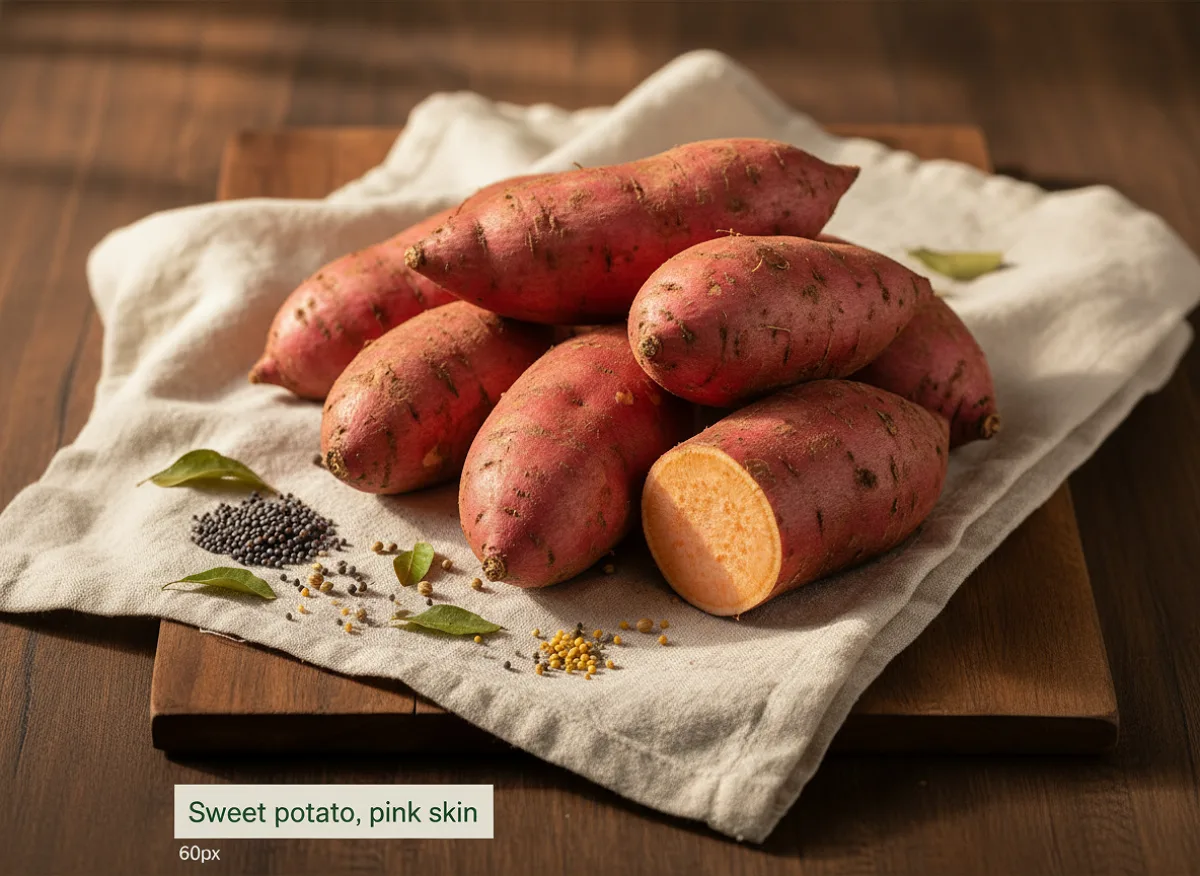
Sweet potato, pink skin
Ipomoes batatas · Also known as शकरकंद (shakarkand), मीठा आलू (meetha aloo), रतालू (ratalu), शकरगोभी (shakargobhi), कुम्हड़ा (kumhra - regional), गुलाबी शकरकंद
Sweet potato with pink or reddish skin (शकरकंद, shakarkand) is a starchy root vegetable with creamy orange or pale flesh, naturally sweet taste, and a soft, fluffy texture when cooked. Common across Indian home kitchens, it is roasted whole over coals, mashed into halwa, or fried...
Nutrition per 100 g
Mean values ± IFCT published SD (edible portion).
More macros
Classification
About Sweet potato, pink skin
What it is
Sweet potato with pink or reddish skin (शकरकंद, shakarkand) is a starchy root vegetable belonging to the morning glory family, distinct from the common potato. The pink-skinned variety has a thin, smooth or slightly bumpy skin and creamy orange or pale yellow flesh inside. It is naturally sweet, with a soft, fluffy texture when cooked, and is eaten fresh, whole, or processed into flour. (IFCT 2017, Ref #F014)
Use in Indian Kitchen
Sweet potato is a beloved comfort food across Indian regions. In North India, it is roasted whole over charcoal or baked, then eaten with a pinch of salt and chaat masala, or mashed into a simple halwa with ghee and jaggery. In the South, it appears in sambar, kootu, and curries alongside other vegetables. Street vendors sell roasted shakarkand with tamarind chutney or dry spice powder. Home cooks also fry thin slices into crispy chips, boil and mash for khichdi, or stuff into parathas. A practical tip: peel after cooking rather than before, as the skin helps retain moisture and nutrients during boiling or roasting.
Key Nutrients
Sweet potato is rich in carbohydrates, dietary fibre, and beta-carotene (provitamin A), especially in the orange-fleshed varieties. It also contains vitamin C, potassium, manganese, and B vitamins. The pink skin contains anthocyanins and other polyphenols. Exact nutrient composition varies by variety and growing conditions; refer to IFCT 2017 for detailed micronutrient profiles.
Health Benefits (Evidence-based)
- High in dietary fibre, which may support digestive health and regular bowel function.
- Rich in beta-carotene and vitamin C, linked to immune support and antioxidant activity.
- Contains resistant starch when cooled after cooking, which may act as a prebiotic fibre.
- Low glycaemic index (when boiled), making it a gentler carbohydrate choice for blood sugar management.
- Potassium content may help support heart health and electrolyte balance.
- Anthocyanins in the pink skin are associated with anti-inflammatory and antioxidant properties.
Culinary Uses (Vegetarian)
- Roasted whole or halved, served with chaat masala or tamarind chutney.
- Mashed into halwa with ghee, jaggery, and cardamom.
- Fried as thin chips or fries, salted or spiced.
- Boiled and added to sambar, kootu, or mixed vegetable curries.
- Mashed into khichdi with rice and dal.
- Stuffed into parathas with spiced mashed filling.
- Steamed and served as a side dish with dal and rice.
Caution
- Sweet potato is starchy and calorie-dense; portion control is important for those managing weight or blood sugar.
- Rarely, individuals with latex allergy may experience cross-reactivity with sweet potato (oral allergy syndrome); consult a healthcare provider if concerned.
- Oxalates are present in small amounts; those with kidney stones or on oxalate-restricted diets should consume in moderation.
References
- Indian Council of Medical Research - National Institute of Nutrition (ICMR-NIN). Indian Food Composition Tables (IFCT 2017). Reference #F014 (Root and Tubers category).
- McGill, C. R., Kurilich, A. C., & Davignon, J. (2013). The role of functional foods, nutraceuticals, and supplements in preventing and treating cardiovascular disease. Nutrition Reviews, 71(8), 530-541.
Sourcing & Storage
Storage
Store sweet potatoes in a cool, dark, well-ventilated place (ideally 13-16°C / 55-60°F) away from direct sunlight and moisture. A pantry, cupboard, or root cellar is ideal. Do not refrigerate raw sweet potatoes, as cold temperatures can negatively affect flavour and texture. Keep them in a mesh bag or open container to allow air circulation and prevent rot. In warm, humid Indian climates, store in the coolest available spot and check regularly for sprouting or soft spots. Once cooked, store in an airtight container in the refrigerator.
Shelf Life
Uncooked sweet potatoes, when stored in cool and dry conditions, keep for 2-3 weeks, sometimes up to a month if undamaged. In warmer climates, shelf life may be shorter (1-2 weeks). Cooked sweet potato keeps in the refrigerator for 3-5 days in an airtight container. Roasted or boiled sweet potato can be frozen for up to 3 months if wrapped well or stored in freezer bags.
Check Before You Buy
Choose sweet potatoes that are firm, heavy for their size, and free of soft spots, bruises, or mould. The skin should be smooth and unblemished, with a vibrant pink or reddish colour. Avoid potatoes with sprouting eyes, wrinkled skin, or a musty smell, which indicate age or rot. When buying from a mandi or kirana store, gently squeeze to ensure firmness; reject any that feel spongy or have visible decay. If buying pre-packed, check the packaging date and ensure no condensation is trapped inside, which can promote mould.
In Ayurveda
Sweet potato (शकरकंद) is traditionally valued in Ayurvedic practice as a nourishing and grounding food. Its sweet taste (madhura rasa) is believed to pacify Vata dosha and support overall vitality. The root is considered easy to digest and is often recommended during winter months as a strengthening, warming food for general wellness.