Sweet Potato
Ipomoes batatas · Also known as shakarakand, शकरकंद, sweet yam, shakarkand, मीठा आलू
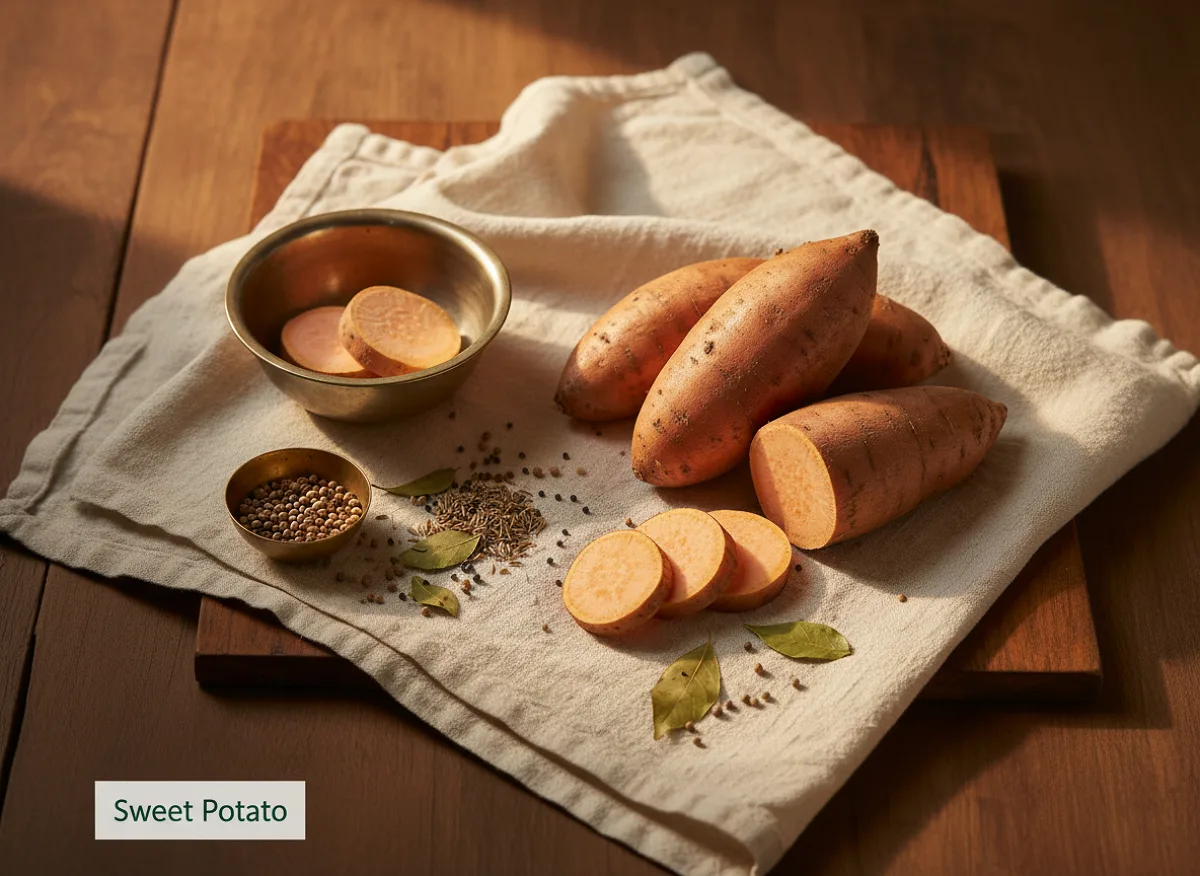
Sweet potato (शकरकंद, shakarakand) is a starchy root vegetable with smooth, thin skin ranging from orange to purple, and creamy, naturally sweet flesh inside. Firmer and sweeter than regular potato, it's a staple in Indian home cooking - roasted whole, mashed into halwa, or slice...
Nutrition per 100 g
Mean values ± IFCT published SD (edible portion).
More macros
Classification
About Sweet Potato
What it is
Sweet potato (शकरकंद, shakarakand) is a starchy root vegetable with smooth, thin skin in shades of orange, purple, or cream, and dense, creamy flesh that tastes naturally sweet and slightly nutty. Unlike regular potato, it holds its shape well when cooked and requires no added sugar for desserts. Fresh sweet potatoes are available year-round in Indian markets, with peak season in winter months. (IFCT 2017, Ref #F013)
Use in Indian Kitchen
Sweet potato appears across Indian regional cooking in both savoury and sweet forms. In North India, it's roasted whole over coals or baked, then mashed with ghee and jaggery for a simple winter comfort dish. South Indian homes make shakarkand halwa - grated and cooked slowly with ghee, jaggery, and cardamom until it turns glossy and rich. It's also sliced thin and fried into crispy chips, added to vegetable curries and sambhar, or stuffed into parathas with spiced potato filling. A practical tip: boil or steam first if you want tender pieces for curry; roast or bake whole for maximum sweetness and caramelisation.
Key Nutrients
Sweet potato is a good source of carbohydrates, dietary fibre, and potassium. Orange varieties are particularly rich in beta-carotene (provitamin A), while purple varieties contain anthocyanins. It also provides vitamin C, manganese, and B vitamins. Exact nutrient composition varies by variety and growing conditions; refer to IFCT 2017 for detailed micronutrient profiles.
Health Benefits (Evidence-based)
- High in beta-carotene (orange varieties), which supports eye health and immune function.
- Good source of dietary fibre, which may support digestive health and satiety.
- Contains potassium, linked to healthy blood pressure regulation.
- Naturally sweet, making it a useful whole-food alternative to refined sugar in halwa and desserts.
- Purple varieties contain anthocyanins, plant compounds with antioxidant properties.
- Low glycaemic index compared to white potato when boiled or steamed, making it suitable for balanced meals.
Culinary Uses (Vegetarian)
- Roasted whole or halved, served with ghee and salt as a simple side.
- Grated and cooked into shakarkand halwa with ghee, jaggery, and cardamom.
- Sliced thin and deep-fried into crispy chips or wafers.
- Boiled and mashed into vegetable curries, sambhar, and kootu.
- Stuffed into parathas with spiced mashed filling.
- Baked or steamed and served with curd and pickle as a light meal.
- Added to mixed vegetable fry (sabzi) with onion, green chilli, and tempering.
Caution
- Sweet potato is high in carbohydrates; portion control is important for those managing blood sugar or weight.
- Oxalates present in sweet potato may be a concern for people prone to kidney stones; moderation is advised.
- Some people may experience digestive discomfort if eaten in large quantities raw or undercooked; always cook thoroughly.
References
- Indian Council of Medical Research - National Institute of Nutrition (ICMR-NIN). Indian Food Composition Tables (IFCT 2017). Reference code F013 (Root and Tubers category).
- National Institute of Nutrition, ICMR. Nutritive Value of Indian Foods. Hyderabad: NIN Publications.
Health Benefits
- Improves Digestion
- Provides Energy
- Boosts Immunity
- Supports Eye Health
- Weight Management Support
Sourcing & Storage
Storage
Store sweet potatoes in a cool, dark, well-ventilated place (ideally 13-16°C, but room temperature is acceptable in Indian homes). Keep them in a paper bag or open basket rather than sealed plastic, as they need air circulation to prevent mould. Avoid storing near onions or potatoes, as they release gases that can spoil sweet potatoes faster. In humid climates, check regularly for soft spots or sprouting and remove any damaged tubers promptly.
Shelf Life
Whole, uncut sweet potatoes stored in cool, dark conditions can last 2-3 weeks at room temperature, or up to 4-6 weeks in a cool pantry or cellar. Once cut or cooked, store in an airtight container in the refrigerator for 3-5 days. Cooked sweet potato can be frozen in portions for up to 3 months.
Check Before You Buy
Choose sweet potatoes that are firm to the touch with no soft spots, bruises, or wrinkled skin. The skin should be smooth and unblemished; avoid any with sprouting eyes or mould. Colour should be vibrant and uniform - orange varieties should be a deep orange, not pale or dull. At the mandi or kirana, pick medium-sized tubers (too large may be fibrous inside). Avoid pre-packed bags where you cannot inspect individual potatoes; if buying packaged, check the date and ensure no condensation inside the bag.
In Ayurveda
In classical Ayurveda, sweet potato (शकरकंद) is not extensively documented in traditional texts, but it is recognized in modern Ayurvedic practice as a warming, nourishing root vegetable. Its sweet taste (madhura rasa) and heavy, grounding quality (guru guna) make it suitable for balancing Vata dosha. The natural sweetness and moistening properties are believed to support digestion and provide sustained energy.