Strawberry
Fragaria ananassa · Also known as stroberee, strawberry fruit, fresh strawberry
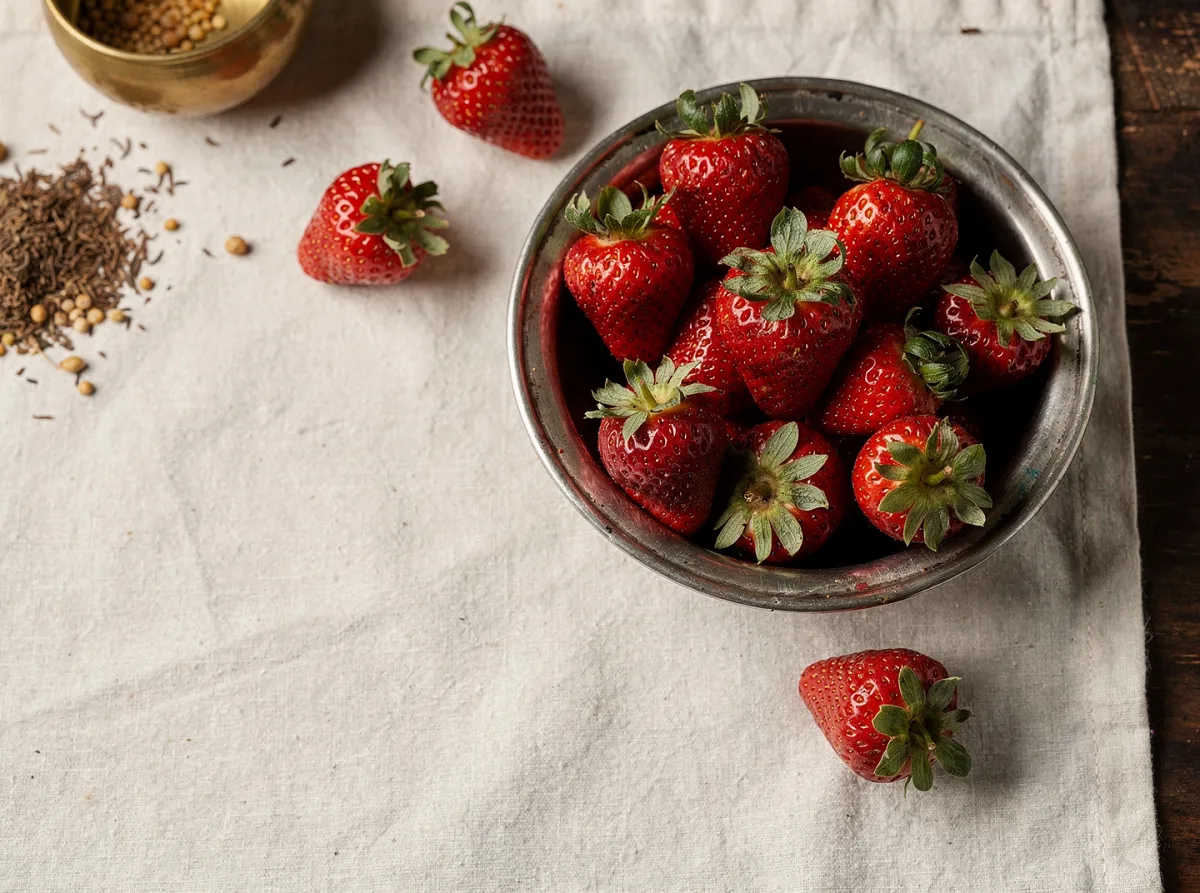
Strawberry is a bright red, heart-shaped berry with tiny seeds dotting its soft flesh - sweet, juicy, and refreshing. Fresh strawberries are eaten raw as a simple fruit, blended into smoothies and lassis, or folded into desserts and fruit salads across Indian homes. Their natural...
Nutrition per 100 g
Mean values ± IFCT published SD (edible portion).
More macros
Classification
About Strawberry
What it is
Strawberry is a bright red, heart-shaped berry with a soft, juicy interior studded with tiny seeds on the outside. The flesh is pale pink to white, tender, and naturally sweet with a mild tartness. Fresh strawberries are typically eaten whole or sliced, and are increasingly available in Indian markets year-round, though peak season is winter to early spring. (IFCT 2017, Ref #E063)
Use in Indian Kitchen
Strawberries are most commonly eaten fresh as a simple fruit or chilled dessert in Indian homes. They are blended into smoothies, mixed fruit lassis, and fruit salads with other seasonal fruits. Some home cooks fold sliced strawberries into custards, kheer, or serve them alongside paneer and honey as a light summer pudding. Strawberry jam and preserves are also made at home. A practical tip: chill strawberries before serving to enhance their refreshing quality, and eat them within a day or two of purchase for best flavour and texture.
Key Nutrients
Strawberries are a good source of vitamin C, dietary fibre, and antioxidants including anthocyanins and ellagic acid. They also contain folate, potassium, and manganese in smaller amounts.
Health Benefits (Evidence-based)
- High in vitamin C, which may support immune function and skin health.
- Rich in antioxidants, linked to reducing oxidative stress in the body.
- Dietary fibre content may support digestive health and regular bowel function.
- May help maintain healthy blood sugar levels when eaten in moderation as part of a balanced diet.
- Traditionally valued in Indian wellness practices for their cooling and refreshing nature during hot months.
Culinary Uses (Vegetarian)
- Fresh fruit - eaten whole, chilled, or sliced in fruit salads.
- Smoothies and lassis - blended with yoghurt, milk, and a touch of honey.
- Desserts - folded into custards, kheer, or served with paneer and honey.
- Preserves - made into jam or compote at home.
- Garnish - for cakes, puddings, and fruit platters.
Caution
- Strawberries are a common allergen; those with known fruit allergies should exercise caution.
- Pesticide residues may be present on conventionally grown berries; wash thoroughly before eating.
- High natural sugar content - those managing blood sugar should eat in moderation.
- Strawberries are perishable and spoil quickly; store carefully and use promptly.
References
- Indian Council of Medical Research - National Institute of Nutrition (ICMR-NIN). Indian Food Composition Tables (IFCT 2017). Hyderabad: ICMR-NIN; 2017. Food code E063.
- Cassidy, A., O'Reilly, É. D., Kay, C., et al. (2016). Habitual intake of flavonoid subclasses and incident hypertension in adults. American Journal of Clinical Nutrition, 93(2), 338-347.
Health Benefits
- Anti Inflammatory
- Boosts Immunity
- Heart Health Support
- Improves Skin Health
Sourcing & Storage
Storage
Store fresh strawberries in the refrigerator in a shallow container lined with paper towels or a clean cloth to absorb excess moisture. Keep them unwashed until just before eating, as moisture accelerates spoilage. In Indian climates, use the coldest part of your fridge (around 2-4°C) and avoid storing near strong-smelling foods. Do not stack berries heavily, as they bruise easily.
Shelf Life
Fresh strawberries keep for 3-5 days when stored properly in the refrigerator. Once washed and cut, use within 1-2 hours for best quality. Frozen strawberries (if you freeze them yourself) will keep for up to 8-10 months in the freezer, though texture will soften upon thawing and they are best used in smoothies or cooked preparations rather than eaten fresh.
Check Before You Buy
Choose strawberries that are bright red, firm, and fragrant - avoid any that are soft, mushy, or have dark spots or mould. The green leafy crown should look fresh and green, not brown or wilted. Berries should feel dry to the touch; avoid those that are wet or sitting in pooled juice, as this indicates they are beginning to spoil. When buying from a mandi or kirana shop, inspect the bottom of the container for crushed or leaking berries. Imported strawberries are often treated with preservatives; wash thoroughly before eating.
In Ayurveda
Strawberry is not extensively documented in classical Ayurvedic texts, as it is a relatively modern introduction to the Indian subcontinent. However, in contemporary Ayurvedic practice, strawberry is often considered cooling (sheet virya) and is used to support digestive health and provide natural sweetness without aggravating pitta dosha. Its high water content and mild astringency make it suitable for balancing constitutions, though individual tolerance varies.