Star fruit
Averrhoa carambola · Also known as Carambola, kamrakh, kamrakha, five-finger fruit, starfruit
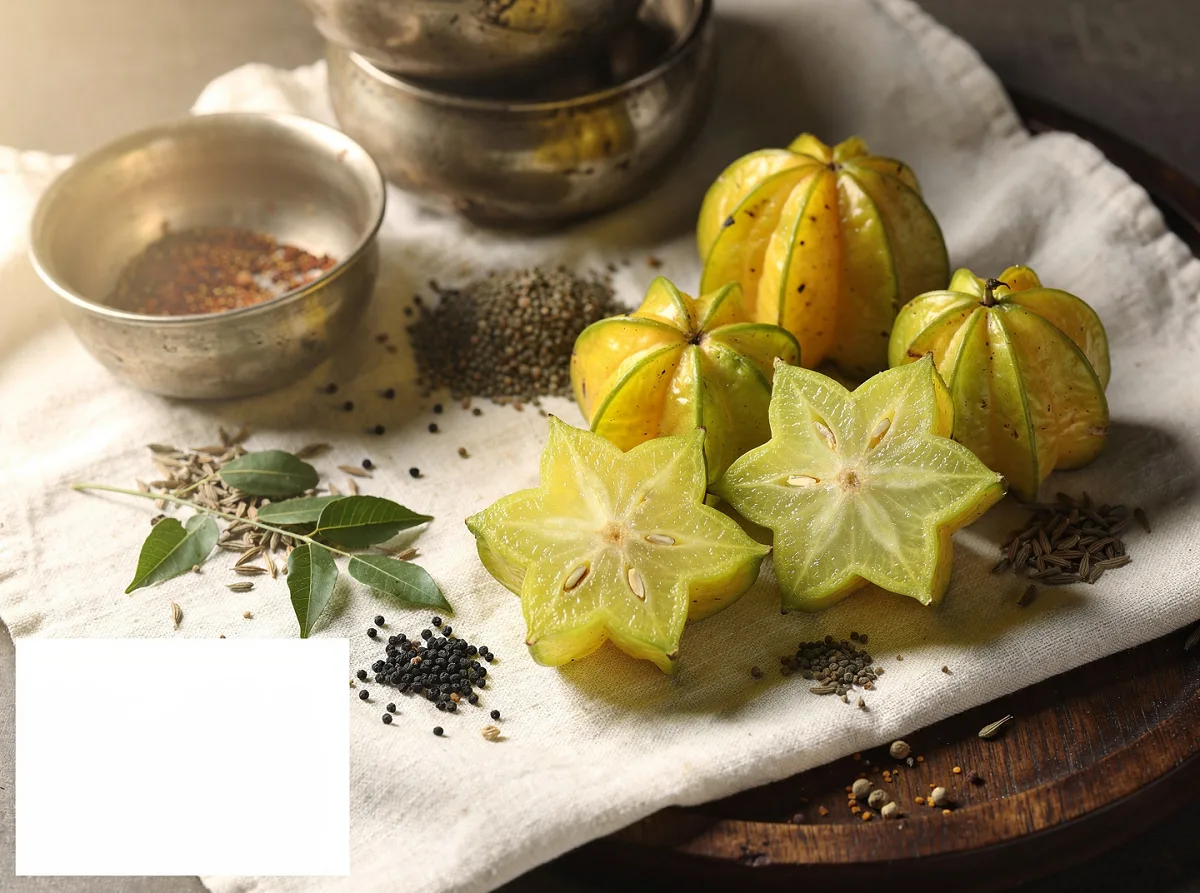
Star fruit (kamrakh) is a tropical fruit with a distinctive five-pointed star shape when sliced crosswise, bright yellow or pale green skin, and crisp, juicy, mildly sweet flesh. Fresh and tart, it is eaten raw as a refreshing snack, sliced into salads, or candied into preserves....
Nutrition per 100 g
Edible portion values from the master catalog.
More macros
Classification
About Star fruit
What it is
Star fruit, known as kamrakh in Hindi and regional Indian markets, is a tropical fruit native to Southeast Asia but now grown in parts of India, particularly in warmer regions. It has a waxy, thin yellow or pale green skin and a translucent, pale yellow flesh inside. When sliced crosswise, it forms a perfect five-pointed star - a feature that makes it instantly recognisable and visually striking on any plate. The flesh is crisp, juicy, and mildly sweet with a subtle tartness, and the entire fruit is edible without peeling. (IFCT 2017, Ref #E062)
Use in Indian Kitchen
Star fruit is most commonly enjoyed fresh as a cooling snack during hot months, sliced and eaten raw or added to fruit salads and chaats for a crisp, refreshing bite. In South Indian homes, it is sometimes candied or made into preserves and chutneys. The fruit pairs well with lime juice, chaat masala, and a pinch of salt to enhance its natural tartness. It is also used in fresh juices, smoothies, and as a garnish for desserts and drinks. A practical tip: choose fully ripe, slightly soft fruits for maximum sweetness and juice; unripe ones can be quite tart and astringent.
Key Nutrients
Star fruit is rich in vitamin C, dietary fibre, and water, making it a hydrating and light fruit. It also contains small amounts of copper, potassium, and antioxidants. Exact nutrient composition is available in IFCT 2017 tables.
Health Benefits (Evidence-based)
- High water and fibre content may support digestive health and regular bowel function.
- Rich in vitamin C, which may help support immune function and skin health.
- Low in calories and naturally sweet, making it a refreshing choice for those watching sugar intake.
- Contains antioxidants that may help protect cells from oxidative stress.
- Traditionally used in tropical regions as a cooling, hydrating fruit during hot seasons.
Culinary Uses (Vegetarian)
- Fresh sliced fruit as a snack or in fruit salads and chaats.
- Candied or made into jams, preserves, and chutneys.
- Juiced or blended into smoothies and fresh drinks.
- Sliced as a garnish for desserts, ice cream, and cocktails.
- Added to raita or fruit-based yoghurt dishes.
Caution
- Those with kidney disease or on dialysis should consult a healthcare provider, as star fruit contains oxalates and may affect kidney function in susceptible individuals.
- Unripe fruit is very tart and may cause mouth puckering; choose ripe, softer fruits for better flavour.
- May interact with certain medications; if on regular medication, seek medical advice before consuming regularly in large quantities.
References
- Indian Council of Medical Research - National Institute of Nutrition (ICMR-NIN). Indian Food Composition Tables (IFCT 2017). Reference #E062.
- National Institute of Nutrition, ICMR. Nutritive Value of Indian Foods. Hyderabad: NIN Publications.
Sourcing & Storage
Storage
Store star fruit at room temperature if you plan to eat it within 1-2 days. For longer storage, place ripe fruits in a paper bag or cardboard box in a cool, well-ventilated place away from direct sunlight. In hot, humid Indian climates, refrigerate ripe fruits in the vegetable drawer or a perforated plastic bag to slow ripening and prevent mould. Unripe, firmer fruits can be left at room temperature to ripen naturally over 3-5 days.
Shelf Life
At room temperature, ripe star fruit keeps for 2-3 days. In the refrigerator, well-stored ripe fruit lasts 5-7 days. Unripe fruit stored at room temperature ripens over 3-5 days and then follows the same shelf life. Once cut, consume within a few hours or store in an airtight container in the fridge for up to 1 day to prevent browning and loss of crispness.
Check Before You Buy
Choose star fruit that is firm yet slightly yielding to gentle pressure, with a bright yellow or pale green colour and no dark spots or blemishes. The fruit should feel heavy for its size, indicating good juice content. Avoid fruits that are rock-hard (unripe and very tart) or overly soft and bruised. A faint, sweet aroma near the stem is a sign of ripeness. When buying from a mandi or kirana store, check that the skin is smooth and unblemished, and avoid any with mould or fermentation odour.
In Ayurveda
Carambola (star fruit) does not have a well-documented classical Ayurvedic entry in traditional texts. As a tropical fruit introduced to Indian cultivation in recent generations, it is not mentioned in foundational Ayurvedic pharmacopeias such as the Charaka Samhita or Sushruta Samhita. Modern Ayurvedic practitioners may classify it based on its cooling, hydrating properties (high water content, mild taste), but no specific rasa, guna, virya, or vipaka designation is established in classical literature.