Spring Onion
Allium cepa · Also known as Onion - stalk
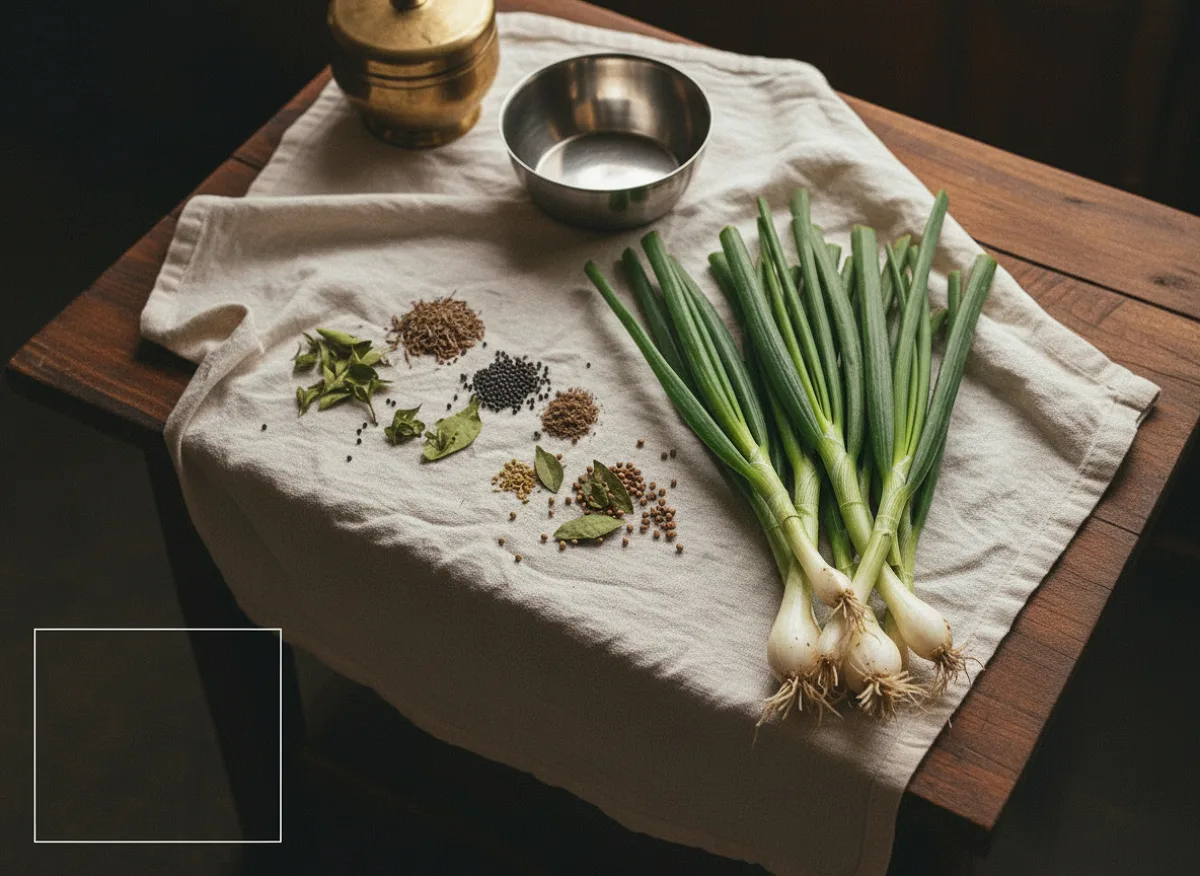
Spring onion (also called onion stalk or hara pyaaz) is the tender green shoot and white bulb of the onion plant, harvested before full maturity. Milder and fresher than mature onions, it is a staple in Indian kitchens for tempering, garnish, and raw salads. Classified under Othe...
Nutrition per 100 g
Mean values ± IFCT published SD (edible portion).
More macros
Classification
About Spring Onion
What it is
Spring onion is the immature onion plant, harvested with both the tender white bulb and green leafy tops intact. It has a mild, sweet onion flavour with a fresh, slightly peppery edge. Unlike mature onions, the entire plant - bulb and stalk - is edible and commonly used in Indian cooking. Botanically Allium cepa, it is classified as an Other Vegetable in the Indian Food Composition Tables (IFCT 2017, Ref #D058).
Use in Indian Kitchen
Spring onion is treasured across Indian regions for its versatility and delicate flavour. In North Indian kitchens, it is a classic tempering ingredient in dals and curries, and a beloved garnish for chaat, samosas, and pakora. South Indian cooks use it fresh in salads and as a finishing touch to rasam and sambhar. In Bengali and Assamese cooking, it appears in fish curries and vegetable stir-fries. The green tops are often reserved for garnish or mixed into chutneys, while the white bulb is chopped for tadka. It is especially popular during spring and monsoon seasons when fresh supplies are abundant in the mandi, and carries a nostalgic association with light, fresh home cooking.
Key Nutrients
Spring onion contains vitamin C, folate, and potassium. The green leaves are particularly rich in vitamin K and beta-carotene. It also provides dietary fibre and small amounts of manganese and phosphorus. Exact nutrient composition is documented in IFCT 2017, Ref #D058.
Health Benefits (Evidence-based)
- May support immune function due to vitamin C content and traditional use as a warming, digestive ingredient.
- Linked to bone health through vitamin K in the green leaves, which plays a role in bone mineralisation.
- Contains quercetin and other compounds traditionally associated with anti-inflammatory properties in Ayurvedic and folk medicine.
- May aid digestion and support healthy gut function, a role emphasised in classical Indian wellness practices.
- Low in calories and high in water content, making it a hydrating addition to meals.
Culinary Uses (Vegetarian)
- Tempering (tadka) in dals, curries, and vegetable dishes.
- Raw garnish for chaat, samosas, pakora, and street food.
- Chopped into fresh salads, raita, and chutneys.
- Stir-fried with other vegetables or paneer.
- Mixed into vegetable pulao, biryani, and fried rice.
- Blanched and added to soups, rasam, and light broths.
Caution
Spring onion is generally safe for most people. Those with sensitive digestion or a history of acid reflux may find raw onions trigger discomfort; cooking softens this effect. People taking blood-thinning medications should consume consistently rather than in sudden large amounts, as onions contain compounds that may interact. Always wash thoroughly before use to remove soil and potential contaminants.
References
- Indian Council of Medical Research - National Institute of Nutrition. Indian Food Composition Tables 2017. ICMR-NIN, Hyderabad.
- National Institute of Nutrition, ICMR. Dietary Guidelines for Indians - A Manual. NIN Publications.
Health Benefits
- Improves Digestion
- Anti Inflammatory
- Boosts Immunity
- Supports Gut Health
- Heart Health Support
Sourcing & Storage
Storage
Store spring onion in the refrigerator in a perforated plastic bag or wrapped loosely in damp paper towel to retain moisture without encouraging rot. Keep in the vegetable drawer away from ethylene-producing fruits like apples and tomatoes. In warm, humid Indian climates, use within 2-3 days for best quality. For longer storage, trim the roots, wrap in foil, and refrigerate; alternatively, chop and freeze in airtight containers for up to 2 months, though texture will soften.
Shelf Life
Fresh spring onion keeps for 3-5 days in the refrigerator when stored properly. Once cut or trimmed, use within 1-2 days. Frozen chopped spring onion (green tops and white bulb separately) will last up to 2 months in the freezer, though best used in cooked dishes rather than raw applications. Do not store at room temperature for more than a few hours, especially in warm weather.
Check Before You Buy
Choose spring onions with firm, crisp white bulbs and bright green, unblemished leaves. Avoid bunches with yellowing, wilted, or slimy tops, or soft, mushy bulbs. The white portion should snap cleanly when bent. Smell should be fresh and mildly onion-like, not fermented or musty. At the mandi or kirana, buy from vendors with good turnover; packed bundles in supermarkets should show no condensation or browning inside the bag. Reject any with visible mould or root rot.
In Ayurveda
In Ayurveda, spring onions are valued for their warming properties and are believed to aid digestion and improve appetite. They are considered beneficial for balancing Vata and Kapha doshas while also promoting respiratory health due to their expectorant qualities. In home remedies, spring onions are often used to relieve cold symptoms and congestion. They can be consumed in soups or teas to help soothe the throat and enhance immunity, making them a useful addition to natural health practices.