Split Field Beans
Vicia faba · Also known as French beans, फ्रेंच बीन्स (French beans), Vicia faba, fava beans, broad beans
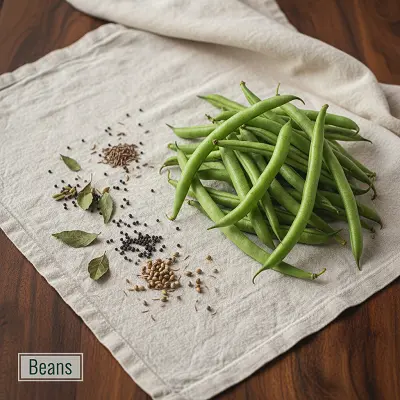
Split field beans (फ्रेंच बीन्स) are tender, pale green legumes with a mild, slightly nutty flavour and soft texture when cooked. Fresh or dried, they feature in South Indian sambhar and kootu, North Indian curries, and simple stir-fries with coconut and spices. Soak dried beans...
Nutrition per 100 g
Mean values ± IFCT published SD (edible portion).
More macros
Classification
About Split Field Beans
What it is
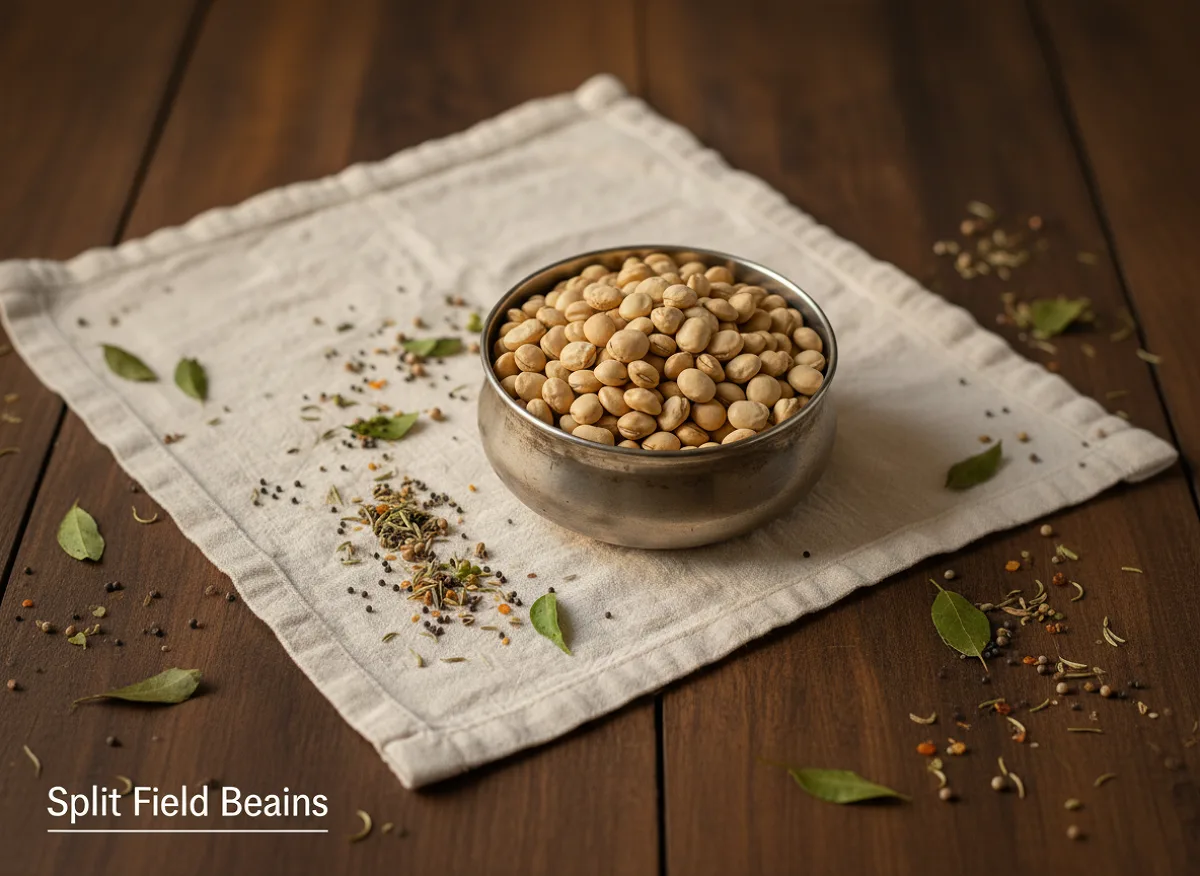
Split field beans, also called French beans or फ्रेंच बीन्स (French beans), are the dried seeds of the broad bean plant (Vicia faba). They are pale green or cream-coloured when dried, with a smooth, slightly flattened oval shape. When cooked, they soften into a creamy texture with a gentle, earthy-nutty flavour. Commonly used whole or split in Indian home kitchens, they are a reliable pulse staple across regions. (IFCT 2017, Ref #D048)
Use in Indian Kitchen
Split field beans shine in South Indian sambhar and kootu, where they cook down into a soft base for vegetable curries. In North Indian kitchens, they appear in dal-based curries and khichdi, often tempered with cumin, mustard seed, and curry leaves. A simple stir-fry with grated coconut, green chilli, and turmeric makes a quick weekday side dish. Soak dried beans overnight to reduce cooking time and aid digestion; this also mellows any earthy aftertaste. Regional cooks often pair them with tamarind or jaggery to balance their mild flavour.
Key Nutrients
Split field beans are a good source of plant-based protein, dietary fibre, and carbohydrates. They contain B vitamins (especially folate), iron, magnesium, and phosphorus. Exact nutrient composition varies by cultivar and growing conditions; refer to IFCT 2017 (Ref #D048) for standardised Indian food values.
Health Benefits (Evidence-based)
- May support steady blood sugar levels due to their low glycaemic index and high fibre content.
- Linked to improved digestive health through soluble and insoluble fibre, which feed beneficial gut bacteria.
- Plant-based protein makes them a valuable addition to vegetarian and vegan diets for muscle maintenance.
- Iron and folate content may help prevent anaemia, particularly when paired with vitamin C sources (lemon, tomato).
- Traditionally used in Ayurvedic cooking to support overall vitality and stamina.
Culinary Uses (Vegetarian)
- Whole or split in sambhar, kootu, and rasam.
- Khichdi and mixed-dal preparations.
- Curried with coconut milk, onion, and spices.
- Stir-fried as a simple side dish with tempering.
- Soaked and sprouted for salads and light meals.
Caution
- Raw or undercooked beans contain lectins; always soak overnight and cook thoroughly until soft.
- Those with a history of gout or uric acid issues should consume in moderation, as beans are purine-rich.
- May cause bloating or gas in sensitive individuals; soaking, sprouting, and cooking with ginger or asafoetida can help.
References
- Indian Council of Medical Research - National Institute of Nutrition (ICMR-NIN). Indian Food Composition Tables (IFCT) 2017. Reference #D048 (Other Vegetables - Legumes category).
- Vaya, J. & Mahmood, S. (2006). Flavonoid content in leaf extracts of the fig (Ficus carrica L.), carob (Ceratonia siliqua L.) and locust bean (Vicia faba L.). Biofactors, 28(3-4), 169-175.
Health Benefits
- Supports Digestion
- Supports Heart Health
- Helps Blood Sugar Control
- Provides Iron
- Provides Satiety
Sourcing & Storage
Storage
Store dried split field beans in an airtight container (glass jar or sealed plastic tub) in a cool, dry place away from direct sunlight and moisture. Keep away from strong-smelling spices to prevent flavour absorption. In humid climates, store in the refrigerator or freezer to prevent insect infestation and mould. Cooked beans keep in the refrigerator in a sealed container for 3-4 days.
Shelf Life
Dried split field beans keep for 6-12 months when stored in an airtight container in a cool, dry place. After opening, transfer to an airtight jar and use within 3-4 months for best flavour and texture. Cooked beans last 3-4 days in the refrigerator and up to 3 months when frozen in an airtight container or freezer bag.
Check Before You Buy
When buying dried split field beans, look for uniform pale green or cream colour with no dark spots, cracks, or discolouration. Beans should feel hard and dry; avoid any with a musty or off smell, which signals mould or age. Check the packaging date if buying from a kirana or supermarket; older stock may take longer to cook. If buying loose from a mandi, ask the vendor when the batch arrived and inspect a handful for debris, stones, or broken pieces before purchasing.
In Ayurveda
In classical Ayurvedic texts, beans and legumes are generally considered to have a balancing effect on the body. Broad beans (बोड बीन्स) are traditionally viewed as a nourishing food that supports strength and vitality, particularly valued during cooler seasons. They are believed to have a slightly warming quality and are often recommended as part of a wholesome vegetarian diet to build tissue and support overall wellness.
Ayurvedic practitioners have traditionally paired beans with warming spices such as ginger, turmeric, and asafoetida (hing) to aid digestion and reduce any tendency toward bloating or heaviness. The practice of soaking and thorough cooking aligns with classical guidance on preparing legumes for optimal assimilation.